|
|
| |
|
 … On this day, I see clearly, everything has come to life.
Note: This blog expresses only the opinions of the blog owner,
and does not represent the opinion of any organization or blog
that is associated with 聚言莊﹕The House Where Words Gather.
|
|
April 11th, 2013
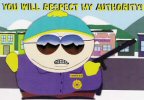 The Hong Kong Movie Gods are kind this year. Unlike last year when A SIMPLE LIFE wasn’t available to poor sods overseas until after the Hong Kong Film Awards were presented, I have been able to see all five of this year’s Best Film nominees. As a result, I can speak with unfounded yet irrationally-confident authority on who should win and who will win this year’s awards. The Hong Kong Movie Gods are kind this year. Unlike last year when A SIMPLE LIFE wasn’t available to poor sods overseas until after the Hong Kong Film Awards were presented, I have been able to see all five of this year’s Best Film nominees. As a result, I can speak with unfounded yet irrationally-confident authority on who should win and who will win this year’s awards.
Without further ado, let’s start with the night’s top prize: Best Film. The nominees are: THE BULLET VANISHES, COLD WAR, MOTORWAY, THE VIRAL FACTOR and VULGARIA. If I had a vote, here is how I would rank the films:
5. THE VIRAL FACTOR
While it boasts some well-done action scenes, THE VIRAL FACTOR is saddled with an overwrought “separated brothers on opposite sides of the law” subplot loaded with both ham and cheese. This nomination speaks more to the lack of depth in this year’s field than the quality of the movie. THE VIRAL FACTOR was released in January 2012 for the Lunar New Year holiday season. It’s a bit sad that, in the ensuing 11 months of 2012, the HK film industry couldn’t come up with one film, just one film, to knock THE VIRAL FACTOR off this list.
Evaluated solely as an action movie, THE VIRAL FACTOR more than fits the bill. As a nominee for one of the best films of the year, not so much.
4. THE BULLET VANISHES
Terrific production design and dynamic performances from both the leads and the supporting cast make THE BULLET VANISHES a worthy nominee for Best Film. What will keep it from being a worthy winner, however, is a plot twist that comes across as unearned. Without spoiling things for those who have yet to see the movie, to pull off a twist successfully, a viewer should be able to re-watch the film and see the internal logic behind it. Take, for example, M. Night Shyamalan’s THE SIXTH SENSE. Re-watching THE BULLET VANISHES with the plot twist in mind, events don’t quite match the outcome and the logical consistency of the film suffers. Close, Lo Chi-Leung and company, but no cigar.
3. MOTORWAY
THE VIRAL FACTOR and THE BULLET VANISHES would be unlikely Best Film winners on Saturday night. MOTORWAY, on the other hand, has a legitimate shot to walk away with the top prize. A solid cops-and-robbers movie, the film talks the talk and drives the drive with noteworthy skill and efficiency. The problem with MOTORWAY is that it is coldly efficient and, ultimately, bland. There is no spark, no edge to film. It’s highly-watchable and highly-enjoyable, but once the credits roll, it’s also highly-forgettable.
Nevertheless, the remaining films in this category are very polarizing so there is an outside chance that MOTORWAY could emerge victorious as a compromise candidate.
2. COLD WAR
Telling a tale of how the upper echelons of the Hong Kong Police Force mobilize their resources to deal with a terrorist threat, COLD WAR has an intense premise and some interesting things to say about stability and security in a civil society. However, with wings made from pretentious Winston Churchill quotes and a few histrionic performances, COLD WAR, like Icarus, flies too close to the sun and comes crashing down in a disappointingly sloppy third act.
That said, there are many aspects of COLD WAR that commend it as a Best Film winner. With a box-office take of HK$42.68 million, COLD WAR was the highest-grossing Hong Kong film of 2012. Moreover, with the East Palace/West Palace checks and balances dynamic of the Operations branch/Administration branch and the exaltation of the role of the ICAC (Independent Commission Against Corruption) in the government system, COLD WAR fires some not so subtle shots at the Mainland. This is epitomized when Secretary of Security Philip Luk (Andy Lau Tak-Wah) addresses a horde of free press about an hour into the film. Luk:
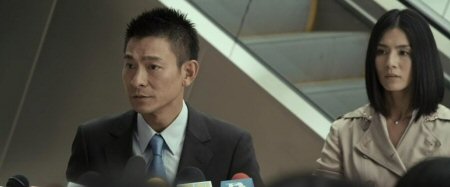
“Hong Kong is an advanced city under common-law jurisdiction. The ICAC doesn’t need to report to me before taking action. I understand that even though you are free to ask any questions, please familiarize yourself with Hong Kong law and the spirit of the rule of law before you ask because this is the core value that made Hong Kong an international finance centre and Asia’s safest city.”
Further, COLD WAR’s ad campaign touted it as a quality film full of “Hong Kong flavour” worthy of being mentioned in the same breath as INFERNAL AFFAIRS. In an age where “if you say something enough times, it effectively becomes true” is an actual media strategy, the branding may swing a few votes its way and be the difference between winning and losing.
Another factor tilting in COLD WAR’s favour, the controversial nature of my pick for Best Film …
1. VULGARIA
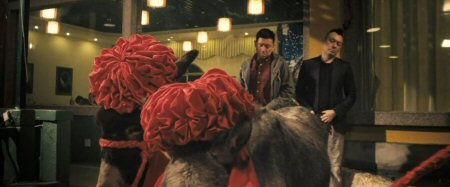
VULGARIA, much like MOTORWAY, is very good at what it does. It’s an exceptionally-crafted comedy filled with biting social commentary and ribald but not obscene jokes. Unlike MOTORWAY, VULGARIA is not bland and, with recurring bits involving popping candy and donkeys, definitely not forgettable. Unblemished by neither a questionable plot twist nor an ill-conceived third act, VULGARIA is the best Hong Kong film of 2012. Unfortunately, its mature subject matter means that it faces an uphill battle to get recognized as such in Hong Kong’s socially conservative society.
Shunned completely by the Hong Kong Film Critics Society in its awards, VULGARIA didn’t get any love either from the Hong Kong Directors’ Guild as COLD WAR, MOTORWAY and Pang Ho-Cheung’s other 2012 effort LOVE IN THE BUFF were selected for its Most Recommended Films of the year. The Hong Kong Arts Development Council gave its HK$50,000 Critics’ Prize to an essay titled “Gazing at the Anxiety of Hong Kong Film Through VULGARIA” by Mainland writer Jia Xuanning. In the piece, Jia argued that VULGARIA is an “irresponsible cultural product” that showed Hong Kong people still cannot accept the realities of the Mainland’s improved social and economic status. With the Hong Kong film industry increasingly reliant on the Mainland for funding, it may be reluctant to bite the hand that feeds it by lauding VULGARIA as its Best Film of 2012.
All this points to a COLD WAR victory on Saturday night. Just how much of a favourite is the Longman Leung-Sunny Luk film? Over at a sportsbook taking bets on the Hong Kong Film Awards, the odds of COLD WAR winning are pegged at 1-5. Its closest competitor, THE VIRAL FACTOR, is given 4-1 odds while VULGARIA has odds of 15-1. For those of you who aren’t degenerate gamblers, this means that if you bet $1 on COLD WAR to win, your return will be a mere 20 cents. If you bet $1 on THE VIRAL FACTOR to win, your return will be $4. A significant disparity that suggests the people who put the money where their mouths are believe COLD WAR is an overwhelming favourite.

QUICK HITS ON THE OTHER MAJOR AWARDS:
Best Director:
If I had a vote, I’d give it to Soi Cheang for MOTORWAY. Cheang also won the Hong Kong Film Critics Society Best Director award and tied for the Hong Kong Film Directors’ Guild directing prize so he’s a strong candidate to win. Longman Leung and Sunny Luk may hold the prize in their hands if there’s a COLD WAR sweep. Dante Lam (THE VIRAL FACTOR) is the dark horse candidate.
Best Actor:
My other cousin Tony, Tony Leung Ka-Fai, is the consensus “hot door” for his work in COLD WAR and the actor I would have voted for in this category. If there is to be an upset, look for Nick Cheung Ka-Fai to win for NIGHTFALL as he walked away with the Hong Kong Performing Artistes Guild award for Outstanding Film Performance in 2012.
Best Actress:
Despite some buzz for Sammi Cheng Sau-Man (ROMANCING IN THIN AIR) double nominee Zhou Xun (THE GREAT MAGICIAN, THE SILENT WAR) is expected to emerge as the winner on Saturday night. The dark horse and my sentimental favourite: Miriam Yeung Chin-Wah (LOVE IN THE BUFF).
Best Supporting Actor:
A total toss up between Ronald Cheng Chung-Gei (VULGARIA) and Chapman To Man-Chat (DIVA) as they are being touted as the “hot doors”. Powered by nostalgia, Alex Man Chi-Leung (THE BOUNTY) circles with an outside chance.
Best Supporting Actress:
The “hot door” designation in this category has been given to veteran Taiwanese actress Elaine Jin (THE VIRAL FACTOR) — seven-time HKFA Best Supporting Actress nominee, two-time winner. Mavis Fan (SILENT WAR) is the dark horse. Personally, I would have voted for Jiang Yiyan (THE BULLET VANISHES).
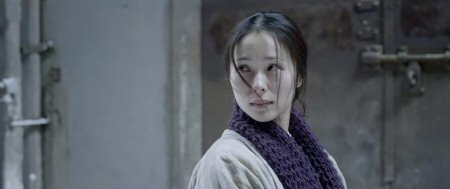
Photo credits: Eric Cartman (Comedy Central), Andy Lau/Charlie Yeung from COLD WAR (Edko Films), Chapman To/Simon Lui from VULGARIA (Making Film Productions), 32nd Hong Kong Film Awards Betting Form (188Bet), Jiang Yiyan from THE BULLET VANISHES (China Lion Entertainment).
Posted in Hong Kong Film Critics Society Awards, Hong Kong Film Awards | No Comments »
November 26th, 2012
With just days left to go in voting for LoveHKFilm’s Best Hong Kong Movies Ever Reader Vote, it’s time to awake from my slumber and arise from my sleep to get back out on the hustings and campaign for two films that I strongly believe deserve consideration for your votes. Also, on the off chance that any of you may care, I’ll share my vote for the “Best Hong Kong Movie Ever”.
The Best Hong Kong Movie Ever
As I am a raging megalomaniac, I’m going to start by revealing my pick for “Best Hong Kong Movie” ever. I don’t know about you but I found the prospect of picking the Best! Hong Kong! Movie! Ever! a daunting prospect. Sure, I’ve seen hundreds of Hong Kong films but thousands have been made so I feel sheepish about being an Arbiter of Best Moviedom.
To help me get a hold of such an unwieldy topic, I decided to fall back onto a situation that I’ve found myself in many times over the years: If you had to recommend just one Hong Kong movie to a complete neophyte, which one would you pick? It’s an important decision because the stakes are high. If the neophyte likes your pick, then you may be opening the door to a lifetime of an enjoyment of the wonder of Hong Kong film. If the neophyte hates your pick, then you have squandered an opportunity to recruit one more fan to the ailing art. For me, then, the vote boils down to if I only had one shot, one opportunity to capture the imagination of a Hong Kong movie neophyte, which movie would I recommend?
After much deliberation, I settled on three movies for final consideration. In alphabetical order they are: A BETTER TOMORROW, KUNG FU HUSTLE and POLICE STORY. It’s a daunting decision so my palms are sweaty, knees weak, arms are heavy, there’s vomit on my sweater already, Mom’s spaghetti … My choice for the Best Hong Kong Movie Ever is … {drum roll} … KUNG FU HUSTLE.
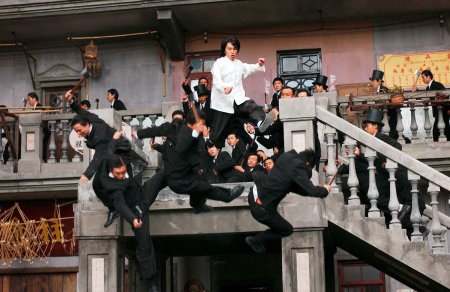
The choice came down to KUNG FU HUSTLE and A BETTER TOMORROW. POLICE STORY was a strong candidate but it is more of a Jackie Chan showcase than a Hong Kong Cinema showcase. As I have written before, A BETTER TOMORROW is a cinematic masterpiece but KUNG FU HUSTLE edges it out narrowly because it features the signature staple of Hong Kong cinema, kung fu, and because it is a more comprehensive movie. Like A BETTER TOMORROW, KUNG FU HUSTLE has brilliant action sequences and themes of heroism and sacrifice but what makes KUNG FU HUSTLE just that little bit better is that it has a sense of whimsy that is found in many a Hong Kong film from the good (CHUNGKING EXPRESS) to the bad (ON FIRE) to the ugly (THE ETERNAL EVIL OF ASIA). The way KUNG FU HUSTLE manages to tell a classic “good versus bad” story set in the milieu of Pigsty Alley yet include elements like mystical kung fu, a dance number and Bugs Bunny-type animation represents the best of Hong Kong cinema and that is why it’s my choice for the title of Best Hong Kong Movie Ever.
For your consideration …
To those of you who are still compiling your lists for the Reader vote, I ask, nay, beseech you to consider putting two relatively unheralded but patently deserving films on your list: Ann Hui On-Wah’s THE WAY WE ARE and Johnnie To Kei-Fung’s EXPECT THE UNEXPECTED.
Though works like SUMMER SNOW and A SIMPLE LIFE have received more acclaim, the low-key THE WAY WE ARE is Ann Hui’s best film. It’s easy to cull drama from situations like the travails of a caregiver to an Alzheimer’s patent or the way the ravages of time takes a toll on the body and the soul. It’s not as easy to cull drama from mundane every day situations like grocery shopping and cooking supper yet Hui manages to do just that, with great affect, in THE WAY WE ARE.
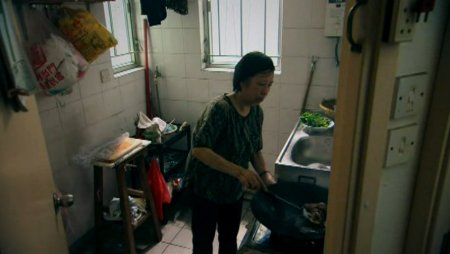
The opening sequence of the film which shows an old lady (played by HKFA Supporting Actress winner Chan Lai-Wan) shopping for groceries then cooking and eating dinner alone gives more insight into old age than any individual sequence found in A SIMPLE LIFE. Similarly, there’s a scene set in, of all places, a Wellcome supermarket that says more about down-to-earth, working-class decency than you can find in any news report, documentary, essay or newspaper/magazine article.
Earlier this year, I saw the documentary, JIRO DREAMS OF SUSHI, about an 85 year-old man who has spent a lifetime mastering the art of making sushi. In the end, the key to his success was the relentless pursuit of simplicity in the complex matrix of variables that go into making a piece of sushi. With THE WAY WE ARE, Ann Hui shows that she has mastered the art of complex simplicity, a feat worthy of your consideration for a place on your list of the Best Hong Kong Films Ever.
Like Ann Hui, Johnnie To Kei-Fung is known more for films like ELECTION and LIFE WITHOUT PRINCIPLE but I believe one of his best movies is the early Milkyway Image production EXPECT THE UNEXPECTED. On the surface, EXPECT THE UNEXPECTED is a routine police procedural filled with the usual tropes: the by-the-book squad leader, the laid-back, loose-cannon cop and the cop just looking to get by until he retires. For good measure, To throws in a love triangle and a tale of unrequited love. The familiar elements, however, are all just part of a brilliant plan to lull viewers into a false sense of security that serves to emphasize and heighten the message of the film: Life is fragile because violence can erupt unexpectedly from the ordinary.
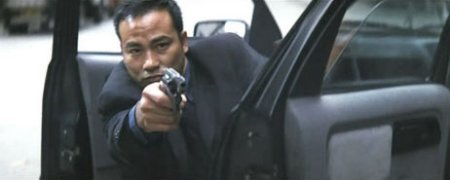
Since the film was released in 1998, there have been two real-life examples of how unspeakable tragedy lies just below the surface of the routine rhythms of life: a sunny Tuesday in New York City in September of 2001 and a peaceful Boxing Day 2004 down in the area of the Indian Ocean. EXPECT THE UNEXPECTED has an unforgettable ending and, if you saw you it, you should not forget about it when you are putting together your ballot.
NOTE: I am aware that Patrick Yau Tat-Chi is listed as the director of EXPECT THE UNEXPECTED but it is widely-accepted that Johnnie To did the heavy lifting. To has said as much himself. Also, as Bill Parcells famously noted: “you are what your record says you are.” Since EXPECT THE UNEXPECTED, Johnnie To has continued to build a prolific filmography. Patrick Yau, not so much.
Image credits: Sony Pictures Classics (Stephen Chow), Class Limited (Chan Lai-Wun), Milkyway Image (Simon Yam)
Posted in Stephen Chow Sing-Chi, Johnnie To Kei-Fung, Ann Hui On-Wah | No Comments »
April 16th, 2011
After some time away, I’ve decided to take the remaining shards of my talents back to the Kozo Entertainment Group. Where have I been these past few months? Well, let’s just say I was, like Sung Chi-Ho in A BETTER TOMORROW, “in Taiwan … on business”.
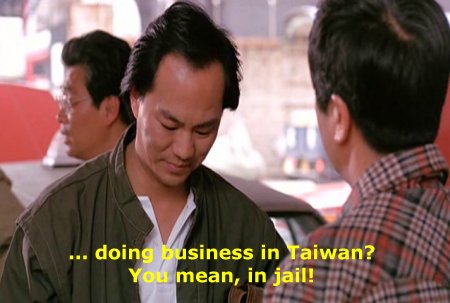
With hopes for a better tomorrow in mind, let’s start this iteration of the House Where Words Gather on a propitious note by talking about “a better tomorrow”. Namely, A BETTER TOMORROW (2010) aka MUJEOGJA (trans. INVINCIBLE) - the South Korean remake of John Woo’s Hong Kong classic.
Directed by Song Hae-Seong (who some may remember as the director of the 2001 film FAILAN starring Cecilia Cheung Pak-Chi and OLDBOY lead Choi Min-Sik), A BETTER TOMORROW 2010 is a serviceable action melodrama whose greatest service is to remind movie fans of the brilliance of John Woo. For the remake, Song changes the setting from Hong Kong to Busan and the criminal enterprise of the main characters from counterfeiting to gun running. In addition, the rift between brothers doesn’t stem from one being a cop and the other a thief. Instead, it’s because one abandoned the other while escaping North Korea for the South.
While there are changes in setting and characters, the remake keeps the narrative structure of the original largely intact. Like the original, the film begins with a nightmare sequence and ends with a shootout on a pier. Because the storytelling adheres so closely to that of the original, sequence after sequence is the same and one can’t help but notice how flat and watered-down the remake is compared to the original. All the counterparts to the iconic scenes in the 1986 film — from the Mark character losing his leg while getting revenge to him dying in a hail of bullets — pale in comparison as Song does not have the skill nor the flair of John Woo.
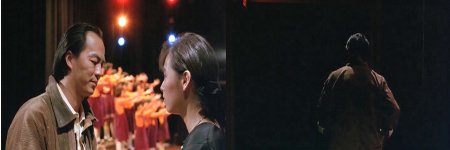
There is, perhaps, no better demonstration of Woo’s mastery of craft than the Wong Tai Sin Childrens’ Choir scene in A BETTER TOMORROW. With the choir singing 明天會更好 (trans. Tomorrow Will Be Better) in the background, Sung Chi-Ho (Ti Lung) bids farewell to Jackie (Emily Chu Bo-Yee) while handing her some evidence. He then glances at the children singing before turning into a dark hallway to head for the decisive showdown with Shing (Waise Lee Chi-Hung). The scene takes less than a minute but in that short period of time, Woo moves the plot along while showing, with great artistry, Sung wistfully abandoning his desire for a life of sweetness and light because he is being forced back into a dark life of bullets and blood. No scene in the remake comes anywhere close to matching that level of exquisite depth and complexity. As a result, A BETTER TOMORROW 2010 suffers by comparison.
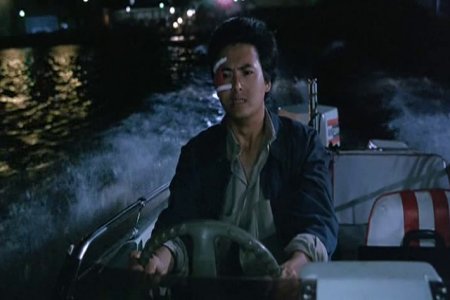
Taken on its own, A BETTER TOMORROW 2010 remains a thoroughly average film that’s competent but uninspiring. It’s mildly entertaining though some may be turned off near the end when events take a melodramatic turn and tough guys become crybabies. The film is worth a watch if you are a fan of cross-cultural remakes. Otherwise, don’t bother turning the jet boat around.
MISCELLANEA:
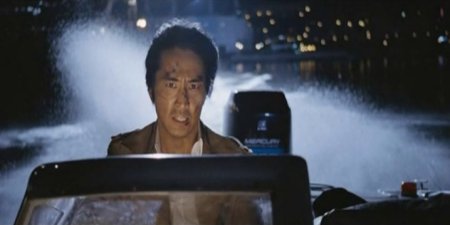
- Song Seung-Heon is given the thankless task of playing the Mark 哥 role. Much like his director in relation to John Woo, Song suffers from the comparison to Chow Yun-Fat because he cannot match Chow in charisma and intensity. He puts forth a solid effort but, in the end, falls short.
- Song did, however, show some flashes of Stephen Chow Sing-Chi. Maybe it was the hair or maybe it was the sunglasses but some mannerisms felt familiar. Any South Korean re-make of SHAOLIN SOCCER or KUNG FU HUSTLE in the offing?|
- The music/soundtrack for A BETTER TOMORROW 2010 is also underwhelming when compared to the original. Many musical cues from the 1986 film - especially the ones for Kit at the shooting range, the shootout at the restaurant and Mark’s death - are embedded in memory. The music from the remake is entirely forgettable.
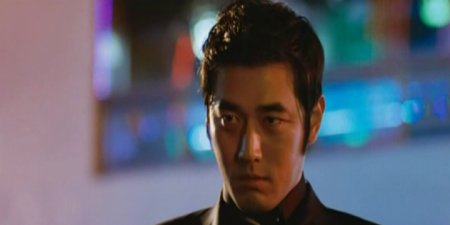
- A BETTER TOMORROW 2010 is superior to the original in one aspect: A great performance by Jo Han-Seon as the turncoat villain helps flesh out a comparatively thin plot thread from the original. Unlike the 1986 movie, we actually get to see the how and why of the heel turn in the remake.
- Also better: The Emily Chu flower vase/comic relief girlfriend character is replaced by a gruff yet caring auntie. No goofy scenes involving cellos, flowers or headphones in the 2010 version.
- Egads! A BETTER TOMORROW was released in Hong Kong on February 8th, 1986. It’s now a little over 25 years old! Twenty-five years! Egads! Eeeeeegads!
BLOG POST EXTRA:
The 30th Hong Kong Film Awards are being presented tomorrow evening. Putting my finger to the wind, I’m feeling a favourable breeze for IP MAN 2 walking away with the Best Film prize. If I had a vote, I would have marked GALLANTS on my ballot as it was the most “Hong Kong” of this year’s nominees. That said, if I was the General Secretary / Paramount Leader of HK films, I would appoint the title of Best Film to LOVE IN A PUFF. There was no better film about Hong Kong than LOVE IN A PUFF in 2010.
Image credits: Cinema City (A BETTER TOMORROW); Formula Entertainment (A BETTER TOMORROW 2010)
Posted in Hong Kong Film Awards, Movie Reviews | 4 Comments »
June 17th, 2010
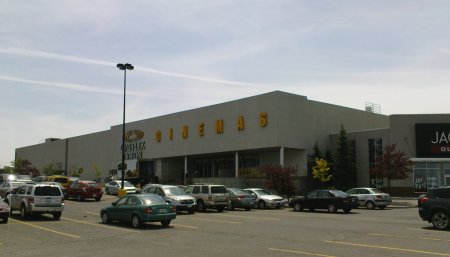
It was a gorgeous morning last Sunday here in the capital of Canada. Under glorious sunshine, it was a pleasant 18°C. So, naturally, I spent it inside, in the dark, at the South Keys Cinemas taking in THE KARATE KID (2010) with my new Mainland pal Jerry and his 8 year-old kid Alex.
 Regular readers will know that the James The Red Engine stink face pretty much sums up my attitude going into the movie. To combat my prejudices, I brought along Jerry, who brings a fresh set of eyes because he has not seen the original, and Alex, who is in one of the film’s target demographics. Alex was the reason we were at the theatre at 10:45 in the morning. He had a soccer game at 3 pm and, with the movie clocking in at two hours and twenty minutes, the 8:10 evening show would have encroached on his bedtime. Regular readers will know that the James The Red Engine stink face pretty much sums up my attitude going into the movie. To combat my prejudices, I brought along Jerry, who brings a fresh set of eyes because he has not seen the original, and Alex, who is in one of the film’s target demographics. Alex was the reason we were at the theatre at 10:45 in the morning. He had a soccer game at 3 pm and, with the movie clocking in at two hours and twenty minutes, the 8:10 evening show would have encroached on his bedtime.
After the show we went to lunch at Harvey’s where, thanks to my lavish Kozo Entertainment Group expense account,  we all had fries with our burgers. Actually, KEG bean counters be damned, I passed on the fries and went straight for the added extravagance of onion rings along with the most expensive item on the menu: the grilled chicken sandwich. we all had fries with our burgers. Actually, KEG bean counters be damned, I passed on the fries and went straight for the added extravagance of onion rings along with the most expensive item on the menu: the grilled chicken sandwich.
In between bites, I asked Jerry and Alex for their opinions of the movie. Alex gave it a “thumbs up” but he complained that it was boring at times. Indeed, Alex was noticeably restless during the Qixi Festival sequence and the Jackie Chan “Look At Me, I’m Doing Serious Acting” sequence. He also flinched during the two scenes where Dre (Jaden Smith) got beat up by the bully and his henchmen. For a movie that is somewhat geared towards kids, it’s hard to fathom why director Harald Zwart opted to show such surprisingly brutal fight scenes.
Unlike his son, Jerry gave THE KARATE KID (2010) a “thumbs down”. Based on my description of the original, he said that he expected the movie to be “like ROCKY” - moving and inspirational. Instead, he thought the film was flat and superficial. A resident of Beijing for four years while he studied chemistry — or was it chemical engineering — at one of the city’s universities, he was bothered by the local inconsistencies that he noticed throughout the film. Referring to the sequence where Dre and his young lady friend Meiying (the delightful Han Wenwen) have a day out in Beijing, Jerry said: “I don’t think the general public is allowed in some of those places”.
The Wudang Mountain sequence also bothered him. Jerry: “You can’t get there and back (to Beijing) in one day!”
In addition, he was irked by the fact that the Qixi Festival usually takes place in August yet, later in the film, Mr. Han (Jackie Chan) marks a significant anniversary on June 8th.
While I’m confident that the incongruities Jerry noticed will not be an issue for most viewers, I do agree that THE KARATE KID (2010) does not pack the same emotional wallop as the original. I’ll admit that I got a little verklempt during some of the Dre-Meiying scenes (What can I say? I’m a sap.), but other “emotional crescendo” moments left me cold. The problem is that there isn’t enough setup for the payoffs so when the big moments happen (like Dre winning the tournament or Mr. Han reconciling himself with the past) they fall flat because they haven’t been earned.
Imagine a comedian who just reels off punch lines without any set up. “No soup for you“, “not that there’s anything wrong with that” or “master of your domain” are meaningless bereft of context. Without revealing any spoilers, there are many moments in the remake that are supposed to stir the emotions of the audience but end up leaving them bewildered because they haven’t been established properly. I suspect that the powers-that-be were relying on people having seen the original because many of the “big moments” are call backs. I think viewers were supposed to think “ah, this is like when Daniel-san found out about Miyagi’s wife and son” or “ah, this is like when Mr. Miyagi helped Daniel-san woo Ali”. As a result, for people like Jerry who haven’t seen the original, the scenes do not resonate as much and the emotions seem shallow.

Having said that, I’ll cast my lot with 8 year-old Alex and give THE KARATE KID (2010) a “thumbs up”. It’s a good time at the movies. Two hours and twenty minutes breezes by as Jaden Smith and Han Wenwen deliver very likeable performances. Also, the Wudang Mountain sequence yields some spectacular shots. I still firmly believe that the remake was unnecessary but like the Russian Premier in that other 1980s classic, ROCKY IV, I stand up and applaud because I can appreciate the effort.
I’ll be back next week with some spoiler-filled thoughts on the film. In the meantime, I have to file an expense report with the KEG bean counters. I can picture the conversation now: “You have just the one rear end and the one set of eyes, why did you need THREE tickets?”
Posted in Movie Reviews, The Life and Opinion of the Webmaster Sanney | 2 Comments »
June 4th, 2010
With THE KARATE KID (2010) set to hit North American movie theatres in a week, the publicity machine for the film is starting to hit top gear. Since it has yet to be screened for critics, the early press has been mostly positive because it’s just been the people behind the movie who have been talking. Will Smith and his family appeared on Oprah last month and, earlier this week, producer James Lassiter spoke to The Los Angeles Times.
Last Friday, a review appeared on Ain’t It Cool News declaring THE KARATE KID (2010) to be a “worthy successor to the previous incarnation”. On Monday, Todd Brown at Twitch said the movie was “better than good”. Also on Monday, Gregory Ellwood at HitFix.com speculated on why it might be “June’s breakout hit”.
All of this positive buzz has created a bit of a conundrum for me. Going back to February 1996 and the North American release of RUMBLE IN THE BRONX, the only Jackie Chan movie I haven’t seen during its opening weekend was THE SPY NEXT DOOR - and that was mostly because I wasn’t a 7 year-old kid. However, I was going to skip THE KARATE KID (2010) next week in favour of THE A-TEAM. Based on the trailer that I saw before IRON MAN 2, THE A-TEAM looks like it’ll be a whole lot of fun while my pre-conceived notions for THE KARATE KID (2010) are not compelling me to rush out and see it. My pre-conceived notions:
 1. There are only really two legitimate reasons to remake a movie. The first is technology now exists to update it. It’s like putting a new coat of paint on an old house. There’s nothing wrong with the house but it just may look better with a new coat of paint. See KING KONG (2005) and CLASH OF THE TITANS (2010). The second is a remake set in a different culture than the original. Keeping the premise but putting it in a completely different setting gives people the opportunity to explore the original themes and ideas from a different angle. See DEATH AT A FUNERAL (2010), THE DEPARTED (2006) and TORTILLA SOUP (2001) - the thoroughly enjoyable Hispanic remake of Ang Lee’s EAT DRINK MAN WOMAN. 1. There are only really two legitimate reasons to remake a movie. The first is technology now exists to update it. It’s like putting a new coat of paint on an old house. There’s nothing wrong with the house but it just may look better with a new coat of paint. See KING KONG (2005) and CLASH OF THE TITANS (2010). The second is a remake set in a different culture than the original. Keeping the premise but putting it in a completely different setting gives people the opportunity to explore the original themes and ideas from a different angle. See DEATH AT A FUNERAL (2010), THE DEPARTED (2006) and TORTILLA SOUP (2001) - the thoroughly enjoyable Hispanic remake of Ang Lee’s EAT DRINK MAN WOMAN.
Otherwise, remakes are usually just tepid versions of their originals because it’s hard to live up to the challenge of competing with the legacy of the originals while establishing a new identity, a new raison d’être. See: THE TAKING OF PELHAM 123 (2009), THE INVASION (2007), THE WICKER MAN (2006), PLANET OF THE APES (2001), PSYCHO (1998) and THE PINK PANTHER (2006).
THE KARATE KID (2010) faces a similar problem. From the fish-out-of-water premise of the “Joisey” kid moving to California to the “You’re The Best Around” montage to the over-the-top bad guys (”Get him a body bag! Yeeaah!”), the original KARATE KID is great because it has a unique combination of cheesy chemistry. Re-creating that chemistry is a “lightning strike twice” situation, not impossible but highly unlikely.
2. Will Smith is producing the movie. On the upside, “Big Willie Style” means a big budget and excellent production values. On the downside, Smith casting his son Jaden in the lead screams “vanity project”.
3. I’m obviously not in the target demographic for this movie. I’m not a child and I’m not a parent of a child. The original had a 21 year-old Elisabeth Shue as the “compelling hot babe”. The “love interest” for 11 year-old Jaden Smith is played by a similarly young Chinese actress named Han Wenwen. Definitely not — unless you’re under 12 years old - “compelling hot babe” material.
4. As I don’t want Skynet/the Cylons to keep track of my web surfing activities, I have my browser cache and cookies cleared before I shutdown my computer. Consequently, I lost a link to an article from earlier this week where someone wrote that the Jaden Smith-Jackie Chan relationship in the movie serves as an allegory for how America needs China and China needs America.
“Child, please”, as Chad Ochocinco would say.
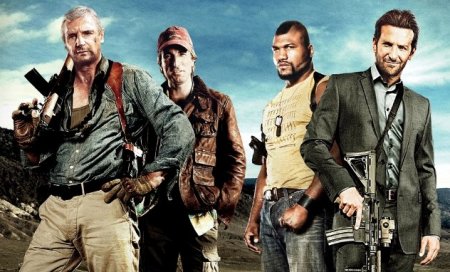
Before this week, all of these pre-conceived notions had me leaning towards going to see THE A-TEAM next weekend instead of THE KARATE KID (2010). However, after being subjected to the Sirens’ call of the publicity machine, I started thinking that I might have to check out THE KARATE KID (2010) first. Then, I read this whopper of a quote from producer James Lassiter in The L.A. Times article “‘Karate Kid’ update breaks down some Chinese walls”:
The people run the country. So if people didn’t want you shooting in their neighborhood, there’s no authority that can tell them they have to. That’s why it’s called the People’s Republic of China.
Like a splash of cold water to the face, that quote snapped me out of the stupor created by the publicity machine. Yes, GeekPadre and Todd Brown gave positive reviews but, like early returns on election night, that doesn’t mean anything. I’ll wait until other critics get a chance to see the movie but unless reviews are overwhelmingly positive, I’m probably waiting until a cheap night Tuesday or a second-run discount theatre or possibly even a video rental before I see THE KARATE KID (2010).
Only my brain, with its bothersome thinking and dilemmas and conundrums, is compelling me to see the remake. My heart is telling me I’ll have a much better time at THE A-TEAM. “Don’t think! Feel!”, noted 20th Century philosopher Bruce Lee said in ENTER THE DRAGON. THE A-TEAM it is.
RELATED LINKS:
Images credits: Samuel Goldwyn Films (TORTILLA SOUP poster); 20th Century Fox (THE A-TEAM publicity image)
Posted in News Links, Jackie Chan, Links of Interest, The Life and Opinion of the Webmaster Sanney | 4 Comments »
|
|
|
| |
| |
|
|
|
|
|
|
|
|
|
|
|
|
|
|
|
|
|
|
|
|
|
|
|
|
|
|
|
|
|
|
|
|
|
|
|
|
|
|
|
|
|
|
|
|
|
|
|
|
|
|
|
| LoveHKFilm.com
Copyright © 2002-2026 Ross Chen |
|
|