|
|
| |
|
 We do news right, not fast
Note: This blog expresses only the opinions of the blog owner,
and does not represent the opinion of any organization or blog
that is associated with The Golden Rock.
|
|
Archive for the ‘festivals’ Category
Monday, October 24th, 2011
Had tickets to two films at the Hong Kong Asian Film Festival today, but I decided to push back THE RAID to watch the 10th anniversary digital remastered version of Pang Ho-Cheung’s YOU SHOOT I SHOOT instead. So, this is the only film watched on Day 6:
Himizu (2011, Japan, Dir: Sion Sono)
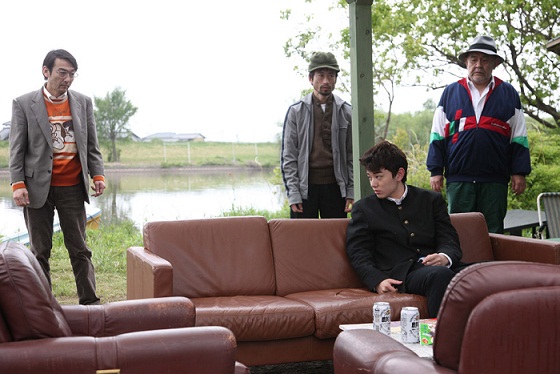
In the middle of the screening, I had to take a bathroom break and missed about 5 minutes of the film. However, I’m actually thankful that I had to take the break, because watching the film in one sitting is an extremely draining experience. From the extreme displays of emotions to the bombastic sound design, Sion Sono takes everything to the extreme in this drama about two tortured youths in post-earthquake Japan. At 129 minutes, HIMIZU is never boring, and it’s often compelling. However, it also feels like it’s about three hours long.
With that said, you’ll either be totally immersed into Sono’s storytelling style or feel completely alienated. I was the former, absorbed from the very first shot of the film, which shows lone figures wandering in the midst of the destruction caused by the earthquake and tsunami that destroyed a good part of northeastern Japan in March 2011. Many will be disturbed by the amount of smacking the lead actors take throughout the film, and you will have to be in tune with Sono’s very dark sense of humor to ride along with it as well. Those who do will be rewarded by this bleak, but engaging coming-of-age tale.
It’ll be interesting to see how Japanese audiences respond to the film come January, as it deals directly with how Japanese people are coming to grips (or not) with the devastating disasters. Some will be disgusted by how Sono portrays Japanese society, and some may admire him for the absurd, over-the-top social critique. Either way, it shows that just because Sion Sono is adapting existing work for the first time, he hasn’t lost his edge as a rebel working in the Japanese film industry. A brave piece of work, but I wouldn’t blame you if you have to wait for video.
Skipping two days due to a detour to the China Film Panorama and a night of rest. But next time: A tattooed assassin and a Taiwanese gymnast.
Posted in festivals, review, Japan | No Comments »
Monday, October 24th, 2011
I originally had three films scheduled for today: India’s THE KITE, plus the two I watched. However, an eye exam (plus the subsequent visit to the optical store) caused me to miss the film. So, day five featured only two films, both from Japan:
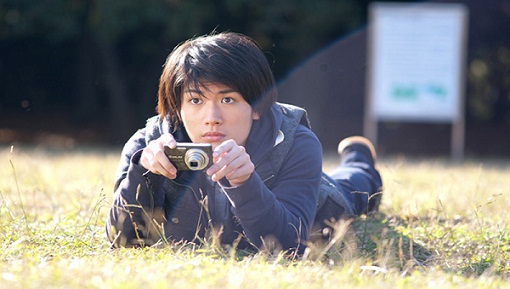
Tokyo Koen (2011, Japan, Dir: Shinji Aoyama)
I have three cities around the world that I consider home: Hong Kong, San Francisco, and Tokyo. As a result, I tend to be easier on films that can represent these three cities well. That may be why I found the latest Shinji Aoyama film to be more engaging that i had expected it to be. On the surface, the lighthearted drama is about the three women in the life of an aspiring photographer. However, in Aoyama’s hands, TOKYO KOEN breaks through simple Japanese indie aesthetics with its picturesque journey through Tokyo’s parks and an odd sense of humor that only Aoyama can pull off.
While Nana Eikura plays the impossibly cute, perky film buff (LIPSTICK reference!), it’s Manami Konishi that surprised me as the hero’s step-sister. Usually playing withdrawn, quiet characters, Konishi exudes a sexy, seductive vibe that I’d never seen before from her. The film’s too light to attract any attention for her performance, but TOKYO KOEN may be my favorite Konishi performance yet.
On a more personal note, the film has also inspired me to take a journey of my own on my next trip to Tokyo. While going around all of Tokyo’s parks may be a bit much, it would be nice to see parts of the city I’ve never been to. Aoyama’s version of Tokyo is one that overseas viewers rarely see - one with little sense of urbanization and technology (the hero insists on using an old film camera). Tokyo’s parks is as big a character as the four human characters in the film, and I would argue that it’s the most beautiful one.
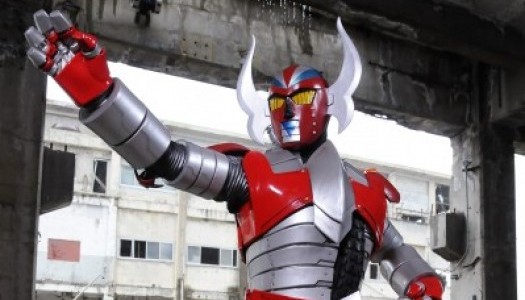
Karate Robo-Zaborgar (2011, Japan, Dir: Noboru Iguchi)
Nikkatsu’s Sushi Typhoon has mostly been specializing in exporting blood, guts, and projectiles shooting from human bodies from Japan to the world - which means they’ve pretty much been making films for foreigners. However, KARATE ROBO-ZABORGAR finally feels like a Sushi Typhoon film for the Japanese audience, even if it’s a very small amount that can appreciate modern throwbacks to cheesy 70’s superhero shows.
The best way I can describe KARATE ROBO-ZABORGAR is a low-budget version of YATTERMAN - a live-action fantasy superhero adaptation that both recreates and parodies its genre. If you look for video of the original ZABORGAR show (or just watch the credits), you’ll see how hard director Noboru Iguchi (MACHINE GIRL) worked to get the film right. However, when he gets to the second half of the film, which jumps 25 years to present day, into the portion of the story not based on the original show, Noboru struggles to keep the energy up as it starts to overstay its welcome.
Still, KARATE ROBO-ZABORGAR is great, irreverent fun at the movies, except when Noboru had to do his Sushi Typhoon duty by throwing in girls in bikinis, blood spraying, and projectiles shooting out of strange places. The rest of the film is so inspired as parody that I wish it left the Sushi Typhoon label so it wouldn’t have had to give any fan service. But I suppose the film wouldn’t have been made without Sushi Typhoon, so KARATE ROBO-ZABORGAR is what it is.
Tomorrow: Sion Sono looks at post-earthquake Japan.
Posted in festivals, review, Japan | No Comments »
Saturday, October 22nd, 2011
I didn’t actually attend any screenings on night four of the 2011 Hong Kong Asian Film Festival. However, I did pop in my 2010 Fresh Wave DVD for a short film that did screen at the festival that night:
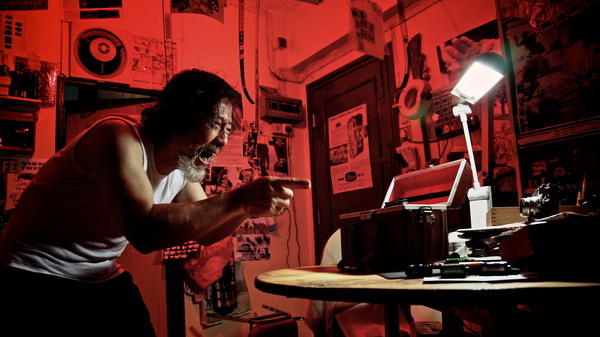
The Decisive Moment (2010, Hong Kong, Dir: Wong Wai Kit)
FULL DISCLOSURE: I was an assistant director on a film that competed alongside this film at the 2010 Fresh Wave Festival.
The winner of Best Cinematography at the open competition section of the 2010 Fresh Wave Film Festival (independent short films funded by the HK Art Development Council) has more than just good cinematography going for it. After opening with a shocker of a sequence, the mockumentary-style drama tells the story of a young news photographer who has to team up with a veteran photographer traumatized by a past event. Wong Wai-Kit’s script carries plenty on its plate, dealing with the bond between the old and the young, the old photographer’s guilt, and even a small course on journalism ethics. In fact, it has so much on in its 35-minute running time that the film felt like a digest of a better feature-length film. The bond isn’t as affecting as it should’ve been, and a deeper insight into commercial interest vs. professional ethics would’ve benefited the film greatly.
Nevertheless, what’s here is very impressive for a Hong Kong independent film. The cinematography award is well-earned thanks to the advent of DSLR, and it is a very compelling film for anyone with a remote interest in the media. The acting in the “documentary” sections isn’t natural enough to make it convincing, which means it might’ve been better if it was just chucked out, but the two leads are actually quite good.
The Fresh Wave Film Festival is an emerging organization of the Hong Kong film industry worth looking at. In a world where Hong Kong commercial filmmakers are constrained by Chinese censorship, Fresh Wave gives aspiring filmmakers in Hong Kong the chance to express themselves without fear of censorship by directly funding their films. Many of the young filmmakers at the festival even take the opportunity to explore social and political issues that are too sensitive or too uncommercial for mainstream cinema. Festival head Johnnie To has even reportedly recruited festival contestants to work at Milkyway. While the quality of the films are hit-and-miss, THE DECISIVE MOMENT (as well as Grand Prize winner/indie breakout 1+1) is definitely one worth checking out.
Also screening along with THE DECISIVE MOMENT in the same program is:
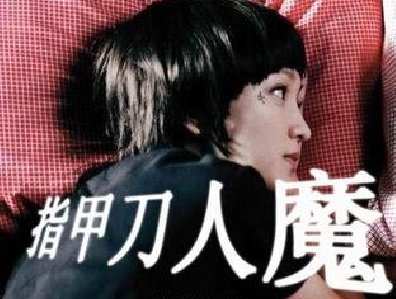
Devil Nail Clippers (2010, China, Dir: Jimmy Wan/Derek Tsang)
DEVIL NAIL CLIPPERS is actually the first film of Pang Ho-Cheung’s “4+1″ project, which involves four short films (produced by Pang) and one feature-length film. The four short films - invested by Samsung and Sina (watch for the shameless product placements!) - are available online for free, which is why I already saw the film earlier in the year. Like the print at the HKAFF, the internet version only has Chinese subtitles.
While the basic premise is based on an installment in Pang’s TRIVIAL MATTERS short story anthology, the short story simply makes up the opening scene of the film, about a girl (Zhou Xun) confessing to her boyfriend (Lawrence Chou) that she’s “nail clipper demon”, which means she only eats nail clippers (NOT nail clippings) to stay alive. What follows is a dry-as-sandpaper dark comedy with a devilish twist that kicks off second half of the 45-minute short film.
Since this is an internet-based short film, I assume that Pang and co. are able to go around stringent Mainland censorship (correct me if I’m wrong). While DEVIL NAIL CLIPPER doesn’t have much objectionable content, it is a surprisingly cynical little film that would not have made it through SARFT. Like Wan and Tsang’s LOVER’S DISCOURSE, DEVIL NAIL CLIPPER is not for everyone, but those who enjoy’s Pang’s sly sense of humor should find something rewarding here.
You can watch DEVIL NAIL CLIPPER (in two parts) -and other 4+1 Project films - here. DEVIL NAIL CLIPPERS already has 10 million views. Yes, it’s perfectly legal.
Coming up on day 5: A park in Tokyo, and a robot that does karate.
Posted in festivals, China, review, Hong Kong | No Comments »
Saturday, October 22nd, 2011
This is the quiet beginning before HKAFF goes into full swing, so only one film once again today:

Tatsumi (Singapore, 2011, Dir: Eric Khoo)
Singaporean director Eric Khoo pays a sentimental tribute to Japanese comic artist Yoshihiro Tatsumi, who led the way for adult-oriented comics, or “gekiga”. In addition to adapting his autobiographical graphic novel DRIFTING LIFE, TATSUMI also adapts five of the artist’s short stories. Some of them - the twisted noir piece HELL and the darkly comedic JUST A MAN - are delightfully twisted works filled with haunting imagery. However, some jarring editing and a lack of real insight into Tatsumi’s storytelling style make this sentimental tribute just a tribute more than a real attempt to understand the artist.
TATSUMI is clearly made by a fan, an admirer who doesn’t dare deviate much from what he loves about his idol. I came out having a generally positive impression of Tatsumi’s works, but I’m not sure if the film compelled me to look for more of them. Without that real insight into Tatsumi’s world (his life story - as narrated by Tatsumi himself - is straightforward with just one moment of the surrealism one would see in his work), TATSUMI is a sometimes beautiful piece of work that some may find difficult to connect to emotionally.
Tomorrow: DECISIVE MOMENT, and bonus track: DEVIL NAIL CLIPPER
Posted in festivals, review | No Comments »
Thursday, October 20th, 2011
Day 2 at the 2011 Hong Kong Asian Film Festival featured only one film:

Cut (2011, Japan, Dir: Amir Naderi)
With Japanese filmmakers like Shinji Aoyama and Kiyoshi Kurosawa attached, CUT fortunately doesn’t fall into the foreign filmmaker in Japan syndrome that sees directors misrepresenting Japan and its cultura. Instead, CUT sees Naderi flaunting his love for the art of cinema via an obsessed cinephile who spends his days screaming about the nature of “pure cinema” and holding rooftop screenings of classic films. Forced to take on the 12 million yen debt his yakuza brother left behind, the cinephile becomes a human punching bag for yakuza thugs for money with the help of a bar girl and an elder gang member.
There’s little doubt that those who aren’t arthouse film buffs will find CUT wildly self-indulgent. The abuse the man takes can be an allegory for the indignation passionate filmmakers take for the sake of their art, but even those that understand that metaphor will find it difficult to identify with Naderi’s manic cinema addiction. Essentially, this is the kind of film that an arrogant film school student might make given the resources Naderi has.
In addition to its artistic ambitions, CUT also suffers from a loose narrative that becomes redundant after the intriguing 45-minute setup. At 132 minutes, CUT doesn’t do enough with its central idea to earn the running time, making it a bit of a slog to sit through. It’s not a particularly violent film (lots of punches and lots of bruises, but very little blood), but seeing star Hidetoshi Nijishima getting punched repeatedly for an hour and a half can get a little uncomfortable to watch.
With that said, CUT is sometimes involving, and cinephiles (especially film school graduates) will identify with its obsession with its love of cinema. However, it still suffers from the problem that films about filmmakers suffer from: It assumes that the plight of a filmmaker is interesting even to those not interested in films.
It isn’t, and I’m a film school graduate.
Day 3: Tatsumi.
Posted in festivals, review, Japan | No Comments »
Saturday, September 3rd, 2011
(Note: This entry was edited on September 4th to fix a link. Also added one small paragraph about SEEDIQ BALE and an additional line about Zhao Baohua and the rating system)
- In the entertainment industry, you should always watch what you say publicly, especially when it might offend the powers that be. Of course, when you become one of those people, you can say whatever the hell you want, as long as it doesn’t offend the people above you.
Feng Xiaogang is one of those people. China’s most commercially successful director and a Huayi Brothers shareholder, Feng Xiaogang has always been an outspoken man, and this time, he is taking on China’s State Administration of Radio, Film, and Television
(Note: The following report is sourced and translated from multiple articles, which you will be able to find at the bottom of the entry. Yes, you will have to read Chinese to know which is which)
Remember when I blogged before about how many people get a share of total box office gross in China? I wrote that it is split (never evenly) amongst cinemas, distributors, and investors. However, what I didn’t know was that the SARFT takes 5% from the theatrical gross of any film that is publicly exhibited in China, in addition to the 3.3% revenue tax. The 5%, which goes to a government film fund that aims to help build film screening infrastructure in rural areas, fund children’s films, and fund “Main Melody Films” (I’m gonna have to start a glossary for these terms soon).
At least that’s what they say the fund does. Anyway, Feng, who is a member of the Chinese People’s Political Consultative Conference, recently attended a conference on the Chinese cultural industry and spoke about problems in the Chinese film industry. One of the problems, he said, is the way the film fund makes money.
He used the example of Huayi Brothers. The box office revenue for their films in 2010 was 1.7 billion yuan. After taking away the cinema’s share, money spent on promotion, production, taxes and various fees, the company made a profit of 80 million yuan. On the other hand, the film fund collected 40 million yuan from Huayi, which is already half their profit. Huayi is one of the most profitable film companies in China, so imagine how much this 5% hurts the smaller companies.
To help production companies and investors find an easier way to profitability, Feng suggests that the government should be paying for the work of the film fund, and SARFT should abolish the 5% tax. Yes, he went there.
And he didn’t just stop there, either.
Feng then went on to criticize the SARFT’s censorship process. Essentially, what he says is that the censroship process has come under heavy scrutiny by the audience, to the point where “SARFT examines films, while the people examines SARFT”. He also points out that the pressure from SARFT’s censorship ends up on the filmmakers, as the suggestions for cuts have reached the point of becoming laughable. Also, the audiences ends up blaming the flaws caused by these censorship cuts on the filmmakers.
Feng said even his AFTERSHOCK, which underwent changes from censorship, was heavily criticized for things that were ordered to be there due to SARFT censorship. In such an environment, directors have all flocked to historical films in order to avoid censorship troubles. As a result, Feng noted that there has only been a few “game changer” films in the Chinese film industry. As a result, he requested that the SARFT examines the negative effects of film censorship.
And then came the responses.
A representative for the film fund defends its tax, saying that 1) The film fund is designed to improve the Chinese film industry, and 2) This is a practice that has been done around the world, including France and Korea. In fact, according to the rep, some countries take even more than 5%! In other words,we do what we’re supposed to do, and it’s OK for us to do it because foreigners do it, too!
Still, the most useful thing this spokesman said was the five main functions of the film fund: 1) To renovate old cinemas, 2) Assist in the construction of cinemas, 3) Install digital projection in cinemas across the country, 4) Screen films in rural areas, and 5) “prepare for new technology in cinemas”.
Meanwhile, industry people like Huayi’s head Wang Zhonglei and Starlight’s Song Guangchang are naturally for abolishing the tax. Meanwhile, others have included alternatives like waiving the tax for films that cost less than 10 million yuan, or waiving the tax for Chinese made films and collect only from imported films. Good luck making that latter one work for co-productions.
As for the censorship comment, the head of LeTV suggests being more lenient on cuts for mid-to-low-budget films to “encourage creativity and explore unique topics”. On the other hand, director Fei Xing (of THE MAN BEHIND THE COURTYARD HOUSE) recounted the four months he dealt with censorship and ended up hearing audience criticized him for awkward SARFT cuts. He suggests that the censors should skew younger and take part in more communication with filmmakers.
Film critic/scriptwriter/SARFT censor Zhao Baohua defended SARFT’s work (though he insisted he does not speak for SARFT, but only for himself), saying that films are only undergoing “bottom-line examination”, meaning that as long as the film’s content don’t violate any laws, it will pass. As for films with sensitive topics and violence, SARFT will give their “suggestions” as a responsibility to film fans and the Chinese film industry.
Zhao said that the media is currently demonizing SARFT and the censorship committee for their work, because the films SARFT has halted productions on are bad films anyway. “When a film deviates from mainstream societal values and the market, the fault should not go to the censorship process. Instead, they [the filmmakers] should examine what went wrong with the film,” said the censor. He also felt that China is not ready for a rating system because it would mean that deviant category III films filled with violence and sex would make its way into Chinese cinemas. He even compared category III films to opium, saying “How can opium enter the market? That is absolutely unacceptable.”
Of course, being the SARFT, that fund is not likely to go anywhere, and censorship will be just as heavy, even if there’s a rating system. The government is intent of maintaining its authority over people, and it’s not about to lose the film industry’s influence over people for petty things like artistic integrity. Then again, maybe I’m just pessimistic like that.
- In other news of directors speaking out, Gordon Chan recently expressed his own concerns about the Chinese film industry at a recent event for his latest film MURAL. Chan was asked whether his film is truly worth watching, or is it just another bad film trying to force its way into cinemas to cash in on the emerging industry. He admits that there are many films with a higher budget for promotion than production to hype the film to death, only to disappoint audiences in the end. This is why he vows not to play that kind of game for MURAL. Yes, it’s quite obvious that Chan never played that game, especially since the production budget for KING OF FIGHTERS couldn’t possibly go any lower.
Anyway, the rest of is promotional fodder, so we’ll just skip all that.
- The 150-minute international version of Wei Te-Sheng’s SEEDIQ BALE (referred to as a “Chinese language film” in most mainstream Mainland Chinese media, by the way, without any regional label, despite what some western media say) had its world premiere at the Venice Film Festival, and review has been fairly mixed. Two Chinese-language review pretty agree that while its budget is clearly on the screen, the film in its current form lacks something to earn its “epic” label. One review even call it a live-action attempt at AVATAR (though Wei began developing the project long before anyone knew what AVATAR was).
Meanwhile, reviews on Variety, Hollywood Reporter, and Film Business Asia are also mixed, pointing the film’s violent and bombastic nature.
So SEEDIQ BALE may not be very good, at least in the form of a 150-minute film. But how is the media in Taiwan, where the film may become a game changer for its commercial film industry, reacting to all of this?
The Liberty Times and Yahoo News are focusing on the positive, reporting that the film was well-received at the festival screening with a 10-minute standing ovation, and that the producer proclaimed the price for North American rights immediately went up after the screening. They also reported the full, 4.5 hour version has been screened for the Taiwanese media, and that version was also very well-received, with applause heard at the very end of part two.
Meanwhile, Christian alternative media Awakening News Network and NOWNews reported that the film wasn’t well-received at the festival screening, and that applause was very scattered, as opposed to the 10-minute standing ovation many Taiwanese media reported.
It would appear that SEEDIQ BALE is being used as Taiwan’s own propaganda tool, promoted as the pride of the nation with a film industry trying to pick itself up from its previous failures. Is it great that SEEDIQ BALE can revive the Taiwanese film industry? Of course. It’d just be great if those news were true.
While one news report point out that 140,000 pre-sale tickets (amounting to a NT$40 million gross) has already been sold, film producer Lorna Tee told me on Twitter that the film is being opened on less screens than YOU ARE THE APPLE OF MY EYE and MONGA opened with. Meanwhile, a blog of someone who works in the Taiwanese film industry reports that the women seem to have no interest in the film. Considering Taiwanese blockbusters in recent years (APPLE, CAPE NO. 7, NIGHT MARKET HERO, and even the pretty boys-filled MONGA) all had to appeal to mainstream Taiwanese culture, and in a way, the female audience, a film about aborigines in what is essentially a foreign language filled with war, death, and destruction may not have the wide appeal it needs to become a hit.
Of course, with somewhat lowered expectations, the positive (and possibly inaccurate) news reports can simply be a last-ditch effort by producers to drum up hype for the film ahead of its opening. China does this all the time, to the point of planting stories in the media via underpaid journalists.
Part one of SEEDIQ BALE opens in Taiwan on September 9th. We’ll know what happens then.
- The excellent Hong Kong Film blog paid a set visit to the Patrick Kong-Wong Jing horror double feature HONG KONG GHOST STORIES recently, and the report revealed that the film will feature Chrissie Chau, Him Law, Bau Hei Jing, Juno Leung, and pretty much everyone else who was in Kong’s MARRIAGE WITH A LIAR. The film will feature two 45-minute horror films - one by Wong Jing and one by Kong - and it’ll be opening in Hong Kong around Halloween. I don’t imagine it’ll play in China, though. And if it does…well, we know what films about ghosts made for China are like.
- It’s not over yet. China is still rolling out some more propaganda films to celebrate the Chinese Communist Party’s 90th anniversary, and the latest one is TONG DAO ZHUAN BING. This one has attracted some attention because there have been reports that pointed out part of the cast is made of real-life government officials, which means the attention on the internet is mostly negative.
The film finally opened on August 30th, and a report on Sina Entertainment found that no one is watching the film. The reporter found that the film is being placed in early morning or late night shows in cinemas, and that some shows are even being cancelled due to low admissions. This means it’ll probably beat THE SMURFS this weekend at the box office.
When asked about how the film will make its 8 million yuan budget back, director Zhao Qi insisted that the film will ultimately succeed on word-of-mouth, and that the film essentially needs only 1000-2000 admissions per city to break even. He has also denied that the film features any government officials as actors, insisting that everyone in the film are professional actors.
- Under I read Weibo so you don’t have to news, legendary actress Brigitte Lin has joined both Tencent and Sina Weibo (I only use Sina). In one day, Lin has already attracted over 320,000 followers on her Sina Weibo. You can follow her here.
Next time: The Golden Rock at the 2011 Hong Kong Summer International Film Festival.
Sources
Awakening News Network
Cinephilia 1
Cinephilia 2
Hong Kong Film blog
The Liberty Times
Mtime 1
Mtime 2
Mtime 3
Mtime 4
Mtime 5
Mtime 6
Now News
Radio Taiwan International
Sina 1
Sina 2
Yahoo Taiwan
Posted in festivals, gossip, media, taiwan, China, Hong Kong, news, review, box office | No Comments »
Thursday, September 1st, 2011
Back at the Chinese box office. Not many surprises, but still worth looking at:
- Last week, OVERHEARD 2 failed to beat the SMURFS in the 7-day chart (it opened on a Thursday), but now it gets its revenge as it held strong in the second week and overtook those pesky blue creatures on the chart. After 11 days, the white-collar crime thriller has already made 161 million yuan. With 82 million yuan made over its first full week, it looks it will break through the 200 million mark, and it’s probably aiming straight at beating SHAOLIN’s 212 million yuan gross to become the second highest-grossing Chinese-language film of the year, if not the 250 million mark.
Excluding ensemble guest star roles in films like BEGINNING OF THE GREAT REVIVAL, OVERHEARD 2 will also likely be the highest-grossing film for all three stars in Mainland China - Louis Koo (beating ALL’S WELL ENDS WELL 2011’s 167 million), Daniel Wu (beating HOT SUMMER DAYS’ 131 million yuan), and Lau Ching Wan (beating, well, OVERHEARD 1). This is excellent news for Polybona, who served as sole distributor of the film and now has the biggest hit of the company’s history. This is also another victory for producer Derek Yee, who has been adjusting his crime film formula for the Mainland as director/producer since PROTEGE, to increasingly higher box office gross on each outing. Guess who lost? Those who had to sit through TRIPLE TAP.
OVERHEARD 2 has also done extremely well in Hong Kong, passing the HK$15 million mark in two weekends, and it should have no problem hitting the HK$20 million mark.
However, one should look closer at OVERHEARD 2’s numbers in China. Even in its opening weekend, the film averaged only about 45 admissions per show from a total of 50000+ showings. In its first full week, it only scored an average of 33 admissions per show. This suggests that the only reason OVERHEARD 2 is doing so well is that it’s taking up all the screens, which is in turn caused by a lack of major competition for male audiences after MY KINGDOM moved out of the way to September 9th. With the weibo buzz on SOURCE CODE pointing to it having a chance at scoring moderate numbers this coming weekend, we’ll see how OVERHEARD 2 does in its second full week. Either way, it won’t have any major competition for another week, so that 200 million mark won’t be so hard to reach.
I had to add a disclaimer that OVERHEARD 2 had no major competition for male audiences because CARS 2 was actually supposed to be its major competition this past weekend. However, the Disney 3D film made only 42.95 million yuan over 5 days (WITH 3D premium prices) for a 27.37 admissions per show average. This is very much a flop-like gross for a Pixar film in China.
Speaking of flops, congratulations to the production company of Wong Jing’s TREASURE HUNT, who probably still hasn’t been able to cover Cecilia Cheung and probably Ronald Cheng’s salaries with its 10-day gross of 18.25 million yuan (remember, half goes to the cinemas). PERFECT BABY, starring Deng Chao, Jane March (Yes, THAT Jane March), and some cute French baby, made a nice, round 10 million yuan over its first 4 days, which is not bad until you see its average admissions per show: 17.95.
Holdovers: SMURFS now at 225.1 million yuan after 19 days, HARRY POTTER 7.2 now at 396 million yuan after 25 days,and TRANSFORMERS 3 now at 1.08 billion yuan.
Oh, remember those “excellent, recommended films” dictated by the SARFT? YANG SHAN ZHOU has now grossed a total of 65.55 million yuan (that’s higher than Andy Lau’s WHAT WOMEN WANT), while WENTIAN is now at 55.1 million yuan. Sorry, POTTER, SMURFS, TRANSFORMERS, and probably even OVERHEARD 2.
Trailer park time:
- Today we have three new trailers: First up, it’s the latest 1-minute trailer for Gordon Chan’s fantasy romance MURAL (to open in China for National Day, but no HK release date planned), the 5-minute trailer for SEEDIQ BALE, and a trailer for the “Main Melody Film” 72 HEROES, starring Eric Tsang, Alan Tam, Tse Kwan Ho, and Liu Kai Chi. I know. 72 HEROES opens in China in mid-September. Don’t even try and shove that stuff down here to Hong Kong, kthx.
- Speaking of SEEDIQ BALE, actress Chie Tanaka revealed that her role in teh film is actually quite small. More importantly, she revealed that SPEED ANGEL, which she co-stars in with Rene Liu, Tang Wei, and Cecilia Cheung, will be released in December.
- And speaking of Japanese cinema, the Montreal World Film Film Festival has once again given two major prizes to Japanese films - Masato Harada’s CHRONICLE OF MY MOTHER for Grand Prix and Takahisa Zeze’s LIFE BACK THEN for the “Innovation Prize”. This is such an important award because the winners at the Montreal World Film Festival usually return to Japan and gain major critical acclaim. DEPARTURES was one of those films.
- Then, we move our focus to Korean cinema. CHRISTMAS IN AUGUST director Hur Jin-Ho is in currently prepping for the China-invested remake of DANGEROUS LIAISONS, and now there’s word that Korean superstar Jang Dong Gun is in talks to join the cast. Nothing’s set in stone yet, but this might signal at a pretty major Panasian cast for Hur’s film.
And on a short version of I read Weibo so you don’t have to:
- Vicki Zhao wrote on her Weibo that the shoot for PAINTED SKIN 2 has finished, and she posted this picture:
 ] ]
This is obviously supposed to be an attempt to disprove reports that Zhao and co-star Zhou Xun have been feuding on set, especially the Apple Daily story about the two throwing chairs on the set at one point. I know at least one guy who isn’t convinced by these pictures and think that they need to be more intimate to make their point clear. I am not that person.
Next time: Chinese/Hong Kong directors speak out, and more news!
I put sources down here so you’d know I didn’t invent my own news:
Entgroup
Filmbiz Asia
m1905
Sina
Sina Weibo
Posted in festivals, actors, gossip, China, South Korea, Hong Kong, Japan, news, box office | No Comments »
Wednesday, August 10th, 2011
I was going to write a little bit about YOU ARE THE APPLE OF MY EYE, but I’ll save it for the next entry. Instead, let’s go straight into Chinese box office:
- Like the gift that keeps on giving, the Chinese weekly box office chart is out.
As expected, HARRY POTTER 7.2 topped the box office, with 188.15 million yuan over four days. The film saw 4.66 million admissions from 73,000 shows for an not-bad 63.1 admissions per show. This ends the multiplex dominance of TRANFORMERS 3, which made another 168 million yuan over the past seven days for a 18-day total of 939.5 million yuan and a per-show average of 42.64 admissions. While it is the highest-grossing film of the year so far and expected to pass the billion yuan mark, it’s not likely to beat AVATAR’s record of 1.35 billion yuan.
Like the past two weeks, the most interesting part of the chart is seeing how the Communist Party’s “excellent, recommended films” are doing. YANG SHAN ZHOU, about a rural Communist Party committee secretary, saw a 251% jump in box office gross this past weekend, making 17.1 million yuan from 6,700 showings for a 20-day total of 26.3 million yuan. WENTIAN, produced by the People’s Liberation Army’s August 1st Studio, finally saw a decline with 10.5 million yuan for a 38-day total of 31.95 million yuan.
If these numbers don’t mean much, look at the admissions per show for these two films: YANG SHAN ZHOU has an 84 admissions per show, and WENTIAN still has a 74.1 admissions per show. Even BEGINNING OF THE GREAT REVIVAL, now in its 8th week, managed a 286% jump for a 6.3 million yuan gross and a 77.1 admissions per-show average, despite already being on DVD and legal online streaming. GUO MING YI, despite outside the top ten, still managed 73 admissions per show in the past seven days.
Know why no local distributor is saying anything about it? Because both Huaxia and China Film Group, both distributors of HARRY POTTER and TRANSFORMERS, happen to be co-distributors of YANG SHAN ZHOU, WEN TIAN, and BEGINNING OF THE GREAT REVIVAL, which mean whatever these five films make goes to these two companies anyway. “Whether you believe it or not, I believe it” indeed.
Elsewhere on the chart: SEER now at 40.1 million yuan after 11 days, MYSTERIOUS ISLAND at 89.35 million yuan after 31 days (and expected to pass 90), Taiwan’s L-O-V-E opens with 7.45 million yuan over three days, and WAGES OF SIN makes 2.25 million yuan over three days.
Opening this weekend in China are THE SMURFS, documentary OCEANS, youth action flick NO LIMIT, TVB/Shaw Brothers’s FORTUNE BUDDIES, and the animated flick LEGEND OF THE MOLE - FROZEN HORROR. Guess which ones will stay and which one will go?
Just some small news tidbits before we go:
- Yes, the Venice Film Festival competition has added Johnnie To’s LIFE WITHOUT PRINCIPLE. He finished reshoots a couple weeks ago, and my inside source told me that they were working very hard on post-production for it, so looks like it will make it for the fest after all.
The Hollywood Reporter story says that there will still be one more surprise film in the competition, and now I’m betting that there’s a pretty good chance it’ll be Zheng Yimou’s NANJING HEROES. It has reportedly passed censorship in Mainland China already, so it’s likely it’ll use Venice as its launching pad for a major international release.
- At a promotional event for OVERHEARD 2 in China, Daniel Wu talked about Clara Law’s LIKE A DREAM, his first effort as a producer/investor. He was quite honest, as he pointed out that he lost money on that film after its disappointing box office run. However, he said that he didn’t mind that it lost money, as it was more an artistic effort than a commercial effort.
He’s currently following the production of TAI CHI, which is the first film of his new production company. He said that his role as producer is to help director Stephen Fung find investments and actor, while Fung will do the same for Daniel when he directs a film. Sounds like a true collaborative effort.
When asked whether he likes being a boss, he said that he likes being an actor, but he doesn’t like being a star. Now, he’s also liking the feeling of being a boss, so look forward to Daniel as he takes on more films behind the scenes.
- Shang Jing, the director of hit comedy MY OWN SWORDSMAN, is working on a new film. The farce, which stars Huang Bo, Fan Wei, and other comedy stars, takes place in a 12-hour period in a group dinner. In China, dinners, especially business-related ones, are more about the social interactions (and drinking) than the food itself. I liked MY OWN SWORDSMAN a lot, so it’ll be interesting to see what Shang Jing does without an established source material like MY OWN SWORDSMAN
- Fox International has announced that it will stop distributing 35mm film prints to cinemas in Hong Kong and Macau starting January 2012. This is an expected step, as most western film distributors (and some local ones) have turned to distributing digital prints rather than film ones. There are not many theaters left in the area (a few in Macau and at least two in Hong Kong) that are not yet equipped with digital projection, so the pressure’s on them to make the change.
- Edit: NEW LINK
Over in Japan, friend Jason Gray started a project that brings free film screenings over to areas devastated by the earthquakes/tsunami earlier in the year. The project has been going well, but he needs help to make these screenings even better by providing more food for the people. If you believe at all in the magic of movies and the joy it brings people, please visit his blog to see how you can help. I know i will.
Next time: Seriously, finally doing the horror in China story. If we can find time.
Sources:
Entgroup
Filmbiz Asia
Hollywood Reporter
Mtime
Sina
Posted in festivals, actors, China, news, Hong Kong, Japan, box office | No Comments »
Tuesday, January 4th, 2011
As I keep trying to plug the hole that lets the spam come in, there will still be no comments. You can @ me on Twitter and that’ll be a comment. Will be glad to retweet or paste back here on the blog.
- My report on 2010 Chinese box office. There hasn’t been a comprehensive report with these numbers yet, so I crunched the numbers myself based on SARFT’s and entgroup.cn’s numbers. Feel free to refer to them, as they should be pretty close to the official numbers.
A little update: As of January 3rd, LET THE BULLETS FLY has surpassed INCEPTION to become the third highest-grossing film ever released in China with 530 million yuan in the bank.
- Chinese-Korean director Zhang Lu (of DESERT DREAM and IRI) will be getting a retrospective of his work at the Korean Film Archive in March. The venue will also be giving blankets and pillows for those who want to sleep through them.
- The full program hasn’t been announced yet, but the Berlinale has already announced roughly half the films in its Panorama section, and it includes three Korean movies! I can’t wait for them to announce the Generation K-Plus selections to see which Hong Kong movie 14-year-olds will be honoring this year.
- Speaking of being honored, the Korean Times gives an introduction/review to this weekend’s no. 1 Korean film THE LAST GODFATHER. It sounds like the comments section of the trailer is funnier than the movie itself. A sampling:
“As you said, this movie might be a crap movie.
Replace “Korea” and “Koreans” with “China” and “Chinese”, and you wouldn’t be able to tell the difference.
Short entry today. They’ll get longer as I get my groove back.
Posted in China, festivals, review, South Korea, Hong Kong, box office | No Comments »
Monday, November 8th, 2010
Skipped a few films and slept through a few as fatigue start to wear in at the 2010 Hong Kong Asian Film Festival:
The Days (China, 1993, Director: Wang Xiaoshuai): Something tells me the accolades and acclaim showered on Wang Xiaoshuai’s low-budget directorial debut was more due to what he was able to do under the circumstance rather than the actual quality of the film. Afraid the case of the Mondays sent me to sleep 10 minutes in, but I’ll say that the state of the married couple in the film was already in trouble when I fell asleep, only for me to wake up to see them disintegrate the rest of the way 40 minutes later. What did I miss?
Sawasdee Bangkok (2009, Thailand, various directors): This festival version showcases four of the nine short films originally made for television to highlight the city of Bangkok:
Wisit Sasanatieng’s short film is a magical realist story about the life of a homeless blind girl who is taken on a tour across Bangkok by an “angel” is well-shot and well-paced, but misses some of the old Sasanatieng visual charm that I enjoyed so much in CITIZEN DOG. A solid start to the set of the films.
Aditya Assarat’s short about a man and his recording of cities is a little too subtle for me. There’s a certain down-to-earth charm with the characters, but don’t remember it amounting to that much.
Kongdej Jaturanrasamee’s short about a walk across late-night Bangkok has an affecting love story, though its outcome was very predictable. It still hit its target in terms of emotions, though the acting is a little weak.
Pen-Ek Ratanaruang’s short about a woman’s miraculous encounter after a night out starts off a little slow, but becomes surprisingly powerful by its conclusion. Not sure if I can say it’s my favorite one (all of them have their solid points), but it’s definitely the one that’s sticking with me even now.
Overall, Sawasdee Bangkok is a very solid set of short films about Bangkok, but I would hesitate to say that it made Bangkok a more attractive place for anyone to go.
Poetry (2010, South Korea, Director: Lee Chang-Dong): This quiet drama about an old woman learning to express herself through poetry in the face of her grandson’s shocking crime and its fallout is now signature Lee Chang-Dong. It is quietly emotional, devastating, and has a brilliant lead performance. It is not a film for everyone, but it is rewarding for anyone looking for an absorbing story. However, it does feel like it was meandering a bit by the middle (which made me like SECRET SUNSHINE more), even if it recovers by its powerful ending. Lee is not just one of the best directors in South Korea, but in Asia.
Rail Truck (Torocco) (2010, Japan, Director: Hirofumi Kawaguchi) - This directorial debut - based on a short story that’s set in Japan - means really well, as it tries to do too much and ended up not achieving much. Runs way too long, and the story didn’t really go much places for it. A film that I appreciate was made, but it’s too bad it ended up not being very good. Mark Lee’s cinematography too warm for its own good, but solid.
Udaan (2010, India, Director: Vikramaditya Motwane) - I’ve only seen three films from the HKAFF New Talent Award Section, but this is definitely choice for the best film of the section. A coming-of-age story that is entertaining, emotionally intense, and very endearing, this directorial debut work within with the father-from-hell cliche box, but ends up creating something very likable out of it. An excellent film that proves Indian movies don’t need silly musical sequences to set itself apart from the rest of the world. It just needs directors as good as Motwane.
In the next few days, the final entry of HKAFF, and a wrap-up.
Posted in festivals, review, Hong Kong | No Comments »
|
|
|
| |
| |
|
|
|
|
|
|
|
|
|
|
|
|
|
|
|
|
|
|
|
|
|
|
|
|
|
|
|
|
|
|
|
|
|
|
|
|
|
|
|
|
|
|
|
|
|
|
|
|
|
|
|
| LoveHKFilm.com
Copyright © 2002-2026 Ross Chen |
|
|