|
|
| |
|
 We do news right, not fast
Note: This blog expresses only the opinions of the blog owner,
and does not represent the opinion of any organization or blog
that is associated with The Golden Rock.
|
|
Archive for the ‘taiwan’ Category
Saturday, November 26th, 2016
Welcome to our 2016 Golden Horse Awards live blog! Unfortunately, I’ll be flying solo tonight.
You guys know how this works: The latest post will be on top, so scroll to the very bottom if you want to read from the beginning. Just reload the page for the latest updates.
23:55 - And that’s another live blog finished. Thank you all for following for the last 5 hours. And see you in April for the Hong Kong Film Awards!
23:49 - Hong Kong and China are the big winners. A Taiwan film got the most nominations, but it only came out with four awards tonight.
Also, yay, young people! New director wins best film. Two HK directorial debuts won big awards.
23:47 - Very interesting results this year. Either Ann Hui’s jury saw many films deserving of awards or didn’t see one film that was particularly deserving of winning more awards than others. Would love to see the jury explain their choices, but I don’t think they do that at the Golden Horse Awards.
23:45 - And the Best Feature Film Award goes to………THE SUMMER IS GONE. The night’s full of surprises.
Final award count: SUMMER IS GONE, SOUL MATE (one category, two winners) CROSSCURRENT, MAD WORLD, TRIVISA, DETECTIVE CHINATOWN and MR. NO PROBLEM at two awards each. I AM NOT MADAME BOVARY, GODSPEED, MOJIN, OLABOLA, AT CAFE 6, LE MOULIN, CITY OF JADE at one award each.
23:42 - Finally time for Best Feature Film. Last year’s ceremony ended at 23:32. It’s already 23:42.
Jury president Ann Hui and Golden Hore Chairwoman presenting.
23:34 - Ma Sichun: “I want to thank Dongyu…”
Zhou Dongyu: “Oh I forgot to thank you.”
Ma: “I want to thank Dongyu, because I wouldn’t be here without her. But then again, maybe Dongyu wouldn’t be here without me, either.”
23:33 - “No one else in my family is in the movies, so I think I’ve really done my family proud!” - Zhou Dongyu.
23:32 - First thing that Zhou Dongyu does is talk about how cold she is. She does go on to thank Zhang Yimou.
23:28 - (Holy crap, that SOUL MATE clip for Zhou Dongyu has a MAJOR spoiler)
And the winner of the Best Actress Award is………Zhou Dongyu AND Ma Sichun for SOUL MATE. I really didn’t see THAT one coming.
Is this the first double acting award ever for the Golden Horse?
23:26 - Feng Xiaogang now gives the Best Actor speech that he wasn’t able to give last year (Guan Hu gave a speech on his behalf).
23:25 - Feng Xiaogang (as last year’s Best Actor winner) and Gwei Lun Mei on stage now to present Best Actress.
23:18 - CROSSCURRENT, MAD WORLD, TRIVISA, DETECTIVE CHINATOWN and MR. NO PROBLEM at two awards each. I AM NOT MADAME BOVARY, GODSPEED, THE SUMMER IS GONE, MOJIN, OLABOLA, AT CAFE 6, LE MOULIN, CITY OF JADE at one award each.
23:15 - (Love that the clip they show from GODSPEED is the only scene in which Michael Hui speaks Cantonese)
And the winner for Best Actor is…….Fan Wei for MR. NO PROBLEM. This is his first Golden Horse nomination and win.
23:13 - Chang Chen and Karena Lam now on stage to present Best Actor.
23:10 - Even though BOVARY now has Best Director, Best Feature Film is still up in the air. TRIVISA also getting love from the jury.
23:08 - ANOTHER commercial break.
23:06 - This is Feng’s first Golden Horse as director. He previously won Best Adapted Screenplay for WORLD WITH NO THIEVES and Best Actor for MR. SIX.
23:02 - Time for Best Director now. The winner is………..Feng Xiaogang for I AM NOT MADAME BOVARY. Feng won Best Actor last year for Mr. Six.
That circle really paid off.
“My Mandarin isn’t very good. Can I speak Cantonese?” - Feng Xiaogang.
23:01 - “I’m sure that most of the audience knows what she’s saying, but I have to translate for Hou Hsiao Hsien” - Matilda Tao.
“No need. We worked a film together. We didn’t talk to each other, but we didn’t need to talk. That’s how we finished so quickly” - Hou Hsiao Hsien.
22:59 - Wait, Hou Hsiao Hsien speaks French????? Never mind, they’re speaking English. HHH seems to have forgotten his lines. He’s staring at his notes while Juliette Binoche fills in. This is hilarious.
22:58 - Back to giving out awards now. Hou Hsiao Hsien and Juliette Binoche now on stage to present Best Director.
22:54 - OK, Coco Lee is totally better than Stephanie Sun tonight. No contest.
22:48 - We’re not getting the Best Director award yet because they have to fit in a Coco Lee performance. Guys, it’s getting late.
22:42 - The major MAJOR awards left now. Expect one commercial break per award just to draw things out.
22:39 - Time for Best Original Song. The winner is………OLABOLA. (Arena Cahaya by Zee Avi)
22:33 - Ann Hsu and last year’s Best Original Song winner Suming Rupi on stage now to present Best Original Score.
And the winner is……..Lim Giong for CITY OF JADE. This is his fifth Golden Horse Award.
22:29 - Technical awards all out of the way now. Two music awards, Best Actor, Best Actress, Best Director and Best Film left.
22:26 - Time for Best Art Direction. The winner is………GODSPEED, for its first award of the night.
I think this is the first win for a Taiwan film tonight.
22:24 - CROSSCURRENT, MAD WORLD, TRIVISA and DETECTIVE CHINATOWN now at two awards each.
22:23: And the winner for Best Makeup and Costume Design is…DETECTIVE CHINATOWN, for the second win of the night.
22:21 - Joseph Chang and Rhydian Vaughan on stage now to present Best Makeup and Costume Design and Best Art Direction.
22:20 - By the way, we’re in hour four now. The end is in sight!!!
22:17 - Nan Zheng Bei Zhan on stage now to perform the Best Original Song nominee from DETECTIVE CHINATOWN.
22:13 - “All I can wait for is a Lifetime Achievement Award” - says one of the lighting guys.
22:10 - Now a montage that highlights people who work behind the scenes in the movies, from camera operators to makeup to art directors to lighting people.
22:08 - Did Matilda Tao just say that Shu Qi is pregnant? Even she got caught off-guard by that.
22:02 - “Midi Z snuck into Taiwan, right? Oh, he came as a student.” - Asked Hou Hsiao Hsien on the Midi Z introduction clip.
22:01 - CROSSCURRENT, TRIVISA and MAD WORLD now tied at two awards each. Yay, Hong Kong.
21:58 - Shu Qi now on stage solo to present the Taiwan Filmmaker of the Year award to Midi Z. He has two films nominated this year: ROAD TO MANDALAY and CITY OF JADE.
21:57 - Wong also thanks his teacher Patrick Tam (he went to City University).
21:56 - “A script is a film’s soul, and she is my soul” - Wong said about his screenwriter/girlfriend. (Quote corrected)
21:54 - Eric Tsang produced a short film for Wong before taking his award-nominated role in MAD WORLD for no pay. Wong previously participated in the Fresh Wave Short Film Festival and is a co-writer of THE WHITE STORM.
21:53 - The trio is presenting Best New Director (Tsang isn’t nominated for this because of his previous co-directorial credits)
The winner is…….Wong Chun for MAD WORLD.
21:51 - “It seems like everyone who’s been on stage tonight ends up losing. Michael Hui’s in trouble!” - Eric Tsang.
21:49 - Eric Tsang, Bowie Tsang and Derek Tsang (or the Tsang Family) on stage now.
21:45 - Baobu Badulu performing the Original Song nominee from HANG IN THERE KIDS!
21:38 - “There are people in the film industry who had a much harder time than me. I hope the Golden Horse Awards would recognize the people who work behind the scenes more in the coming years.” - Chang Yung Hsiang.
21:37 - Chang says that he can see from the award staff that there are more young people in the industry now.
21:33 - Chang Yung Hsiang takes the stage now, greeted by a standing ovation.
21:31 - Chang is the first screenwriter to win the Lifetime Achievement Award at the Golden Horse Awards.
21:29 - Li has worked on over 30 films with Chang.
21:28 - Kevin Chu and Li Hsing go on stage to present the Lifetime Achievement award to five-time Golden Horse-winning writer Chang Yung Hsiang.
Chang has written over 120 screenplays. I caught one of them - EXECUTION IN AUTUMN - last week in Taipei.
21:26 - Juliette Binoche just got caught yawning on camera.
21:23 - It’s great that the Hong Kong screenwriters are trying to speak Mandarin, but seriously, it’s OK to speak Cantonese.
21:21 - TRIVISA and CROSSCURRENT now tied at two awards each.
21:20 - And the winner of Best Original Screenplay is……..TRIVISA
21:18: CROSSCURRENT is the first film of the night to win more than one award.
Now it’s time for Best Original Screenplay.
21:14: Tian and Lee’s first award: Best Cinematography. (Chung Mong Hong’s nomination clip for extra cheers)Mark
And the winner is….CROSSCURRENT (Mark Lee).
This is Mark Lee’s seventh Golden Horse win. Lee’s younger brother accepts the award on his behalf.
This is also the second consecutive year for Lee to win, after he picked up the award for THE ASSASSIN last year.
21:11 - Tian Zhuangzhuang and jury member Angelica Lee now on stage to present the next awards.
Tian is one of the stars of Sylvia Chang’s recently wrapped film.
21:07 - Another commercial break as we go into hour three now.
21:05- Lin and Song stick around to present Best Animated Short Film. There’s no Best Animated Feature film nominee this year, by the way.
And the winner for Best Animated Short Film is…….Redic Hsu’s WANDER IN THE DARK
21:02 - Ying says that he based his film on two short stories by the same author, but he was unable to list the source material in the credits “due to the situation in Hong Kong.”
21:00 - Ariel Lin and Song Seung-heon on stage now to present Best Live Action Short Film.
Ariel Lin showing off her Korean skills. Nice.
And the winner is……..Ying Liang’s A SUNNY DAY.
This is Ying Liang’s first short film shot in Hong Kong.
20:57 - A quick recap of last night’s winners: THE SUMMER IS GONE for the FIPRESCI Award and I AM NOT MADAME BOVARY for the Audience Award.
20:55 - The Golden Horse Awards received over 500 submissions this year, setting a new record. The jury stands up for their time in the spotlight. Ann Hui is the jury president.
20:51 - Leah Dou (Faye Wong’s daughter) on stage now to perform the theme song from SOUL MATE, nominated for Best Original Song tonight.
20:43 - An hour and a half in, and no film has won more than one prize tonight. A really interesting race this year.
20:42 - Time for Best Supporting Actor now. The winner is…..Lin Po Hung for AT CAFE 6. Did not see that one coming, either.
Lin was a contestant on singing competition A MILLION STARS, which Tao hosted.
20:36 - Mei Feng is co-writer Huang Shi’s teacher at the Beijing Academy of Film. MR. NO PROBLEM is a teacher-student collaboration.
Mei Feng last won the Golden Horse for SPRING FEVER.
20:32 - Time for Best Adapted Screenplay. Sandra dares Peter Chan to just say SOUL MATE.
The winner is……MR. NO PROBLEM.
20:31 - “Only 12 people in Taiwan has seen it [he means the jury], because SOUL MATE can’t be distributed here - unless Derek Tsang wins Best Director tonight.” - Peter Chan. Films that win the Best Director or Best Film award at the Golden Horse can bypass the annual quota for Chinese films in Taiwan.
20:28 - Tao makes an effort to go shake the hands of the performers. Nice.
Next up are Peter Chan and Sandra Ng.
Chan’s production SOUL MATE has seven nominations. “How many people in Taiwan has seen it?” - Sandra asks in a hilarious Beijing-accent Mandarin.
20:24 - Zee Avi and Alvin Wee performing the theme song from OLA BOLA now.
Damn, I forgot to look for that OLA BOLA DVD when I was in Taiwan last weekend.
20:21 - With a few more technical awards on the way, we may not know which film is the frontrunner for some time.
20:20 - Another commercial break.
20:17 - And now the in memoriam segment, with an instrumental version of A BETTER TOMORROW’s theme song playing in the background.
20:15 - Elaine Jin is in tears. The last time she won a Golden Horse Award was 22 years ago for Edward Yang’s A CONFUCIAN CONFUSION.
20:14 - And the winner of Best Supporting Actress is….Elaine Jin for MAD WORLD.
20:11 - Fan presents another award. She recalls how she couldn’t make it to the ceremony the last time she was nominated and won Best Supporting Actress for THE MATRIMONY.
Fan now presents Best Supporting Actress.
20:08 - In case you’re keeping count. CROSSCURRENT at one, TRIVISA at one, LE MOULIN at one, MOJIN THE LOST LEGEND at one, DETECTIVE CHINATOWN at one, and THE SUMMER IS GONE at one.
20:07 - Fan is presenting Best Sound Effects.
The winner is…….CROSSCURRENT
20:05 - Nadow joins Tao on the stage now to introduce the next presenter: Fan Bingbing. Nadow runs up to escort her to the microphone.
Fan is nominated for Best Actress tonight for I AM NOT MADAME BOVARY.
20:00 - Second commercial break now.
19:59 - Producer of LE MOULIN gives a shout out in support of legalizing same sex marriage on stage, then reads a speech written by Huang, who’s not at the ceremony tonight.
19:58 - I don’t think I’ve ever seen Michael Hui more nervous when he was trying to say “Best Documentary” in Mandarin.
19:56 - Hui sticks around to present Best Documentary.
And the winner of Best Documentary is…..LE MOULIN by Huang Ya Li. Sorry, Umbrella Movement movie.
19:55 - “Thanks to the director for giving me a chance to become famous”– Kong Weiyi
19:54 - Hui needs a little help pronouncing the winner’s name in Mandarin.
And the winner of Best New Performer is……Kong Weiyi for THE SUMMER IS GONE. Kong gets a cute little pedestal to speak.
19:52 - Hui is present Best New Performer tonight. WEEDS ON FIRE clips included a Cantonese cuss word, by the way.
19:50 - “I was nominated for the Golden Horse and lost to Li Hsing. I thought i would get a lot of nominations, but then I waited for 38 years. How was the last 38 years for you guys?” - Michael Hui.
19:49 - Nadow goes on stage to get rid of some chairs so Tao can speak to Best Actor nominee Michael Hui.
Tao invites Hui onstage to present an award.
19:47 - Joseph Chang, Rhydian Vaughan and Gwei Lun Mei are sitting together. Mind blown.
Performance over. Best Supporting Actor nominee Nadow speak to Tao now.
Nadow is best known in Taiwan as a comedian, which is why he didn’t even expect to be nominated tonight.
19:44 - By the way, tonight’s award ceremony is taking place in Taipei’s Sun Yat Sen Memorial Hall. No real reason to bring it up. Just killing time.
19:39 - Back from commercial break. Stephanie Sun now on stage to perform.
Sun doesn’t seem to be on her A game with her tonight.
19:33 - First commercial break of the night. It’s time for more pizza.
19:32 - Winner, action choreographer Wu Gang, reveals that Wang Baoqiang had to spend the entire shoot on an injured leg.
Wu Gang was a second generation member of Jackie Chan’s stunt team.The team is now in its 8th generation.
19:31 - And the winner of Best Action Choreography is….DETECTIVE CHINATOWN. Didn’t see that one coming.
19:30 - Ren and Lam stay around for their third award: Best Action Choreography.
Lam Suet jokes that he never has to do any action because he’s always the supporting actor.
19:28 - No one’s getting played off the stage, because Golden Horse is cool like that.
19:23 - Ren and Lam stay to present the Best Visual Effects awards.
And the winner for Best Visual Effects is……MOJIN - THE LOST LEGEND.
19:21 - David Richardson isn’t present tonight. Co-nominee Allen Leung accepts the award and gives his speech in Cantonese. Yau Nai-hoi stands at his side and gives a short speech on David Richardson’s behalf.
Richie Ren: “I don’t have to translate, right?”
19:19 - Best Film Editing is the first award of the night.
And the winner is……TRIVISA! Totally deserved in my book.
19:17 - Tao connects as many dots as possible with a very professional, eloquent introduction, skipping the over-the-top jokes.
Lam Suet and Richie Ren presenting the first award of the night.
Lam Suet asks Ren to bring out some vases for the judges - That’s a TRIVISA joke.
19:16 - Johnnie To didn’t make it to the awards, despite being nominated. His TRIVISA directors are present at the ceremony, though.
19:15 - Eric Tsang and Peter Chan are just separated by a set of stairs. Chan produced SOUL MATE, Derek Tsang’s solo directorial debut. Of course, Eric Tsang and Peter Chan have worked together for years.
19:14 - [About Derek Tsang] “He started in catering and worked his way up for 15 years. No one gets into the Golden Horse using their fathers.”
19:13 - “This year is about passing the torch. There were 85 new directors in the submissions this year.”
19:11 - Matilda Tao, the host for tonight’s ceremony takes the stage. She’s an old-school veteran television host. Very professional.
19:09 - Now a montage of the nominees.
19:06 - The awards begin with Chang Chen on stage speaking about his experience on Edward Yang’s A BRIGHTER SUMMER DAY
A BRIGHTER SUMMER DAY was his first film. 2016 marks its 25th anniversary.
The cast and crew of the film now join Chang on stage.
19:03 - Shu Qi being oddly awkward on the red carpet, not really answering anything for some reason.
Oh, look it’s Juliette Binoche.
19:00 - Here we go! The 53rd Golden Horse Awards has officially begun….and we’re still on the red carpet.
Shu Qi making her way down the red carpet now.
18:57 - Star Movies Chinese here in Hong Kong has TRIVISA lined up as the post-awards movie. I really hope that it does win something.
18:53 - I neglected to mention one film in my preview: SOUL MATE. The friendship drama has been gathering some traction locally and may pick up a surprise award or two. Zhou Dongyu is really great in it.
18:50 - 10 minutes away. Be sure to take a look at the list of nominees to follow along tonight.
18:40: And we’re off! Star Chinese Movies is still showing DETECTIVE CHINATOWN, but some of the awards have already been decided:
The Audience Award goes to I AM NOT MADAME BOVARY
The FIPRESCI Prize goes to SUMMER IS GONE
The Lifetime Achievement Award goes to scriptwriter Chang Yung-Hsiang
Posted in taiwan, awards | Comments Off
Saturday, November 21st, 2015
Welcome to our 2015 Golden Horse Awards Live Blog! This year, we’re once again joined by special guests Dana Fukazawa and Coco Shen for commentary. They’ll be identified as D and C throughout the night.
The blog will be updated throughout the night. To see the latest update, just reload the page. The updates go from bottom to top.
23:32: And we’re wrapped for the night! A long night, lots of surprises, and a few films to catch up on. Thanks for following us tonight, and thanks to special guests Dana Fukazawa and Coco Shen. See you next March for the Hong Kong Film Awards!
23:30: This is the first time a Hou Hsiao-Hsien film won Best Picture at the Golden Horse Award.
23:29: The Best Picture Award goes to: THE ASSASSIN. Five awards total. Top winner of the night.
23:26: Jury president Chen Kuofu and TOUCH OF ZEN star Xu Feng now on stage to present Best Picture.
23:22: Final award Best Picture after this commercial break. I hope.
23:17: Finally. The Best Actress Award goes to: Karena Lam for ZINNIA FLOWER.
23:15: We were supposed to be passing this award out 15 minutes ago. It hasn’t happened yet.
23:11: Finally time for the Best Actress award. Chen Shiang Chyi and Lee Kang-Sheng presenting.
23:08: And now a performance by Jonathan Lee dedicated to the nominees before the Best Actress Award.
23:05: We’re in our fifth hour now, and we start with a montage of the Best Actress nominees.
22:57: “Actually, I should be receiving the Best New Actor award. Now that I’ve won Best Actor, I won’t have a chance at that award anymore.” - Feng Xiaogang’s speech.
22:56: Guan Hu said that he forced Feng Xiaogang write an acceptance speech this afternoon. Guan now reading it from his phone.
22:53: The Best Actor Award goes to: Feng Xiaogang for MR. SIX! The sole nominee that didn’t show up.
22:50: Lin Chiling reminds me that she acted in a Japanese drama as she serves as Tsumabuki’s translator. That was a bad memory.
22:49: Satoshi Tsumabuki now on stage to present Best Actor.
22:46: Three awards to go. Time for Best Actor.
But first, some hosts banter. Lin Chiling picks Mickey Huang up in her awkward dress.
22:40: HHH says he would like to keep shooting films set in the Tang Dynasty, now that he’s done it for THE ASSASSIN.
22:39: “I haven’t received this in a while.” - Hou Hsiao-Hsien. He forgets the name of his crew.
22:38: The Best Director Award goes to: Hou Hsiao-Hsien for THE ASSASSIN.
They sure kept him sweating, though.
THE ASSASSIN and THANATOS, DRUNK now tied at four awards.
22:37: Ang Lee: “Who’s your favorite director?”
Shu Qi: “The one that I haven’t worked with.”
Shu Qi has not worked with Ang Lee. She was supposed to be in CROUCHING TIGER, HIDDEN DRAGON, but couldn’t do it.
22:35: Time for Best Director. Shu Qi and Ang Lee presenting. Will HHH get his day on stage?
Ang Lee asks Shu Qi whether she has to wear such tall shoes.
22:33: The Best New Director award goes to: Bi Gan for KAILI BLUES.
22:32: Back and we have Chen Jianbin on stage to present Best New Director.
22:25: Before stepping into the major awards, we get the in memoriam segment.
22:20: Time for Original Music Award for Best Film.
The Original Music Award for Best Film goes to: THANATOS, DRUNK for its fourth award. Things are really looking up for THANATOS.
22:15: The award for Best Original Film Song goes to: WAWA NO CIDAL/PANAY
22:14: Stone and Ann Hsu now on stage to present the two music awards.
22:11: Lin Chiling: High school girl, award show host, and now lip-syncing for Eason Chan. Can’t say she’s not hardworking.
22:09: Time for the fifth Best Original Film Song. Eason Chan will NOT be singing the song from OFFICE. Instead, it’s Lin Chiling.
Lin Chiling is not actually singing. She’s just lip-syncing.
22:00 Moving right along as we enter the 4th hour. Gwei Lun-Mei presents Best Film Editing.
The award for Best Editing goes to: THANATOS, DRUNK, for its third award. Now it’s tied with THE ASSASSIN.
Chang Tso-chi is the winner, but clearly he can’t make it. Two actors from the film go on stage.
21:58: The Best Action Choreography Award goes to: THE MASTER.
21:57: Gwei Lun-Mei now on stage to present Best Action Choreography. She seems amazed that she played an action girl in FLYING SWORDS OF DRAGON GATE.
21:55: As we near our 4th hour, another montage for women doing martial arts (?)
21:52: The Best New Actor Award goes to: Lee Hong-chi for THANATOS, DRUNK. The second win for the film tonight.
21:50: Eason Chan now on stage to present Best New Performer.
21:44: Doze Niu brings out the statue for Hou Hsiao-Hsien.
HHH: “This is the first time I brought my wife to the Golden Horse Awards.”
21:41: Of course, Hou Hsiao-Hsien’s Outstanding Taiwanese Filmmaker of the Year Award is for THE ASSASSIN, so it’s going to be a bit awkward when it doesn’t win the major awards, right?
21:38: D: “HHH must be thinking, ‘why did they ask Kevin Chu to give this to me?! Ang Lee is sitting right there. Wang Tong is here too!’”
21:37: Li leaves the stage without giving a speech. Seems to not be in the condition to give one.
Next to Outstanding Taiwanese Filmmaker of the Year, going to Hou Hsiao-hsien. Award is presented by Kevin Chu and Sylvia Chang.
21:36: Li is pushed out on a wheelchair, met by a standing ovation.
21:34: Li Lihua has been in 130 films over 40 years.
21:33: Jackie Chan is presenting the Lifetime Achievement Award to Li Lihua, his godmother and his screen mother.
21:31: Jackie Chan on stage now. My guests wonder if Kai Ko ran into him backstage.
21:28: A few surprises tonight and still no clear indication of a ASSASSIN sweep yet. Interesting results.
21:26: ASSASSIN still the leader of the night with three awards.
21:24: The winner of Best Adapted Screenplay is: THARLO. Second ASSASSIN loss of the night
21:22: Giddens and Kai Ko still on stage, to present Best Adapted Screenplay.
21:19: Time for Best Original Screenplay.
The winner for Best Original Screenplay is: MOUNTAINS MAY DEPART.
21:18: Kai Ko and a crazy-haired Giddens on stage now.
21:17: Finally over. First costume change by the hosts as they try to decipher the Tang Dynasty Chinese in THE ASSASSIN. Chang Chen defers to Hou Hsiao-Hsien.
21:13: And all three of us just wowed when they pulled out the Leslie Cheung song.
21:06: Stepping into the third hour. Eason Chan and Rainie Yang now on stage to sing a medley of film theme songs.
20:56: “I’ve worked with Hou Hsiao-hsien ten times, and I’ve won three Golden Horse Awards.
20:55: The Best Cinematography Award goes to: Lee Ping-Bing for THE ASSASSIN. Third award of the night.
20:54: Time for Best Cinematography. Will ASSASSIN takes its third award here?
20:50: Time for Best Sound Effects.
The Best Sound Effects award goes to: THE ASSASSIN for the second award of the night
20:49: Alec Su and Ruby Lin (formerly of MY FAIR PRINCESS) now on stage to present awards.
20:47: KAILI BLUES and MOUNTAINS MAY DEPART won the FIPRECI Award and Audience Award, respectively.
20:46: We come back from commercial break with some love for the jury, led by Chen Kuofu.
20:45: No film has more than one award yet tonight. No clear sweep in sight.
20:42: The whole PORT OF CALL team are in tears.
20:39: Michael Ning: ”I want to thank Aaron. I’m a nobody, but I got the chance to act with you. You didn’t look down on me, and you took care of me and supported me.”
20:37: Michael Ning is also nominated for Best New Actor tonight.
Michael Ning suddenly switches to Cantonese mid-way.
20:35: Time for Best Supporting Actor.
The Best Supporting Actor award goes to: Michael Ning for PORT OF CALL.
Tonight’s first win for PORT OF CALL
C: “Taiwan doesn’t have a Best Actor, but it has a lot of great Best Supporting Actors!”
20:34: Did Ha Ji-Won beg Hou Hsiao-Hsien for a job?
20:33: Director Cheng Wei-Hao says he’s the last to speak so he can say that THE TAG-ALONG opens next month.
20:30: DEATH OF A SECURITY GUARD director Cheng Wei-Hao also directed the Golden Horse Film Festival’s closing film THE TAG-ALONG.
20:29: Chang and Ha’s first award is Best Short Film.
The winner of Best Short Film is: THE DEATH OF A SECURITY GUARD.
20:27: Oh, this whole thing is in English. Poor Chang Chen has to translate everything Ha Ji-Won says.
20:26: Chang Chen and Korea’s Ha Ji-Won on stage now.
20:21: Ding Ke on stage now to sing the theme song for PORT OF CALL.
20:17: Another commercial break.
20:15: Lu Xuefeng will probably hold the record for the longest speech of the night.
“I hope that I’m only the first award for THANATOS, DRUNK tonight!”
20:13: Lu says that their lighting guy worked despite having gout. I feel for him, bro.
20:10: ”I was fortunate to encounter a hard-working team. Without Chang Tso-Chi, there wouldn’t be a Lu Xuefeng.”
20:09: D: “She spent the whole movie drinking and crying!”
20:06: The winner for Best Supporting Actress is: Lu Xuefeng for THANATOS, DRUNK.
Lu was last nominated for WHEN LOVE COMES, also by Chang Tso-Chi.
20:04: The second award for Aaron-Karena is Best Supporting Actress.
This is Elaine Jin’s fifth nomination at the Golden Horse. Jiang Wenli (THE MASTER) is competing with her niece Ma Sichun (LEFT EAR).
20:01: “This award is heavy. Heavy things are worth a lot of money.” says the winner for THE CHINESE MAYOR.
19:59: Their first award is Best Documentary.
The winner of Best Documentary is: THE CHINESE MAYOR
19:57: Golden Horse nominees Aaron Kwok and Karena Lam on stage now to present awards.
Karena: “Congratulations for your third nomination”
Aaron: “Fourth!”
19:56: C: “I’m glad that this performance shows that Taiwan has more than just the Taipei Chili Peppers!”
19:55: WAWA NO CIDAL is also known as PANAY. It’s the opening film of this year’s Singapore Film Festival.
19:51: Suming Rupi on stage to perform the theme song for WAWA NO CIDAL. TOUCH OF THE LIGHT’s Huang Yu-siang on the piano.
19:47: Another commercial break.
19:46: Winner Hwarng Wern-Ying has been working with Hou Hsiao-Hsien since GOOD MAN GOOD WOMAN.
19:44: Time for Best Costume Design.
The winner of Best Costume Design is: THE ASSASSIN. First win of the night.
19:43: Our guests are both happy about OFFICE’s win. That set was impressive.
19:41: Deng Chao’s first award is Best Art Direction.
The winner of Best Art Direction is: OFFICE. THE ASSASSIN’s first loss tonight.
19:39: Deng Chao now on stage to present two more prizes.
19:38: All three of us agree that the award has already gone on too long.
19:34: Back from commercial break with a musical performance. The theme song from THE LAUNDRYMAN, by some kind of Taiwan rock Jesus.
C: “Taiwan Chili Pepper!”
19:29: First ad break of the night. Half an hour. Only two awards given out. Long night ahead of us.
19:27: The winner of Best Animated Feature is: MCDULL ME AND MY MUM.
19:25: Simon Yam stays on stage for the second award. The Best Animated Feature.
19:23: Best Visual Effects is the first award of the night. My guests think it’ll go to WOLF TOTEM or MONSTER HUNT.
The winner of Best Visual Effects is: THE TAKING OF TIGER MOUNTAIN
19:22: Simon Yam now on stage to give out the first award of the night.
Simon Yam shows off his Taiwanese to show that he can speak all kinds of languages.
Still don’t know what award he’s giving out.
19:19: Hou Hsiao-Hsien and his “WTF am I doing here” face!
19:17: Mickey Huang and a much taller Lin Chiling now back on stage as hosts.
19:15: Finally, the long-awaited nominee montage. Here we go!
19:14: C: “Why did they do this to the poor girl? Just get Hebe to sing it with her”
19:12: Best Actress nominee and OUT TIMES star Vivian Sung now sings the OUR TIMES theme song.
C: “Probably to celebrate it making so much money!”
19:11: Darren Wang from OUR TIMES put in a cameo. Lin Chiling’s ex Jerry Yan (who plays the older version of Darren Wang’s character in the film) shows up on screen for the night’s first applause.
19:08: Eight minutes in. Alcohol opened. Sketch still not over.
19:06: The hosts are using “witty banter” to name all the nominees.
C: “These poor people have to fake their laughter!”
19:04: Lin Chiling walks on stage with a high school uniform. Still not the oldest Taiwanese actor to play a high schooler (That’s Takeshi Kaneshiro for THE CROSSING)
19:03: I guess we can never avoid starting an award show with one of these things.
Huang: “It’s not easy to sing in front of Eason Chan!”
Sylvia Chang puts in a one-shot cameo.
19:01: We’re off! Hosts Mickey Huang and Lin Chiling on stage with a song-and-dance sequence.
18:57: In case you need a refresher, here is the nomination list
18:53: We’re seated and ready to go. Star Chinese Movies isn’t, though. They’re still showing the credits of KANO.
Posted in taiwan, awards | Comments Off
Saturday, November 22nd, 2014
Welcome to the 2014 Golden Horse Live blog.
We’re updating live below, with the newest update on the top. Just keep reloading the page and you’ll see the latest update.
First, a disclaimer: This live blog reflects only the opinion of this blogger. It does not represent the opinions of any of the organisations that this blogger is affiliated with.
Check the nomination list right here
23:26: And that’s another year of the Golden Horse Awards. Thank you all for reading.
If you’re just joining now. Start from the very bottom and work your way up.
23:22: The Best Film award goes to: BLIND MASSAGE. A total of six awards out of seven nominations.
Director Lou Ye is the only one to not win for the film.
23:21: Chen: “I was really afraid of having to watch four films a day, because some films are really….difficult…to sit there and watch.” Her near slip-up got a huge laugh.
23:18: Jury President Joan Chen and Golden Horse Chairperson Sylvia Chang on stage to present the Best Film award.
23:14: Finally, the Best Picture award coming. Assuming this is the final commercial break
23:10: This is Chen’s first win and second nomination. She was the star of several Tsai Ming-liang films. Tsai was one of the first people she thanked.
23:06: The Best Actress award goes to: Chen Shiang Chyi for EXIT
23:04: As we enter our fifth hour, Ann Hui and Lee Kang-sheng on stage to present the Best Actress award.
22:56: Chen Jianbin’s wife Jiang Qinqin joins Chen on stage to give her husband a kiss….followed by an acceptance speech. She also co-stars in A FOOL.
22:54: It’s time to note that Chen Jianbin alone has won more awards than most films tonight.
22:53: The Best Actor award goes to: Chen Jianbin for A FOOL. TRIPLE WINNER!
22:50: Aaron Kwok and last year’s Best Actress winner Zhang Ziyi present the Best Actor award.
212:49: Mickey Huang: “Liao Fan is BLACK COAL THIN ICE. Do you think this is PARADISE IN SERVICE?”
22:46: Time for Best Actor. Ella goes into the audience to hug Chen Jianbin. Attempting to hug all the nominees.
22:44: Mickey Huang: “I’m really surprised tonight, because Ethan Ruan is still here.”
Ruan was blasted last year for leaving the award ceremony early.
22:41: Star Chinese Movie just sold WRATH OF VAJRA being made by the “director of GALLANTS.” No, Star Movies, Law Wing-cheong was an actor in GALLANTS, not the director.
22:38: Three awards left: Best Actor, Best Actress, Best Film.
22:36: There was a priceless look of shock on Ann Hui’s face, as if Hou Hsiao-hsien might’ve read her name wrongly.
This is Hui’s third Best Director win at the Golden Horse Awards.
22:35: And the Best Director award goes to: Ann Hui for THE GOLDEN ERA.
22:34: This is Gong Li’s first appearance at the Golden Horse Award because COMING HOME is her first nomination.
22:33: Time for Best Director award. Hou Hsiao-hsien and Gong Li presenting.
22:32: Chen Jianbin was about to give a quote that he has remembered all his life, but stops to thank his family.
22:30: Unfortunately, A FOOL has only been screened publicly once at the Golden Horse Film Festival (only because it’s a nominee).
22:29: And the Best New Director award goes to: Chen Jian-bin for A FOOL. A double winner!
22:27: Jacky Cheung now on stage solo. Because he’s freaking Jacky Cheung. Ella: “Sing something!”
Cheung noted that he wasn’t supposed to present the award solo.
Cheung is presenting the Best New Director award.
22:22: Entering the home stretch now as we hit our final five awards: Best New Director, Best Director, Best Actor, Best Actress and Best Film.
22:21: Personally, I’m a little surprised by the Zhang Lei win, as Tsao Yu-ning was a heavy favorite to win for KANO. At least the biggest breakout performance of the year in Taiwan.
22:19: Liao Fan now on stage to introduce Best Picture nominee BLACK COAL, THIN ICE.
22:17: And the Best New Performer award goes to: Zhang Lei for BLIND MASSAGE. Now its fifth award for the night.
22:15: Lily Collins and Chen Bo-lin now stage to present the Best New Performer award. Collin: “I hear you’re the friend of all the girls in Taiwan”. Ha Ha.
22:11: KANO won the Audience Award and the FIPRESCI Award. Both of these were announced before the ceremony tonight.
22:10: Mickey Huang now interview two-time Best Actor winner Aaron Kwok.
22:08: The jury being introduced now. Jury President Joan Chen being interviewed now.
22:03: Jacky Cheung on stage now to perform his latest song. Huge applause.
22:02: Wei Te-sheng: “When I make a film, I have to make loan. She always has to be the guarantor. Do you know how painful that is?”
22:00: As the show enters its fourth hour, a video clip of nominees talking about the family members they want to thank.
21:52: Qin Hao on stage to introduce Best Picture nominee BLIND MASSAGE, which now looks like a pretty heavy favorite to win the big award tonight.
21:50: And the Best Original Song award goes to: THE CONTINENT. Pu Shu goes on stage to accept the award.
This is rocker Pu’s first song in over a decade
21:48: Yang wraps up his recurring head joke with a kiss on his bald head from Michelle Chen. Mickey Huang: “Don’t piss off Amber Kuo” (Yang’s girlfriend)
21:47: Yang and Chen remain on stage to present the Best Original Song.
21:46: Chen Qigong not present to receive the award. Best New Actor nominee Zhang Huiwen accepts the award on his behalf.
21:45: And the Best Original Score award goes to: COMING HOME.
21:43: Michelle Chen and Tony Yang (bald!) on stage to present two awards. First, Best Original Score.
21:42: Oh, Happiness will not be performed tonight because David Tao can’t make it to the show.
21:39: Each of the Best Original Song nominee gets a performance tonight. Happiness from (SEX) APPEAL is the only one left.
21:37: Anthony Wong Yiu-ming, wearing his yellow ribbon, now on stage to sing the theme song from ABERDEEN.
21:32: Tian now reads a poem at his Golden Horse statue. He has never received one before.
21:28: Tian: “I didn’t come here to escape war or anything. I came to Taiwan to act…so I want to thank Taiwan.”
21:27: Tian (holding the award): “I’ve waited for you for half a century! ”
21:26: A standing ovation for Tian Feng now.
21:24: Tian Feng was one of the most prolific actors in the 1960’s. One of King Hu’s favorites.
He often played masters, fathers, authoritative characters. Jackie Chan even played his stunt double before.
21:22: Sun Yueh presents the Lifetime Achievement award to Tian Feng.
21:17: Niu: “Some has called Jimmy the liver of Taiwan cinema” (If I didn’t hear it wrong)
21:15: Huang signs three contracts on stage. I guess he’s still paying off some bills.
21:12: Huang was the producer on SEEDIQ BALE, known as the film that borrowed the largest amount of money for a Taiwan film.
This year, he’s the producer of KANO (which hasn’t broken even yet), PARADISE IN SERVICE (whose director has been convicted of a crime during pre-production) and CAMOUS CONFIDENTIAL.
20:10: Time for the Outstanding Taiwanese Filmmaker of the Year award, which goes to producer Jimmy Huang. Wei Te-sheng and Doze Niu on stage to present the award to him.
21:02: The video segment didn’t include Jimmy Heung, but the two hosts did mention him.
And now, a song performance.
21:00: And now, the In Memoriam segment.
20:58: Ma Yingli is director Lou Ye’s wife, by the way.
20:56: Ma Yingli says that the original novel doesn’t have narrative or any of the stuff that can turn it into a dramatic narrative.
20:54: And Best Adapted Screenplay goes to: BLIND MASSAGE for its fourth award.
20:53: Time for Best Adapted Screenplay
20:52: Yee Chih-yen said that he was inspired to write MEETING DR. SUN after talking to teenagers about the difficulties in their lives.
Yee also says that this is the first time he’s won a major film award in Taiwan (I guess Taipei Film Festival didn’t count?)
20:50: MEETING DR. SUN also won the Best Screenplay award at the Taipei Film Festival.
Li Lieh is a producer on the film
20:49: Li Lieh: “Oh, Umin Boya, you’re not nominated this year?”
And the Best Original Screenplay award go to: MEETING DR. SUN.
20:48: Li Lieh and Umin Boya on stage to present. Seems like Umin Boya forgot his lines.
They first present Best Original Screenplay.
20:44: And dinner’s here!!!!
20:43: Jiang Qunqun reading a Best Picture intro. For Chen Jianbin’s A FOOL.
20:41: And the winner of the Best Action Choreography award is: AS THE LIGHT GOES OUT. Another unexpected Hong Kong win.
20:40: And now, time for Best Action Choreography.
20:39: The hosts remind the winners that the Golden Horse Award does not limit the lengths of the winners’ speeches.
20:38: The winners clearly did not expect this award. Again, this must be what winning a Golden Horse award feels like (speaking as a film school graduate/failure)
20:37: And the Best Visual Effects award goes to: THE MIDNIGHT AFTER
I would have never expected a Fruit Chan film to ever win a Best Visual Effects award if you asked me 10 years ago.
20:36: Best Visual Effects up first. Apparently, it was the most difficult award to decide on, according to Fung.
20:35: Jury member Stephen Fung and Rainie Yang now on stage to present Best Visual Effects and Best Action Choreography.
20:34: The two hosts talk about how it’s totally OK to not win an award tonight.
20:32: Ella Chen just did an impression of Aaron Kwok. Ouch.
20:31: On an unrelated note. I have waited an hour for my dinner delivery, and the restaurant just called me to tell me that something isn’t in stock.
20:28: I should clear up that Golden Horse is absolutely not a sensitive keyword on Weibo. Just seems like certain media are not covering it. Individual accounts and smaller media are still doing live coverage.
20:26: Pu Shu now performing the awesome theme song from Han Han’s THE CONTINENT. I’ve been told this is a big deal.
20:24: Clearly, Star Chinese Movies is going to be looping the same 5 ads again all night.
20:21: It is extremely odd that Sina Entertainment is just pretending that The Golden Horse award is totally not happening right now.
20:19: Screenwriter Li Qiang now on stage to introduce THE GOLDEN ERA as Best Picture nominee.
Last year, Li said that Anthony Chen taking two years to write his award-winning script for ILO ILO was nothing since his script for THE GOLDEN ERA took three years to write.
20:19: This is where the geography game gets tricky. Does Chen’s Supporting Actor award go to China and Taiwan? I’d personally put it under the nation of the film, which makes this the second award for Taiwan.
20:18: This really is Chen Jianbin’s year. He’s nominated for Best Supporting Actor, Best New Director and Best Actor thanks to PARADISE IN SERVICE and his directorial debut A FOOL. His film is also nominated for Best Film.
20:17: And the Best Supporting Actor goes to: Chen Jian-bin for PARADISE IN SERVICE. Second award for the Doze Niu film.
20:16: Now, time for Best Supporting Actor. Another competitive category here.
20:15: Gwei Lun Mei says she has always played major roles in her films since her first film. Lau Ching Wan: “Me too!”
She forgot about FLYING SWORDS OF DRAGON GATE
20:14: Mickey Huang: “We should get our Tourism authority to sponsor the awards” after hearing the director saying that he was traveling to Taiwan for the first time.
20:13: If we’re playing the geography game, it’s currently: China - 6, Taiwan - 1, Hong Kong - 0
20:11: And the winner of Best Short Film is THE HAMMER AND SICKLE ARE SLEEPING by Geng Jun.
20:09: Lau Ching Wan and Gwei Lun Mei now on stage to present two awards. Best Short Film.
And Lau Ching Wan’s Mandarin….
20:08: For those keeping score: PARADISE IN SERVICE has 1, BLACK COAL THIN ICE has 1, BROTHERHOOD OF BLADES has 1, and BLIND MASSAGE has 3
20:06: A lot of local support for KANO, but also rumored to be the film that got the awards a ban in Chinese media. I repeat that this is only a rumor.
20:03: Now, a performance of the Japanese-language folk song in KANO. Though it sounds more like Taiwanese.
Masatoshi Nagase shows up on stage as the couch. Stays around to introduce the Best Picture intro clip in Japanese.
20:02: BLIND MASSAGE opens in China next weekend on the 28th. Not sure if it’ll be an edited version, though.
20:01: And the winner of Best Sound Effects is: BLIND MASSAGE. That’s three consecutive awards for the film!
Winner Fu Kang was also nominated for his work on RED AMNESIA, so he did have a 40% chance of winning.
20:00: Dai and Chen around for a third award: Best Sound Effects.
19:59: The younger winner, who is the student of the older editor, is absolutely speechless. That must be how winning your first Golden Horse feels like.
19:57: If all those rumors about multiple cuts of NO MAN’S LAND is true, then that Best Editing award….
Anyway, the winner is BLIND MASSAGE, its second win out of seven nominations.
19:56: Dai and Chen now present the Best Editing Award.
19:53: And the Best Cinematography award goes to: BLIND MASSAGE. This is the first win out of seven nominations from the film.
Winner Zeng Jian is a second-time winner, but his first win was split among three cinematographers.
19:52: Leon Dai and someone who identifies herself as “not Gwei Lun-mei” (Best Actress nominee Chen Shiang-chyi) now on stage to present. Their first award is Best Cinematography.
19:51: However, another smaller media organization I follow on Weibo is updating live. So…..
19:49: There’s been no confirmation of a Mainland China ban on the Golden Horse award, but Sina Entertainment’s Weibo account has not updated anything since the red carpet. They used to post live updates of the ceremony.
19:48: Wan Qian makes a wish on stage: She says she hopes to return to the stage in the future as the Best Actress winner.
19:46: And the winner of Best Supporting Actress is: Wan Qian for PARADISE IN SERVICE.
PARADISE has now won one and lost one.
19:45: By the way, INSANITY has only been shown once publicly at the Golden Horse Film Festival. I don’t think it has a Hong Kong release date set yet.
19:44: COTTON was the film that took 8 years to shoot, by the way.
Chang and Lee back to present the Best Supporting Actress award. This is the PARADISE IN SERVICE competition, with two actresses from the film nominated in this category.
Trivia: Ivy Chen was nominated at both Golden Horse and the Taiwan equivalent of the Razzies
19:43: And the winner of Best Documentary is: COTTON
19:42: Their first award is Best Documentary. They point out that one film took 8 years to shoot. Another took 10
19:40: Angelica Lee and Chang Chen now on stage to present. Each team of presenters presents two awards.
19:36: I believe Lau Ching Wan and Rubber Band are the only representatives of THE WHITE STORM tonight. Feel free to correct me on Twitter if I’m wrong.
19:34: We’re back with a live performance of the WHITE STORM theme song performed by Rubber Band. In Cantonese!
19:31: First commercial break! That means I can order dinner now.
19:30: Video clip of actors remember their first song. Chen Bl-lin says “I think they used to play the national anthem”. That’s not gonna be well-liked to Mainland audiences watching.
19:28: Director Diao Yinan accepts the award on behalf of the winner, who is currently at work.
19:27: Ruan and Kuo stay to present Best Art Direction.
The winner is BLACK COAL THIN ICE. First win out of 8 nominations
19:26: Winner dedicates awards to her colleagues
19:25: Star Chinese Movies adds a note on the top right corner, saying that it will be showing BROTHERHOOD OF BLADES. The film has not been shown theatrically in Hong Kong, but the China version DVD has English subtitles.
19:24: And the winner is: BROTHERHOOD OF BLADES. One out of five nominations won.
19:22: Kuo Shu-yao and Ethan Euan now on stage to present the first awards. First up: the Makeup and Costume Design award
19:21: Ella Chen of S.H.E. and TV hosts Mickey Huang are the hosts this year. They’re saying hi to the big guests, including a very confused Nagase Masatoshi
19:17: Sorry for the delay. Don’t worry, it’s a 4-hour show, and we’re only at the hosts banter right now.
Posted in taiwan, China, awards, Hong Kong | Comments Off
Saturday, November 24th, 2012
This is it! Today is November 24th, 2012, and it’s the day of the 2012 Golden Horse Awards. In the household of the Golden Rock (population: 1), we celebrate the best and brightest of films from the Greater China Region (that were submitted) with snark and live-blogging!
So without further ado, read below all that happened at this year’s Golden Horse Awards:
10:58pm: And 4 hours later, we’re done with our Golden Horse Awards coverage. Thanks to everyone on Twitter, Facebook, and those who read the last 4 hours. Our next live blog will be in April with the Hong Kong Film Awards, and we’ll of course be back to cover the 50th Golden Horse Awards next year, too. See ya!
10:56pm: So the final count: BEIJING BLUES and LIFE WITHOUT PRINCIPLE tied at 3. Mainland China cinema is the ultimate winner of the night with most wins.
10:55pm: Wow, that was a major, major surprise. BEIJING BLUES take home Best Picture without winning Best Screenplay, Best Director, or any of the acting awards.
10:54pm: Finally, here we go. Oh, god, the clip for BULLET VANISHES is a major spoiler
The winner of Best Feature Film is……BEIJING BLUES!!!!!!!! WHAT??!?!?!?!?!?!
10:49pm: Waste of time banter happening. Please stand by.
10:47pm: Seen on Weibo: Leon Dai writes brief Weibo post called “Ten Years”. No names on it, of course.
10:46pm: Now, Andy Lau on stage to present the Best Picture award. I predicted GF*BF to take the top prize, but it’s all up in the air now.
Andy Lau is the Chairman of this year’s Golden Horse Award jury.
10:44pm: Huang Bo: “I always look up to Uncle Andy when I was growing up…….then people told me that Andy Lau would be perfect as my younger brother.”
10:43pm: Bowie Tsang explaining why she was so emotional about Lau Ching-Wan winning the Golden Horse Awards: He’s never won a Golden Horse before, and she was also present the only time he won a Hong Kong Film Award.
10:40pm: Next up is the final award, Best Film.
Current count: LIFE WITHOUT PRINCIPLE at 3 awards, MYSTERY at 2, and BEIJING BLUES at 2
10:36pm: “I don’t make movies for awards….I’m just kidding, of course I want awards.”—Lau Ching-Wan
10:34pm: And the winner for Best Actor is…………….Lau Ching-Wan for LIFE WITHOUT PRINCIPLE!!!! This is his first Golden Horse Best Actor win.
10:32pm: I don’t understand what Deanie Ip is saying. Seriously.
10:30pm: Deanie Ip now on stage to present the Best Actor Award. I’m rooting for Lau Ching Wan, but feel a bit sorry for Taiwan now, so a Joseph Chang win would be a nice moment.
10:29pm: Huang Bo mentions that Joseph Chang must be feeling a lot of pressure. His win would give Taiwan a great morale boost.
10:27pm: The two hosts now discuss the Best Actors nominees. Nick Cheung shared his Best Actor Award with Huang Bo when he won.
10:20pm: Sadly, Gooey does NOT thank Leon Dai in her acceptance speech.
10:17pm: And the winner for Best Actress is………………….Guei Lun-Mei for GF*BF!!!!! Taiwan finally nabs a big award!
10:14pm: Li Bingbing and some guy named Jackie Chan on stage to present the Best Actress award. Jackie Chan attempts to speak Taiwanese and fails miserably…and I don’t even speak Taiwanese!
Jackie Chan says he was asked to drag out his time on stage. Threatened to start singing.
I predicted Sandrine Pinna for the win, but this is a really tough one.
10:13pm: “Maybe you should win the Best Actress Award” — Hao Lei to Huang Bo.
10:10pm: I prefer Bai Baihe in LOVE IS NOT BLIND to Bai Baihe in real life.
10:08pm: Huang Bo and Bowie Tsang go into the audience to interview the Best Actress nominees.
10:03pm: Still no clear frontrunner tonight, as BEIJING BLUES, LIFE WITHOUT PRINCIPLE, and MYSTERY each has two awards.
10:02pm: To winning Best Director paving the path for LIFE WITHOUT PRINCIPLE to pick up Best Film, but remember all paths were leading to A SIMPLE LIFE last year when SEEDIQ BALE won.
10:01pm: And now, it’s the one commercial break per major award phase of the night.
9:59pm: And the winner for Best Director is………………..Johnnie To for LIFE WITHOUT PRINCIPLE!
Lau Ching-Wan goes up to the stage and says: “I am not Johnnie To”.
9:57pm: Of course. Huang Bo and Lin Chiling take the chance to promote SAY YES, their upcoming Valentine’s Day movie.
9:56pm: Give Lin Chiling the award for Best Script Reader tonight.
9:54pm: Lin Chiling now on stage to present the Best Director Award. As I typed earlier, was expecting a Taiwanese director to get it, but now leaning towards Johnnie To or Gao Qunshu.
Lin Chiling is so thin that she looks like she’s tied up in bondage.
9:52pm: Time for some witty banter before the Best Director Award. OK, guys, let’s get to it, we’re getting into the 4th hour……….
9;50pm: Also forgot to mention that Taiwan has yet to figure out how to send out HD signal abroad: Star Movies Chinese HD channel’s broadcast is in 4:3 aspect ratio.
9:48pm: Had expected Gilles Yang or Doze Niu to have pretty good chance at Best Director tonight, but now leaning towards Gao Qunshu or Johnnie To. What happened, Taiwan??!!!!!
9:47pm: Camera captures Doze Niu taking photo of LOVE theme song being performed onstage with his iPhone. Oh, he’s one of THOSE people…..
9:45pm: OK, I get it. A classic theme song from a film by each of the Best Director nominee. Try explaining that idea at the pitching meeting.
9:44pm: Someone please tell Sammi on Weibo that they’re singing another one of her songs. Since, you know, she’s clearly not paying attention.
9:43pm: Um, didn’t we already get a movie theme song medley already? Not that I’m not liking this one better…….
9:42pm: But before the major awards, we get another musical performance by Outstanding Taiwanese Filmmaker award winner Huang Yu-Siang and singer Lala Xu.
Did I say that Huang Yu-Siang is a really good pianist?
9:40pm: This commercial break is feeling extra long…..
9:34pm: Good, humble speech by Mr. Shih. Up next to present is Lin Chiling, after the commercial break.
Looks like we’re coming into home stretch, as the four major awards are the only ones left.
9:27pm: Shih Chun was discovered by King Hu. In addition to being one of the best-known wuxia stars (including in King Hu films), he will also be in Hou Hsiao Hsien’s upcoming wuxia film THE ASSASSIN
Shih now works in preservation and promotion of King Hu’s works.
9:26pm: Hou Hsiao-Hsien now on stage to present the Lifetime Achievement Award to Shih Chun.
9:24pm: Just seen on Weibo: Sammi Cheng found out her ROMANCING IN THIN AIR song’s Golden Horse win on Weibo.
9:20pm: I didn’t make a prediction for this award. Guessing Taiwan doesn’t have to worry about this award, either.
The winner for Outstanding Taiwanese Filmmaker of the Year is…………Huang Yu-Siang! The blind star and composer of TOUCH OF THE LIGHT!
9:19pm: Wang Wei-Liu, last year’s Outstanding Taiwanese Filmmaker of the Year, now on stage to present this year’s Outstanding Taiwanese Filmmaker award.
Wang clearly nervous as he makes his way through his speech.
9:16pm: Already known: GF*BF wins the Golden Horse Audience Award.
9:14pm: This year’s jury Chairman is Andy Lau, which is why he’s sitting front and center at the ceremony.
9:12pm. Whew, getting a few minutes’ break, finally.
9:10pm: Wang Wei-Liu up after the commercial break. I’m guessing it’s time for the Lifetime Achievement Award
9:08pm: Szeto Kam-Yuen and Lo Wei-Kuen both got mentions, so I guess it’s not just Taiwanese………
9:05pm: Now, the In Memoriam sequence, remembering Taiwanese film figures who left us this past year.
9:03pm: And now, a montage about the success of Taiwanese films…….on the night when Taiwanese films are losing to Mainland Chinese films. Whoops.
9:02pm: TOUCH OF THE LIGHT is produced by Wong Kar-Wai’s Jet Tone Films, which is why Chang thanks Wong Kar Wai.
9:00pm: And the winner of Best Director is……….Chang Jung-Chi for TOUCH OF THE LIGHT!
8:58pm: Now it’s time for Best New Director, presented by Wei Te-Sheng…..and sorry, I don’t know who the other one is….total fail.
Also, Taiwan doesn’t have to worry about this category: All 5 nominees are Taiwanese.
I predicted Chang Jung-Chi or Fung Kai to win for TOUCH OF THE LIGHT or DIN TAO
8:55pm: Angelababy was wondering which of her two nominated films would win Best Action Choreography. Neither did.
Bowie Tsang: “I think this is the time to say…’TAIWAN FILMS JIA YOU!’” Someone’s getting nervous….
8:54pm: Chin Ka Lok having a really good week: Marriage, baby on the way, and now, a Golden Horse Award!
8:53pm: Time for Best Action Choreography. I predicted JUDGE ARCHER or TAI CHI
The winner for Best Action Choreography is………….MOTORWAY!!!!!!!
8:51pm: Also forgotten: One of the three winners for DRAGON GATE is Korean, so I can’t translated his speech. The American guy: “This place is wonderful. The food, wow!” I think that was a euphemism.
This is like a bad joke: A Korean, a Hong Konger, and an American step onto an award stage……….
8:50pm: And the winner for Best Visual Effects is………FLYING SWORDS OF DRAGON GATE. Oh, I forgot the 3D thing.
8:49pm; Stephen Fung and Angelababy now on stage to present Visual Effects and Best Action Design.
I predicted Best Visual effects would go to PAINTED SKIN.
8:46pm: Four Hong Kong winners so far tonight. Is LIFE WITHOUT PRINCIPLE heading to major winning night after Best Screenplay win?
8:43pm: Next up after commercial: Stephen Fung and Angelababy present.
8:42pm: And the winner of Best Original Song is…………DoReMi from ROMANCING IN THIN AIR. Lo Dayu’s first Golden Horse Award.
8:41pm: Now, Ronald and Richie present Best Original Song. I guess the other two nominated songs will not be performed, then. I predicted Sammi Cheng’s DOREMI for ROMANCING IN THIN AIR.
8:39pm: They are first presenting Best Original Film Score. I predicted LOVE, but I’m not really rooting for any film in particular.
And the winner of Best Original Score is…………..MYSTERY
8;37pm: Now that’s over, Ronald Cheng and Richie Ren come on stage to present.
Ronald: “Why are you always playing cops and heroes, while I play a man in drag, a man in drag, and a man in drag?”
8:36pm: Oh no, Sally Yeh is going to try and pretend to be dancing. I need some more yakitori.
8:34pm: Camera gets half a second of Jackie Chan singing along, then quickly cuts back to Andy Lau. Hmmmmmmmmm…………
8:33pm: Quick check of Weibo says Taiwan cinema is in a bit of danger this year, as Mainland films take up the awards.
8:30pm: Camera gets a shot of Andy Lau singing along. Hmmmmmm……
8:27pm: Time for another musical performance. A medley of classic film theme songs performed by Sally Yeh. This means only one thing: Yakitori break!
8:25pm: No win for GF*BF so far, which does not bode well for its Best Picture chances. But remember, SEEDIQ BALE went through similar process last year.
8:21pm. Time for Best Original Screenplay. I predicted GF*BF or CHA CHA FOR TWINS.
The winner of Best Original Screenplay is…………….LIFE WITHOUT PRINCIPLE! Third Hong Kong win of the night!
Denise Ho accepts the award on behalf of the winners.
8:20pm: LOVE IS NOT BLIND writer wrote her book after an argument with her boyfriend.
8:19pm: The writer of LOVE IS NOT BLIND is absolutely effing ADORABLE
8:17pm: And the winner for Best Adapted Screenplay is…….LOVE IS NOT BLIND! I got another one right!
8:15pm: Bad mic disaster just as Alec Su begins to speak. Awkward moment no. 4 of the night. The two then recite their favorite dialogue of the year……but no one seems to be recognizing them.
Sonia Sui and Alec Su are presenting Best Adapted Screenplay. I predicted LOVE IS NOT BLIND
8:14pm: A few of the ones I wanted to win have been winning, but my “should win”’s have been way off tonight. Expected advantage for Taiwan not happening this year.
8:13pm: Next up as presenters: Sonia Sui and Alec Su.
8:11pm: Liang Jing thanks DESIGN OF DEATH co-star Huang Bo for the fake set of teeth she wears in the film.
That’s two wins for DESIGN OF DEATH and two wins for BEIJING BLUES.
8:09pm: And the winner for Best Supporting Actress is………….Liang Jing for DESIGN FOR DEATH!
Liang Jing is director Guan Hu’s wife. Kitty Zhang is Wang Quan’an’s wife. Xu Fan is Feng Xiaogang’s wife. Hey, see a pattern?
8:08pm: Chou and Gooey remain to present Best Supporting Actress. Gooey: “Jay…you’re not nominated this year for it”. Jay follows with a shout-out to Nicholas Tse, who IS nominated for Best Actor.
I predicted one of the LOVE actresses.
8:06pm: Um, pretty clear that the director of CHINA HEAVYWEIGHT doesn’t really speak Mandarin. Congrats anyway, dude.
8:05pm: CHINA HEAVYWEIGHT marks another win for documentary distributor CNEX.
8:04pm: And the winner of Best Documentary is……CHINA HEAVYWEIGHT!
8:03pm: Jay Chou and Gooey address each other by their character names. Gooey says “My favorite role of yours is….GREEN HORNET”
The two are presenting Best Documentary. I didn’t predict this category.
8:00pm: From Twitter again: “Tony Yang’s girlfriend=Amber Kuo, yo”. Thanks, Shelley! Also from her: “NIGHTFALL should never win for anything”
7:59pm: From Twitter “Tony Yang’s gf is Amber Kuo”. Thanks, @yupkigirl!
7:58pm: Jay Chou and Guey Lun-Mei (aka Gooey) up next as presenters.
7:57pm: And the winner of Best Editing is……………..BEIJING BLUES! Second award of the night
7:56pm: Sorry, Chen and Yang’s second award is Best Editing. I didn’t predict anything, but would like to see MYSTERY win. BEIJING BLUES also a possible winner.
7:55pm: And the winner is……………NIGHTFALL????!!!!!!!!!
Nick Cheung accepts the award on behalf of the winners.
7:54pm: The first award they’re presenting is Best Sound Effects. I predicted BLACK AND WHITE, but want BULLET VANISHES or SILENT WAR
7:52pm: Ivy Chen and Tony Yang now presenting Best Sound Effects and Best Special Effects. Chen is nominated for Best Supporting Actress, and apparently Yang’s girlfriend is also nominated. Tell me on Twitter who they’re talking about.
7:50pm; Alan Kuo performing DIN TAO, nominated for Best Original Song tonight.
7:47pm: Lead cast of DIN TAO and drumming troupe perform. First performance of the night.
Friendly reminder: Tweet your thoughts about tonight’s awards in Twitter with the hashtag #2012GHA!
7:45pm: Huang Bo and Bowie talk about the success of local films, from PAINTED SKIN to VULGARIA to DIN TAO
7:42pm: No clear front runner yet. GF*BF already lost out at least two categories, one of which had a pretty good chance of winning.
7:41pm: Next up: Ivy Chen and Tony Yang present….something. We’ll find out after the commercial break
7:40pm: Chapman To lost, but looks very happy that Ronald won for VULGARIA….co-produced by To
7:38pm: And the winner for Best Supporting Actor is………Ronald Cheng!
7:37pm: And now, Niu and Peng remain for Best Supporting Actor. I predicted Ronald Cheng to win for VULGARIA.
7:36pm: Winner Wu Di says it was the first time he’s ever shot on digital.
7:35pm: And the winner for Best Cinematography is…………..BEIJING BLUES! Good night for Mainland Chinese cinema tonight.
7:34pm: Niu and Peng say they don’t know why they’re presenting Best Cinematography. Skips to nominee clip. Ouch.
I predicted Jake Pollock to win for GF*BF, but wanted WHITE DEER PLAIN to win.
7:32pm: Doze Niu and Eddie Peng up next as presenters after this commercial break.
7:31pm: And the winner of Best Art Direction is………..DESIGN OF DEATH! A pleasant surprise!
7:29pm: Winner just says thanks and takes off. Pinna and Chang caught off-guard
Time for Best Art Direction now. I predicted FLYING SWORDS OF DRAGON GATE
7:28pm: And the winner is………THE BULLET VANISHES! Whoo-hoo, I got one right.
7:27pm: An awkward “whose turn is it to talk now” moment there with Chang and Pinna. The latter keeps missing her cue.
They’re presenting Best Make-up and Costume Design. I predicted TAI CHI or BULLET VANISHES
7:26pm: And time for our first commercial break. Next presenters: Joseph Chang and Sandrine Pinna
7:25pm: That was a bit of a surprise. Does that signal the beginning of a good night for Lou Ye’s MYSTERY?
7:24pm: And the winner of Best New Performer is……….Qi Xi for MYSTERY!
7:22pm: I predicted that Peijia Huang would win this category with CHA CHA FOR TWINS.
7:20pm: Ko and Kuo remain on the stage to present Best New Actor. Ko Chen-Tung won this awards last year.
7:19pm: And the winner of Best Short Film is……..THE HOME GLEANERS
7:18pm: Amber Kuo and Ko Chen-Tung are the first presenters. Presenting Best Short Film.
7:17pm: Of course, they throw in an anti-piracy message at the end of the dance sequence
7:15pm: This is the first year that the nominee list expanded to five?
7:14pm: “All of this year’s Best Actor nominees have beautiful wifes, too!” Lau Ching Wan shakes his head.
Huang Bo: “What about Nicholas Tse?”
Bowie Tsang: “Let’s not go there”
7:12pm: Huang Bo: “Look, I was beaten up this year, too! Why wasn’t I nominated? Chapman To didn’t get beaten up, either.” This was followed by a clip of VULGARIA. Yes, that clip.
7:11pm: “All of this year’s Best Actor nominees had to withstand a good beating!”
7:10pm: I am not kidding that when I type that Huang Bo is a surprisingly good singer.
7:08pm: Tonight’s hosts are Bowie Tsang and HUANG BO! The two start with speech about dreams and being happy to be there. Leads to a song & dance!
7:07pm: As always, just keep reloading this page to see the latest entries.
7:06pm: Awards officially starting now. Starting with montage of nominated films.
7:03pm: Holy crap, Lin Chiling is really tall. I also call the kettle black.
7:02pm: The feed starts with red carpet footage, Lin Chiling walking the red carpet now.
7:00pm: And we’re off. Star Movies Chinese feed starting now.
14:30: Four and a half hours away from the show. Tonight’s live blog is brought to you by the iPad, my generic keyboard, my desktop computer, and Splashtop 2. We’re hella hip with technology like that. Since this seems to be working, I’ll be back at 7:00pm Hong Kong time!
Don’t forget to join and post comments on twitter with hashtag #2012GHA!
Posted in taiwan, China, awards, Hong Kong | Comments Off
Wednesday, November 21st, 2012
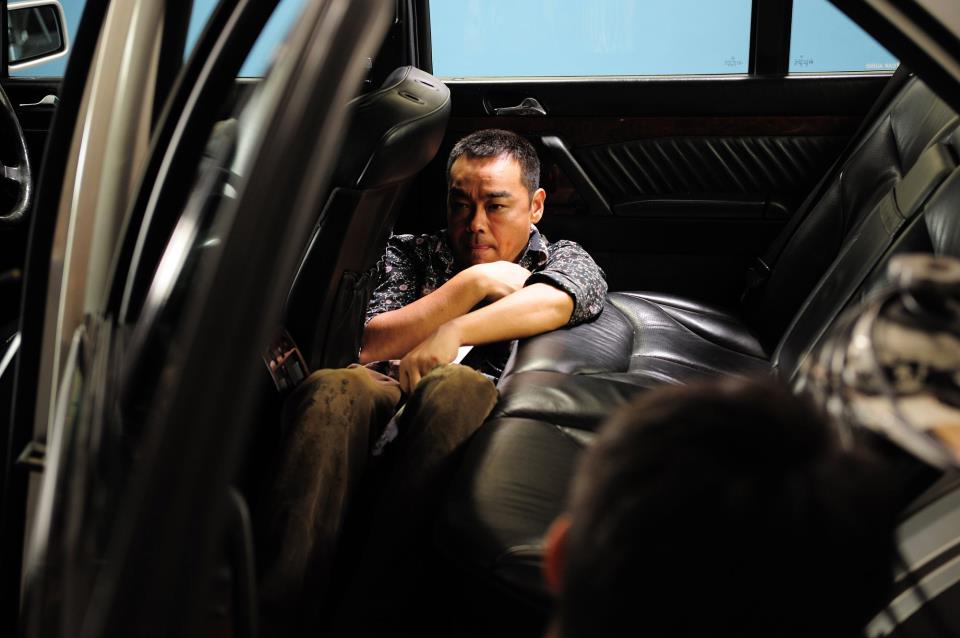
“I’m ready to get that Golden Rock guy when he gets in the car”
Before every awards live blog, I post my predictions for most, if not all, categories. This year’s Golden Horse Awards is no exception. So the below are my predictions for the awards.
Have no idea what I’m talking about? Check out my post from several days ago and get ready to join us for the Golden Horse Awards live blog!
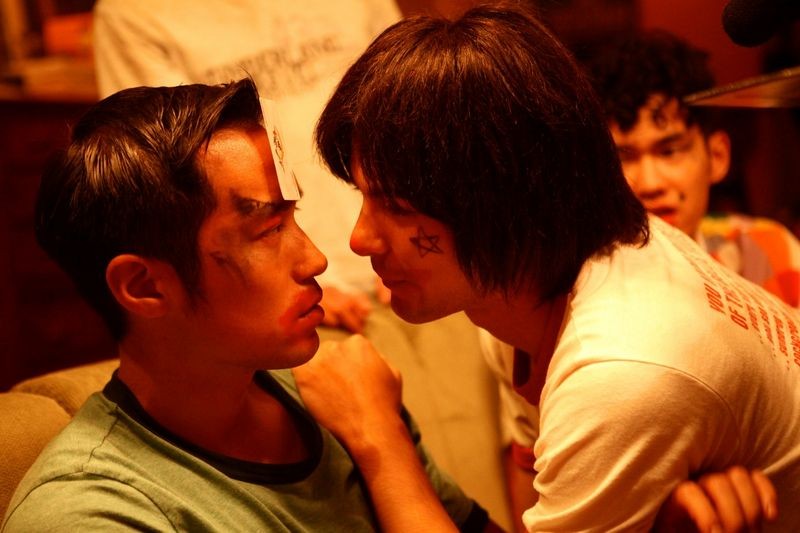
“If we had known that we’d be a frontrunner at the Golden Horse Awards, we would’ve made out a little longer! You know, for more votes!”
Best Picture
Nominees:
- Beijing Blues
- The Bullet Vanishes
- GF*BF
- Life Without Principle
- Mystery
Will Win: GF*BF
Should win: LIFE WITHOUT PRINCIPLE
Taiwanese films tend to have a slight advantage at the Golden Horse (for obvious reasons). Since the other four films aren’t significantly stronger than the Taiwanese entry, GF*BF actually does have a chance to take the top prize. However, in my own opinion, LIFE WITHOUT PRINCIPLE is the strongest of the five films - but just barely.
Best Director
Nominees:
- Gao Qunshu (Beijing Blues)
- Yang Ya-Che (GF*BF)
- Johnnie To Kei-Fung (Life Without Principle)
- Doze Niu (Love)
- Lou Ye (Mystery)
Will win: Doze Niu (LOVE)
Should win: Gao Qunshu (BEIJING BLUES)
In the past two years, the winner of the Best Director prize didn’t win Best Picture, and it would be no surprise if that trend continues this year. Note that Law Chi-Leung was not nominated, replaced by Doze Niu, which means that the committee must’ve saw something in Niu’s skill to juggle multiple plot strands and 10 major characters in a single film - even if that film wasn’t the top 5 films of the year. The GHA has made strange choices before, and Niu winning would not be their strangest decision (Aaron Kwok, I’m looking at you). Gao Qunshu picked up the Best Director prize at the Shanghai Film Festival for BEIJING BLUES, and it’s easy to see why from the film. I wouldn’t mind if Johnnie To wins, either.
Best Actor
Nominees:
- Joseph Chang (GF*BF)
- Lau Ching-Wan (Life Without Principle)
- Nick Cheung Ka-Fai (Nightfall)
- Nicholas Tse Ting-Fung (The Viral Factor)
- Chapman To Man-Chat (Vulgaria)
Will win: Joseph Chang (GF*BF)
Should win: Lau Ching-Wan (LIFE WITHOUT PRINCIPLE) or Nick Cheung (NIGHTFALL)
I’m going to insist that the Taiwanese entry in any major category with just one Taiwanese nominee has a better chance of winning. Since Joseph Chang actually does give the best performance in the film, and his category is in dead heat, I will predict that he will win. However, Lau has never won a Golden Horse award, and Nick’s dialogue-less performance is flashy award bait, so they might be the more deserving ones here. I think Chapman is just happy to be there.
Best Actress
Nominees:
- Bai Baihe (Love Is Not Blind)
- Hao Lei (Mystery)
- Denise Ho Wan-Si (Life Without Principle)
- Guey Lun-Mei (GF*BF)
- Sandrine Pinna (Touch of the Light)
Will Win: Sandrine Pinna (TOUCH OF THE LIGHT)
Should win: Pass
Not having seen TOUCH OF THE LIGHT, I don’t want to make a call about who should win. However, wouldn’t be surprised if Sandrine Pinna takes the award in Taiwan’s representative at the Academy Awards Best Foreign Film race. If you force me to choose one between the four that I’ve seen, I would take Hao Lei or Bai Baihe. Yes, I chose two.
Best Supporting Actor
Nominees:
- Chapman To Man-Chat (Diva)
- Bryan Chang Shu-Hao(GF*BF)
- Zhuang Kai-Xun (Stilt)
- Ronald Cheng Chung-Kei (Vulgaria)
- Wu Gang (White Deer Plain)
Will win: Ronald Cheng (VULGARIA)
Should win: Ronald Cheng (VULGARIA)
Ronald Cheng is the best thing in Pang Ho-Cheung’s comedy, and he also has the flashiest performance out of the four nominees I’ve seen in this category (Chapman was good in DIVA, though). Even with two Taiwanese nominees, they will have to be pretty damn good to beat Ronald Cheng here, and Bryan Chang was not good enough. STILT, however, seemed to have been well-liked at home, which could work in Zhuang Kai-Xun’s favor. I haven’t seen the film.
Best Supporting Actress
Nominees:
- Liang Jing (Design of Death)
- Amber Kuo (Love)
- Ivy Chen Yi-Han (Love)
- Mavis Fan Hsiao-Shuan (The Silent War)
- Dada Chen (Vulgaria)
Will Win: Ivy Chen or Amber Kuo (LOVE)
Should win: Liang Jing (DESIGN OF DEATH)
Forget Mavis and Dada, which leaves us the two LOVE actresses and DESIGN OF DEATH’s Liang Jing. Amber and Ivy are both fine, and should be likeable enough to get the votes. However, Liang Jing gave a flashier performance (without dialogue, too, if I remember correctly) and a better performance overall as well.
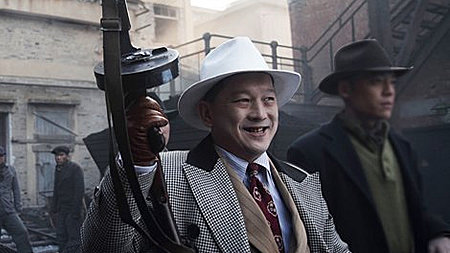
Despite not being nominated, Liu Kai-Chi will show up uninvited like this
Best New Director
Nominees:
- Tsai Yueh-Hsun (Black & White Episode 1: The Dawn of Assault)
- Yang Yi-Chien, Jim Wang (Cha Cha for Twins)
- Fung Kai (Din Tao: Leader of the Parade)
- Hero Lin (Silent Code)
- Chang Jung-Chi (Touch of the Light)
Will Win: Chang Jung-Chi (TOUCH OF THE LIGHT) or Fung Kai (DIN TAO)
Should win: Pass
Chang Jung-Chi has the country’s Oscar representative, while Fung Kai has the breakout hit of the year. BLACK AND WHITE was a total flop, I personally felt nothing for CHA CHA FOR TWINS, and I haven’t seen SILENT CODE or LIGHT. So I won’t be speculating on who should win.
Best New Performer
Nominees:
- Peijia Huang (Cha Cha for Twins)
- Chun-Mei Guo (Flying Dragon, Dancing Phoenix)
- Zhang Zixuan (Love Is Not Blind)
- Qi Xi (Mystery)
- Eric Lin Hui-Min (Starry Starry Night)
Will win: Peijia Huang (CHA CHA FOR TWINS)
Should win: Peijia Huang (CHA CHA FOR TWINS)
The only thing I liked about CHA CHA FOR TWINS was Peijia Huang’s dual-role performance. It seems to be the flashiest out of the five (I haven’t seen FLYING DRAGON), and it’s a well-liked film, so Huang is currently the frontrunner.
Best Original Screenplay
Nominees:
- Dai Yan, Gao Qunshu (Beijing Blues)
- Yang Yi-Chien (Cha Cha for Twins)
- Yang Ya-Che (GF*BF)
- Milkyway Creative Team, Au Kin-Yee, Wong King-Fai (Life Without Principle)
- Mei Feng, Yu Fan, Lou Ye (Mystery)
Will win: GF*BF or CHA CHA FOR TWINS
Should win: LIFE WITHOUT PRINCIPLE
The two Taiwanese films are likely favorites in a field where the quality is pretty even across the board (except for CHA CHA, in my opinion, but it has awards to tell me otherwise). PRINCIPLE is just a personal favorite. Also, MYSTERY should be in adapted screenplay.
Best Adapted Screenplay
Nominees:
- Xu Haofeng (Judge Archer)
- Guan Hu (Design of Death)
- Bao Jingjing (Love Is Not Blind)
- Tom Lin Shu-Yu (Starry Starry Night)
- Wang Quan-An (White Deer Plain)
Will win: LOVE IS NOT BLIND
Should win: LOVE IS NOT BLIND
Have not seen JUDGE ARCHER, so it has a chance of winning. However, if I have to choose one out of the four, WHITE DEER PLAIN is close for ambition, but LOVE IS NOT BLIND is the most successful out of the four.
Best Cinematography
Nominees:
- Wu Di (Beijing Blues)
- Song Xiao-Fei (Design of Death)
- Jake Pollock (GF*BF)
- Cao Dun (Love Is Not Blind)
- Reitemeier Lutz (White Deer Plain)
Will win: Jake Pollock (GF*BF)
Should win: Reitemeier Lutz (WHITE DEER PLAIN)
Lutz ought to win just because of scale and how attractive the whole package of WHITE DEER PLAIN looks. Otherwise, Jake Pollock has won before, and he should be in a good position to win again partly because of that. Plus, GF*BF is a very pretty film.
Best Editing
Nominees:
- Yang Hongyu (Beijing Blues)
- David Richardson (Life Without Principle)
- Chen Po-Wen (Money and Honey)
- Simon Jacquet (Mystery)
- Cheung Ka-Fai (Nightfall)
Will win: pass
Should win: Simon Jacquet (MYSTERY)
Not having seen MONEY AND HONEY, I can’t make a call on who should win. However, Simon Jacquet did a great job sorting out Lou Ye’s active camerawork, and I wouldn’t be surprised if he is recognized for his work here.
MYSTERY star Qin Hao waiting to hear the news outside the Golden Horse Awards venue, shovel in hand.
Best Art Direction
Nominees:
- Lin Mu (Design of Death)
- Yee Chung-Man, Ben Lau Man-Hung (Flying Swords of Dragon Gate)
- Mam Lim-Chung (The Silent War)
- Penny Tsai (Starry Starry Night)
- Huo Tingxiao (White Deer Plain)
Will win: FLYING SWORDS OF DRAGON GATE
Should win: FLYING SWORDS OF DRAGON GATE
Money buys you the best set, and that goes for FLYING SWORDS OF DRAGON GATE. Also, Yee and Lau picked up the same award earlier in the year at the Hong Kong Film Award, so it would be no surprise if they pull a repeat here. However, the
category is pretty even this year, with strong work in DESIGN OF DEATH and WHITE DEER PLAIN as well.
Best Make-up and Costume Design
Nominees:
- Stanley Cheung (The Bullet Vanishes)
- Lin Mu (Design of Death)
- Fang Chi Luen, Li-Wen Hsu (Love)
- Man Lim-Chung (The Silent War)
- Tim Yip Kam-Tin (Tai Chi 0)
Will win: TAI CHI 0 or THE BULLET VANISHES
Should win: TAI CHI 0 or THE BULLET VANISHES
Both films are heavier on the make-up end than the Costume Design part, but the teams on both films churned out strong work that’s apparent on screen. I’ll be happy if either of those two films win.
Best Action Choreography
Nominees:
- Xu Haofeng (Judge Archer)
- Cyril Raffaelli, Li Chung-Chi (Black & White Episode 1: The Dawn of Assault)
- Yuen Bun, Sun Jian-Kui, Allen Lan Hai-Han (Flying Swords of Dragon Gate)
- Chin Kar-Lok (Motorway)
- Sammo Hung Kam-Bo (Tai Chi 0)
Will win: JUDGE ARCHER or TAI CHI 0
Should win: MOTORWAY or FLYING SWORDS OF DRAGON TIGER GATE
Sammo Hung’s work is more clearly seen in part two of the TAI CHI trilogy, but he may get an award based on seniority here. I haven’t seen JUDGE ARCHER, but Xu Haofeng is a well-known martial artist who devotes his life to martial arts (he writes novels and is a co-writer on THE GRANDMASTERS). Nevertheless, Chin Kar Lok and his team deserves to be recognize for their car stunts in MOTORWAY, and FLYING SWORDS is a previous winner at the HK Film Awards.
Best Original Film Score
Nominees:
- An Wei, Wang Fan (Judge Archer)
- Teddy Robin, Tommy Wai (The Bullet Vanishes)
- Chen Chien-Chi (Love)
- Ding Wei, Lin Zhaoyang (Love Is Not Blind)
- Peyman Yazdanian, Johann Johannsson (Mystery)
Will Win: LOVE
Should win: Pass
The four scores here weren’t particularly memorable, so I will fall back to the Taiwan advantage and choose the Taiwanese film. I have not heard the JUDGE ARCHER score, so that win may happen as well.
Best Original Song
Nominees:
- “She & Me” (from Cha Cha for Twins)
Music: ciacia
Lyrics: ciacia
Performer: ciacia
- “Din Tao” (from Din Tao: Leader of the Parade)
Music: Lui Wei-Ren
Lyrics: Lui Wei-Ren
Performer: Alan Kuo
- “DoReMi” (from Romancing in Thin Air)
Music: Lo Tayu
Lyrics: Lin Xi
Performer: Sammi Cheng Sau-Man
Will win: DoReMi (ROMANCING IN THIN AIR)
Should win: DoReMi (ROMANCING IN THIN AIR)
Seen all three films, heard all three songs, and only remember one of them. DIN TAO has a better chance of winning than CHA CHA’s song, but I have a feeling Sammi will come out on top.
Best Visual Effects
Nominees:
- Frankie Chung (Black & White Episode 1: The Dawn of Assault)
- Kent Chen, Horn Hsu (Cha Cha for Twins)
- Wook Kim, Josh Cole, Frankie Chung (Flying Swords of Dragon Gate)
- Koan Hui, Chang Hongsong (Painted Skin: The Resurrection)
- Xiao Yang, Chang Song, A Law, Li Ming-Hsung, Li Jin-Hui (Starry Starry Night)
Will win: PAINTED SKIN
Should win: STARRY STARRY NIGHT or CHA CHA FOR TWINS
CHA CHA FOR TWINS did pull off the twins concept very well because of its special effects team, though their work are virtually invisible compared for PAINTED SKIN and FLYING SWORDS. STARRY STARRY NIGHT also used effects to good measure - a restrained, but fairly strong effort.
Best Sound Effects
Nominees:
- Frank Cheng (Black & White Episode 1: The Dawn of Assault)
- Phyllis Cheng (The Bullet Vanishes)
- Dong Xu (Design of Death)
- Kinson Tsang King-Cheung, Lai Chi-Hung (Nightfall)
- Traithep Wongpaiboon, Nopawat Likitwong (The Silent War)
Will win: BLACK AND WHITE
Should win: THE SILENT WAR or THE BULLET VANISHES
BLACK AND WHITE is an easy choice because of the action portions, but THE SILENT WAR has a very intricately designed sound mix (though it was far too soft when I saw it in the cinemas), and BULLET uses the sound to drive the tension, especially towards the end of the film.
I will be referring to these predictions throughout the night of the awards. I predict that I’ll get a lot of these wrong, but I did try to put in as much informed opinion in this as I can. If i come out over 50% right, I would’ve had a good night.
Hope to see you on on November 24th on Twitter!
Detective Hunter Zhang being told why LOVE IS…PYJAMAS should’ve been nominated for Best Picture
Posted in taiwan, awards | Comments Off
Saturday, September 3rd, 2011
(Note: This entry was edited on September 4th to fix a link. Also added one small paragraph about SEEDIQ BALE and an additional line about Zhao Baohua and the rating system)
- In the entertainment industry, you should always watch what you say publicly, especially when it might offend the powers that be. Of course, when you become one of those people, you can say whatever the hell you want, as long as it doesn’t offend the people above you.
Feng Xiaogang is one of those people. China’s most commercially successful director and a Huayi Brothers shareholder, Feng Xiaogang has always been an outspoken man, and this time, he is taking on China’s State Administration of Radio, Film, and Television
(Note: The following report is sourced and translated from multiple articles, which you will be able to find at the bottom of the entry. Yes, you will have to read Chinese to know which is which)
Remember when I blogged before about how many people get a share of total box office gross in China? I wrote that it is split (never evenly) amongst cinemas, distributors, and investors. However, what I didn’t know was that the SARFT takes 5% from the theatrical gross of any film that is publicly exhibited in China, in addition to the 3.3% revenue tax. The 5%, which goes to a government film fund that aims to help build film screening infrastructure in rural areas, fund children’s films, and fund “Main Melody Films” (I’m gonna have to start a glossary for these terms soon).
At least that’s what they say the fund does. Anyway, Feng, who is a member of the Chinese People’s Political Consultative Conference, recently attended a conference on the Chinese cultural industry and spoke about problems in the Chinese film industry. One of the problems, he said, is the way the film fund makes money.
He used the example of Huayi Brothers. The box office revenue for their films in 2010 was 1.7 billion yuan. After taking away the cinema’s share, money spent on promotion, production, taxes and various fees, the company made a profit of 80 million yuan. On the other hand, the film fund collected 40 million yuan from Huayi, which is already half their profit. Huayi is one of the most profitable film companies in China, so imagine how much this 5% hurts the smaller companies.
To help production companies and investors find an easier way to profitability, Feng suggests that the government should be paying for the work of the film fund, and SARFT should abolish the 5% tax. Yes, he went there.
And he didn’t just stop there, either.
Feng then went on to criticize the SARFT’s censorship process. Essentially, what he says is that the censroship process has come under heavy scrutiny by the audience, to the point where “SARFT examines films, while the people examines SARFT”. He also points out that the pressure from SARFT’s censorship ends up on the filmmakers, as the suggestions for cuts have reached the point of becoming laughable. Also, the audiences ends up blaming the flaws caused by these censorship cuts on the filmmakers.
Feng said even his AFTERSHOCK, which underwent changes from censorship, was heavily criticized for things that were ordered to be there due to SARFT censorship. In such an environment, directors have all flocked to historical films in order to avoid censorship troubles. As a result, Feng noted that there has only been a few “game changer” films in the Chinese film industry. As a result, he requested that the SARFT examines the negative effects of film censorship.
And then came the responses.
A representative for the film fund defends its tax, saying that 1) The film fund is designed to improve the Chinese film industry, and 2) This is a practice that has been done around the world, including France and Korea. In fact, according to the rep, some countries take even more than 5%! In other words,we do what we’re supposed to do, and it’s OK for us to do it because foreigners do it, too!
Still, the most useful thing this spokesman said was the five main functions of the film fund: 1) To renovate old cinemas, 2) Assist in the construction of cinemas, 3) Install digital projection in cinemas across the country, 4) Screen films in rural areas, and 5) “prepare for new technology in cinemas”.
Meanwhile, industry people like Huayi’s head Wang Zhonglei and Starlight’s Song Guangchang are naturally for abolishing the tax. Meanwhile, others have included alternatives like waiving the tax for films that cost less than 10 million yuan, or waiving the tax for Chinese made films and collect only from imported films. Good luck making that latter one work for co-productions.
As for the censorship comment, the head of LeTV suggests being more lenient on cuts for mid-to-low-budget films to “encourage creativity and explore unique topics”. On the other hand, director Fei Xing (of THE MAN BEHIND THE COURTYARD HOUSE) recounted the four months he dealt with censorship and ended up hearing audience criticized him for awkward SARFT cuts. He suggests that the censors should skew younger and take part in more communication with filmmakers.
Film critic/scriptwriter/SARFT censor Zhao Baohua defended SARFT’s work (though he insisted he does not speak for SARFT, but only for himself), saying that films are only undergoing “bottom-line examination”, meaning that as long as the film’s content don’t violate any laws, it will pass. As for films with sensitive topics and violence, SARFT will give their “suggestions” as a responsibility to film fans and the Chinese film industry.
Zhao said that the media is currently demonizing SARFT and the censorship committee for their work, because the films SARFT has halted productions on are bad films anyway. “When a film deviates from mainstream societal values and the market, the fault should not go to the censorship process. Instead, they [the filmmakers] should examine what went wrong with the film,” said the censor. He also felt that China is not ready for a rating system because it would mean that deviant category III films filled with violence and sex would make its way into Chinese cinemas. He even compared category III films to opium, saying “How can opium enter the market? That is absolutely unacceptable.”
Of course, being the SARFT, that fund is not likely to go anywhere, and censorship will be just as heavy, even if there’s a rating system. The government is intent of maintaining its authority over people, and it’s not about to lose the film industry’s influence over people for petty things like artistic integrity. Then again, maybe I’m just pessimistic like that.
- In other news of directors speaking out, Gordon Chan recently expressed his own concerns about the Chinese film industry at a recent event for his latest film MURAL. Chan was asked whether his film is truly worth watching, or is it just another bad film trying to force its way into cinemas to cash in on the emerging industry. He admits that there are many films with a higher budget for promotion than production to hype the film to death, only to disappoint audiences in the end. This is why he vows not to play that kind of game for MURAL. Yes, it’s quite obvious that Chan never played that game, especially since the production budget for KING OF FIGHTERS couldn’t possibly go any lower.
Anyway, the rest of is promotional fodder, so we’ll just skip all that.
- The 150-minute international version of Wei Te-Sheng’s SEEDIQ BALE (referred to as a “Chinese language film” in most mainstream Mainland Chinese media, by the way, without any regional label, despite what some western media say) had its world premiere at the Venice Film Festival, and review has been fairly mixed. Two Chinese-language review pretty agree that while its budget is clearly on the screen, the film in its current form lacks something to earn its “epic” label. One review even call it a live-action attempt at AVATAR (though Wei began developing the project long before anyone knew what AVATAR was).
Meanwhile, reviews on Variety, Hollywood Reporter, and Film Business Asia are also mixed, pointing the film’s violent and bombastic nature.
So SEEDIQ BALE may not be very good, at least in the form of a 150-minute film. But how is the media in Taiwan, where the film may become a game changer for its commercial film industry, reacting to all of this?
The Liberty Times and Yahoo News are focusing on the positive, reporting that the film was well-received at the festival screening with a 10-minute standing ovation, and that the producer proclaimed the price for North American rights immediately went up after the screening. They also reported the full, 4.5 hour version has been screened for the Taiwanese media, and that version was also very well-received, with applause heard at the very end of part two.
Meanwhile, Christian alternative media Awakening News Network and NOWNews reported that the film wasn’t well-received at the festival screening, and that applause was very scattered, as opposed to the 10-minute standing ovation many Taiwanese media reported.
It would appear that SEEDIQ BALE is being used as Taiwan’s own propaganda tool, promoted as the pride of the nation with a film industry trying to pick itself up from its previous failures. Is it great that SEEDIQ BALE can revive the Taiwanese film industry? Of course. It’d just be great if those news were true.
While one news report point out that 140,000 pre-sale tickets (amounting to a NT$40 million gross) has already been sold, film producer Lorna Tee told me on Twitter that the film is being opened on less screens than YOU ARE THE APPLE OF MY EYE and MONGA opened with. Meanwhile, a blog of someone who works in the Taiwanese film industry reports that the women seem to have no interest in the film. Considering Taiwanese blockbusters in recent years (APPLE, CAPE NO. 7, NIGHT MARKET HERO, and even the pretty boys-filled MONGA) all had to appeal to mainstream Taiwanese culture, and in a way, the female audience, a film about aborigines in what is essentially a foreign language filled with war, death, and destruction may not have the wide appeal it needs to become a hit.
Of course, with somewhat lowered expectations, the positive (and possibly inaccurate) news reports can simply be a last-ditch effort by producers to drum up hype for the film ahead of its opening. China does this all the time, to the point of planting stories in the media via underpaid journalists.
Part one of SEEDIQ BALE opens in Taiwan on September 9th. We’ll know what happens then.
- The excellent Hong Kong Film blog paid a set visit to the Patrick Kong-Wong Jing horror double feature HONG KONG GHOST STORIES recently, and the report revealed that the film will feature Chrissie Chau, Him Law, Bau Hei Jing, Juno Leung, and pretty much everyone else who was in Kong’s MARRIAGE WITH A LIAR. The film will feature two 45-minute horror films - one by Wong Jing and one by Kong - and it’ll be opening in Hong Kong around Halloween. I don’t imagine it’ll play in China, though. And if it does…well, we know what films about ghosts made for China are like.
- It’s not over yet. China is still rolling out some more propaganda films to celebrate the Chinese Communist Party’s 90th anniversary, and the latest one is TONG DAO ZHUAN BING. This one has attracted some attention because there have been reports that pointed out part of the cast is made of real-life government officials, which means the attention on the internet is mostly negative.
The film finally opened on August 30th, and a report on Sina Entertainment found that no one is watching the film. The reporter found that the film is being placed in early morning or late night shows in cinemas, and that some shows are even being cancelled due to low admissions. This means it’ll probably beat THE SMURFS this weekend at the box office.
When asked about how the film will make its 8 million yuan budget back, director Zhao Qi insisted that the film will ultimately succeed on word-of-mouth, and that the film essentially needs only 1000-2000 admissions per city to break even. He has also denied that the film features any government officials as actors, insisting that everyone in the film are professional actors.
- Under I read Weibo so you don’t have to news, legendary actress Brigitte Lin has joined both Tencent and Sina Weibo (I only use Sina). In one day, Lin has already attracted over 320,000 followers on her Sina Weibo. You can follow her here.
Next time: The Golden Rock at the 2011 Hong Kong Summer International Film Festival.
Sources
Awakening News Network
Cinephilia 1
Cinephilia 2
Hong Kong Film blog
The Liberty Times
Mtime 1
Mtime 2
Mtime 3
Mtime 4
Mtime 5
Mtime 6
Now News
Radio Taiwan International
Sina 1
Sina 2
Yahoo Taiwan
Posted in festivals, gossip, media, taiwan, China, Hong Kong, news, review, box office | No Comments »
Friday, July 15th, 2011
- Today’s focus story goes back to the “box office gouging” story popping up on the internet recently about BEGINNING OF THE GREAT REVIVAL. However, it seems like not many people (including the western press) know that this isn’t the first time it’s happened. An article in a lifestyle site has analyzed the trend, so here’s what they find, plus a little bit of my own insights:
On the opening day of WU XIA, some netizens reported that they were getting printed tickets for BEGINNING OF THE GREAT REVIVAL when they bought tickets for other movies. This so-called “box office gouging” has reportedly happened in a few cities, but no one knows the full extent of the practice. However, the CEO of Stellar Megamedia, a co-investor of Peter Chan’s WU XIA, said that the effect was actually minimal on its disappointing opening week.
This isn’t the first time box office gouging has been reported. According to the article, the first report of this happening goes all the way back to 2006, when Ann Hui’s THE POSTMODERN LIFE OF MY AUNT made only RMB 5 million, despite good word-of-mouth. The report quotes an “insider” who said that the box office gross for that film was actually split with other films in secret. The “insider” did not say what films they were.
Then, in 2010, CITY OF LIFE AND DEATH director Lu Chuan wrote an angry tweet on his Weibo, describing his anger when he saw a certain male company executive stood up at a meeting of film professionals and proudly proclaimed “the main-stream has actually made money!”. He angrily wrote that that the box office for that executive’s “main-stream film” was gouged from box office grosses from smaller films. Of course, Lu did not write what film, what executive, or what company.
The last time such box office gouging happened was in December 2010, when audiences at one multiplex in China reported over the course of two days that they got printed tickets to Chen Kaige’s SACRIFICE when they wanted tickets to MY NAME IS NOBODY. That was probably the first actual recorded case of box office gouging by netizens, but rumor of such practice goes back as far as 2005, when there were rumors of KUNG FU HUSTLE’s box office gross being gouged by Huayi Brothers’ A WORLD WITHOUT THIEVES.
Of course, the first party everybody blames is either the production company or the distributor (or in the case of REVIVAL, the government!). However, there are actually many parties on each film that benefit from a film’s success. The report directly points its finger to cinema owners. Typically, a Chinese film’s box office gross is shared by three parties - the cinema owners, the distributor, and the production company. The cinemas take the biggest share at 45-55%, and they can actually negotiate for a bigger piece of the pie if the film is a bigger release.
Now, let’s suppose that you’re a cinema owner that will be getting, say, a 55% of the gross for, say, BEGINNING OF THE GREAT REVIVAL. China Film Group tells you that they’re targeting a gross of RMB 800 million for the film, which means you’ll be picking up RMB440 million of that gross. So you line it up in your biggest auditoriums, give it half your total shows, expecting your local party members to show up and buy lots of drinks and popcorn.
Now suppose the film under performs.
As of Monday, July 11, BEGINNING OF THE GREAT REVIVAL has made only RMB 348 million, which is not only a ways to go before matching the gross of predecessor FOUNDING OF A REPUBLIC, but also a LONG way to go from the RMB 800 million target. If you find yourself only getting RMB 170 million out of the RMB 400 million you were promised from a film that’s giving you a higher percentage of the box office gross than other films that’s taking up your auditoriums now, what would you do?
The report goes to point out that it’s virtually impossible right now for Chinese production companies to send people out to monitor these practices because there are far too many cinemas in China (remember, it’s a big country, with lots of people). Also, the government has essentially bought into this ideology called free market and hasn’t done anything to monitor the practices of its film industry because of its rapid growth. The communication scholar quoted in the article essentially blames the government for not doing anything to crack down on dubious business practices in the film industry. Because seriously, who the hell would trust people to have a conscience or business ethics, right?
Of course, we’ll never know who is really behind these box office gouging practices, but I wouldn’t start pointing fingers immediately at China Film Group or the government just because one of the accused films happens to be a propaganda film celebrating the communist party’s 90th anniversary. Of course, they’re an easy target, but can China Film Group really send out a memo out to theaters all across China telling them to boost box office? And since we’re talking about the government being the puppet master here, why would they need to bother printing out fake tickets when they can simply get the numbers rigged?
Anyway, with netizens proving to be a more powerful monitor than any team sanctioned by production companies (WU XIA’s distributor immediately offered a cash reward for those who report box office gouging of their film, and they said they already allotted RMB 5000 - 1000 for each case), it’s not likely this type of behavior will become regular behavior.
HOWEVER, let me remind you that there are many shady practices in the film industry, including China’s, as well as its media. Hell, the report that I based this focus story on apparently literally steals portions from an older story (and maybe so on and so forth). There’s a possibility that we’re all being taken for a ride by PR firms, publicists, film distributors, media outlets, and even cinema owners. Right now, not even Peter Chan is willing to comment anything specific about possiblity of such practices, except he did say that he always found film distribution “very shady”. So, keep an open mind and just watch how things develop down the road.
- Some more Facebook pages of Hong Kong movies have opened:
Dante Lam’s big-budget actioner THE VIRAL FACTOR stars Nicholas Tse, Jay Chou, and Andy On. The film recently wrapped its shoot in Malaysia, and it’s not clear whether Lam will be shooting more in Hong Kong. The film’s shoot, unfortunately, has been on the news everyday due to the media’s coverage of the Nicholas Tse-Cecilia Cheung divorce. The film has yet to lock down a release date.
Wing Shya and Tony Chan’s LOVE IN SPACE is their follow-up to HOT SUMMER DAYS. Like SUMMER, the film will follow multiple love stories, and it stars Rene Liu, Aaron Kwok, Eason Chan, Guey Lun Mei, Angelababy, and Jing Boran. The 20th Century Fox production opens September 9th in China (and likely Hong Kong as well)
- Peter Chan and Takeshi Kaneshiro attended a promotional event for WU XIA in Beijing, and the film’s distributor released a deleted scene from the film online. The scene shows Takeshi Kaneshiro’s mental alter ego sparring with his investigator, played by Jiang Wu. The scene is amusing, but I can understand why it was cut from the film.
- In March, Huayi Brothers revealed a series of upcoming films called Plan H, including DETECTIVE DEE 2, YANG FAMILY, and Stephen Fung’s TAICHI (currently in production). Now, WINDS OF SEPTEMBER director Tom Lin’s STAR, starring Harlem Yu, Rene Liu and Xu Jiao CJ7), has locked down a November 4th release date. According to the news report, the film will be released day-and-date in Asia and North America. China Lion has a distribution deal with Huayi, so it’s not surprising that it will go to the states, but I have my doubts about Asia.
Another Plan H film getting ready to start production. Doze Niu (MONGA) is beginning a “test shoot” for his latest film LOVE, starring Shu Qi, Ethan Ruan, Mark Chao, and one more actress. While reports indicate that Vicki Zhao will be replacing Zhou Xun on the film, not even the media is willing to lock down who will be playing that fourth role.
And now, I read Weibo so you don’t have to:
- Musician Ah Niu, who made his directorial debut with ICE KAKANG PUPPY LOVE, has announced that his second film will be THE GOLDEN COUPLE. I imagine more info will come in a few days.
- Director Pang Ho-Cheung said that production has officially began on his LOVE IN A PUFF sequel, which is rumored to be called LOVE IN A BUFF
- Hong Kong producer Ng Kin Hung (GIRL$, HI, FIDELITY, the upcoming LAN KWAI FONG) is currently recruiting for his upcoming project about indie rock bands. Here’s the poster:
- And to end the week on a high note: Actor Ronald Cheng has returned to the set of Wong Jing’s latest film after his wife gave birth to his baby daughter. Chapman To apparently attempted to console Ronald being separated away from his newborn baby, and this is the result:
Next time: Why BEGINNING OF GREAT REVIVAL under performed, reading between the lines of China’s box office report, directors insisting their 3D movie really is 3D, and maybe some Korea/Japan news finally. Have a good weekend.
Sources:
China Times
ent.163.com
Film Business Asia
Lifestyle.com.cn
Mtime
Sina News
Yahoo News
Posted in actors, taiwan, China, Hong Kong, box office | No Comments »
Saturday, November 28th, 2009
For some reason, no Hong Kong television station is showing this year’s Golden Horse Awards live (does the lack of HK presence play any role in it?). So all I could do was watch the entertainment news channel and update the awards list as I go. Now that I find out it was simulcasted on the internet live, maybe I can live-blog it again next year.
Until then, here’s the winners list:
Best Film - No Puedo Vivir Sin Ti
Best Director - Leon Dai - No Puedo Vivir Sin Ti
Best Actor - Nick Cheung Ka-Fai - Beast Stalker and Huang Bo - Cow (tie)
Best Actress - Li Bingbing - The Message
Best Supporting Actress - Kara Hui - At the End of Daybreak
Best Supporting Actor - Wang Xueqi - Forever Enthralled
Best New Performer - Yu Shaoqun - Forever Enthralled
Best Original Screenplay - Leon Dai, Chen Wen-Pin - No Puedo Vivir Sin Ti
Best Adopted Screenplay - Guan Hu - Cow
Best Documentary - Cheung King-Wai - KJ: Music and Life
Best Editing - Cheung King-Wai - KJ: Music and Life
Best Cinematography - Cao Yu - City of Life and Death
Formoz Film Award - No Puedo Vivir Sin Ti
Formoz Filmmaker Award - Li Long-Yu
Best Art Direction - Face
Best Action Choreography - Ip Man
Best Original Score - Equation of Life and Death
Best Sound Effects - KJ: Music and Life
Best Visual Effects - Crazy Racer
Best Make-up and Costume Design - Face
Posted in taiwan, awards | 2 Comments »
Saturday, September 19th, 2009
A short entry before the weekend:
- Super-duper Communist propaganda movie Founding of a Republic (with 170+ stars) is looking at a record opening day with a half-day gross of 14 million rmb. Possible reasons? It’s on a record number of screens, it has China’s best known stars, and free/discount coupons were passed out around the country, which the studio can easily report as a full-priced sdmission? Or everyone in China might just be that patriotic.
- The film festival in Kaohsiung is now reconsidering its decision to show 10 Conditions of Love, the documentary on exiled Uighur figure Rebiya Kadeer due to fears of angering China.
- Meanwhile, the Tokyo International Film Festival has possibly succumbed to public pressure, though this time, the pressure is forcing them to show a film instead of not showing it.
- In keeping with the festival news, the Hong Kong Asian Film Festival has announced its picks this year, which include two opening films being distributed by Edko (parent company of festival runner Broadway Cinematheque) and a Sion Sono retrospective. Time to get busy!
And that’s it for tonight. More over the weekend.
Posted in festivals, taiwan, China, Japan, box office | No Comments »
Wednesday, July 22nd, 2009
- Taking over 120 screens (out of 190, according to this issue of Hong Kong Film Magazine), Harry Potter took in an amazing HK$23.2 million over its first 5 days at the Hong Kong box office. With one IMAX screen and a HK$10-inflated ticket price, did anyone not expect it to do this well? The good news is that it’s even doing better than Transformers II, because it’s obviously a superior movie.
On the other hand, Murderer didn’t get the historic 2nd week drop I was hoping for and made HK$4.2 million in its second week. With HK$9.4 million in the bank, don’t be surprised if it makes HK$15 million. In that case, I hope those audiences had a good laugh.
The only other thing close to competition against Harry Potter was the documentary KJ, and those nightly showings were sold out weeks ago. Night shows have been added again for a third time at a second theater - quite encouraging for a local documentary.
- And at the Japan box office, the great Harry Potter vs. Pokemon battle happened over the 3-day weekend, with Harry Potter winning soundly over those damn Pocket-sized monsters. Meanwhile, Amalfi, apparently Fuji TV’s most expensive film and now earning a complaint from the Japan Writer’s Guild because of a lack of writer credited for its screenplay (apparently director Nishitani and novelist Shimpo both denied credit because other people also participated in it. Via Ryuganji’s Twitter), debut at 3rd place. The crowded market pushed a whole lot of films lower down the chart, including Transformers II now down at 9th place.
- While the Japanese audience had the sense to watch a movie about a gangster high school teacher instead of Transformers, that kind of logic didn’t apply to the Chinese audience, who have decided to make Transformers II their highest-grossing film ever and turning their country into the highest-grossing territory in the world outside the USA.
- After winning the big prize at the Taipei Film Festival last week, Leon Dai’s No Puedo Vivir Sin Ti won the Grand Prize this week at Japan’s Skip City. Now I regret missing it at the Hong Kong Film Festival.
- In addition to letting former deputy directors make crappy films with Jackie Chan cameos, China’s film agency SARFT is now banning local dialects from historical dramas, portrayals of government leaders, and kids’s shows because they don’t follow the standardize Mandarin policy the government is pushing. This could spell trouble for the super-duper Communist movie coming in September, considering the Communist party’s earlies leaders spoke in heavy local dialects. Then the SARFT can criticize them for not being historically accurate! What to do, what to do…..
- At the Jeonju Fantastic Film Festival, Hollywood execs have agreed on one thing: If you don’t watch our English-language movies, we’ll invade you by making movies in your own language. Juding by Park Chan-Wook’s Thirst, that’s a good thing. Judging by Murderer, that’s a terrible thing.
- And in Jeonju, producers also decided that 3D is the way to go for Asian films. I just briefly watched Andrew Lau’s The Park on TV today, and I’m inclined to disagree with that assessment.
- Koji Yakusho will be leading the ensemble cast in Takashi Miike’s remake of Thirteen Assassins, which has just started shooting.
- The Hong Kong government has decided to turn Bruce Lee’s former Hong Kong home - now a love hotel - into a museum and has launched a design competition for it.
- Before Hur Jin-Ho can even complete his latest film, Japanese distributor Amuse Soft has already snapped up the distribution rights for it. With the star of A Moment to Remember and the success of April Snow, will Hur Jin-Ho score another hit for the Korean wave in Japan?
- After Stephen Chow dropped out, Sony is still moving ahead with The Green Hornet by looking at Nicholas Cage to play the villain. Michel Gondry and Nicholas Cage as the villain? It’s so brilliant it doesn’t even need Stephen Chow!
Posted in China, TV, taiwan, festivals, awards, Hollywood, Hong Kong, Japan, news, South Korea, box office | No Comments »
|
|
|
| |
| |
|
|
|
|
|
|
|
|
|
|
|
|
|
|
|
|
|
|
|
|
|
|
|
|
|
|
|
|
|
|
|
|
|
|
|
|
|
|
|
|
|
|
|
|
|
|
|
|
|
|
|
| LoveHKFilm.com
Copyright © 2002-2026 Ross Chen |
|
|