|
|
| |
|
Note: This blog expresses only the opinions of the blog owner,
and does not represent the opinion of any organization or blog
that is associated with Damn you, Kozo!.
|
|
Archive for the ‘Kozo's Mailbag’ Category
Thursday, April 23rd, 2009
Man, it’s been awhile. And it’ll probably be a lot longer before I write in this thing again because in a few short hours, I’m off to Italy. Again. My toys will miss me:
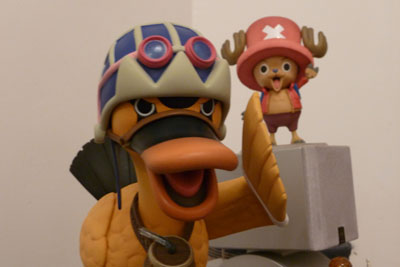
Carue and Chopper will guard my Blu-ray collection.
This year is the second year that I’m attending the Far East Film Festival. I get to go because I contributed to their catalog and book, plus I’m fortunate enough to have saved enough money for a plane ticket. This is a special time of the year because it represents the end of a lot of stuff. The Hong Kong International Film Festival is over. The Hong Kong Film Awards and associated drama is over. The LoveHKFilm Awards and all the related busywork is over. All that’s left is the review writing, which I’ll get to when I get to. That’s what 2009 is about for me: not doing more than I have to.
(more…)
Posted in Awards, Donnie Yen, Toys, Chow Yun-Fat, Celebrity Photos, Kozo's Mailbag, Andy Lau | 11 Comments »
Tuesday, December 2nd, 2008
NOTE: For this edition of Damn You Kozo, I’m combining a number of topics I was planning on writing separate blog entries about. Due to various reasons it’s been difficult getting anything off the ground, so I figured it was everything or nothing. Sadly, I have too many ideas to list everything, so why don’t we go with just five? Sounds like a plan.
Anyway, let’s get this over with.
Abandoned Blog Entry #1
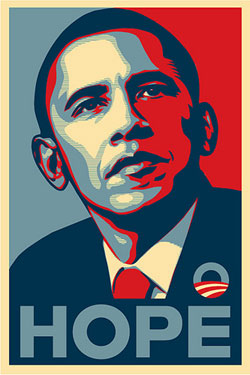
OBAMA WINS, I CONSIDER MOVING BACK TO THE UNITED STATES
This is kind of cool:
(more…)
Posted in Aaron Kwok, LoveHKFilm Issues, Donnie Yen, Film Festivals, Stephy Tang, Twins, Kozo's Mailbag, Chow Yun-Fat, Celebrity Photos | 19 Comments »
Wednesday, August 6th, 2008
Like The Dark Knight, this edition of Kozo’s Mailbag is a sequel.
A reader named David sent me the following:
You should review The Dark Knight
Here are the reasons why:
1) I want to hear your opinion
2) Edison Chen is in it
3) Some of the action is set in Hong Kong
4) The low amount of Hong Kong movies
David is right about points #2-4, though I question why he cares about point #1. Still, his question was echoed by comments at the LoveHKFilm Facebook group, the LoveHKFilm Community, and on Damn You, Kozo itself. My original response was some jokey review of the 10 minutes that took place in Hong Kong, but that likely was not the answer that people were asking for.
So, here’s the rest of the story. Excuse my long-windedness, but this is what happens when you ask me my opinion of a movie, Hong Kong or otherwise. To make matters worse, I refuse to be that thoughtful and insist on posting my comments without editing for coherence, clarity, or spoilers. You reap what you sow.
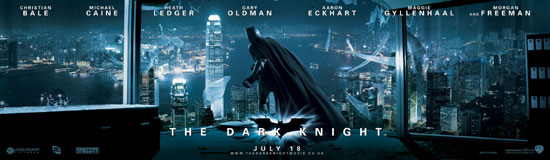
Batman invades Hong Kong right in time for the Olympics
My short answer: The Dark Knight is a great movie, and worthy of most of the praise it’s getting. I believe its success lies more in content than in form, but the form is still pretty damn good and either way you slice it, this is a triumph for the comic book film genre. Comic books have not been your granddad’s funny books for up to forty years, and it’s great that film adaptations of comic book heroes are finally maturing. This is an exceptional case because The Dark Knight isn’t Sin City or 300, i.e. it’s not based on a completely dark media property. Batman has seen interpretations that range all over the spectrum, and some of them were more than a little cartoony. This is easily the character’s darkest depiction outside the four-color printed form, and as an audience member, I’m grateful for it.
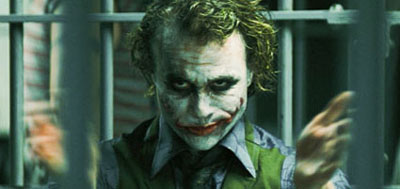
A round of applause for everyone
Now for the long answer.
The Dark Knight is the best live-action Batman film, if not the best comic book film ever made. Christopher Nolan and company actually delve into the character beyond just his origin, and don’t reduce him to a masked foil facing an over-the-top cartoonish villain. The Dark Knight explores what it takes to be Batman; the billions of dollars and kickass technology help, but it’s Bruce Wayne’s sacrifice and will that make it possible to put up with all the crap that Batman has to. The filmmakers doesn’t trivialize the character, and actually attempt logic and reason in their exploration of the Batman character and his world. Batman is put in tough moral positions in the film, and his methods and choices aren’t always as successful as they are telling and appropriate. He discovers the consequences of putting on a mask to fight crime, and chooses to push forward because that’s what his crusade requires. The film is as faithful a live-action representation of Batman as we’re ever likely to see. For a lifelong Batman fan, The Dark Knight is a gratifying motion picture.
For everyone else? Maybe not. I’m actually a little surprised at how much positive press The Dark Knight has been getting, because this is not a film for families or audiences looking for anything remotely warm-and-fuzzy. I maintain that good times are still the primary attraction for the mass audience, and as such, it’s strange that this dark, violent, and pessimistic film would be getting so highly rated over, say, Wall-E, which manages to have its cake and eat it too. Wall-E is a thoughtful, intelligent, and also funny, heart-warming, and happy little movie. Frankly, I liked Wall-E more than The Dark Knight - but maybe that’s because deep down, I’m a sap.
Also, Wall-E’s depiction of a junk-filled Earth reminds me of my apartment.
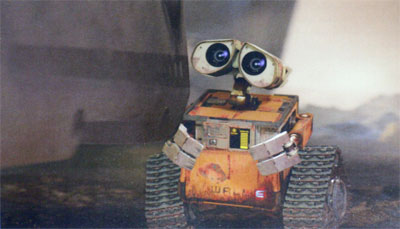
This movie is pretty good, too
The Zeitgeist should get some of the credit for The Dark Knight’s popularity. Aside from the Heath Ledger factor, much has been written about The Dark Knight’s brilliance in encapsulating the War on Terror and the fallout from 9/11 into its complex, borderline confusing narrative. An article in the Wall Street Journal even interprets Chris Nolan’s Batman as a metaphor for George W. Bush. I would puke if I weren’t laughing so hard. Dark Knight does possess many themes and ideas that make intriguing metaphor for the War on Terror, and willing cinema readers and columnists should have a field day looking for a hidden agenda. There’s even a column out there talking about the significance of dogs in the film. I predict that many film theory teachers will soon receive a deluge of Dark Knight papers.
I think some of the discussion is overblown; sometimes a cigar is just a cigar. The film’s themes completely make sense for Batman, and have appeared in one form or another in the comics. Christopher Nolan and the writers (Jonathan Nolan and David Goyer) swipe from nearly 70 years of comics history, and while current events undeniably influenced Nolan’s cinema interpretation, reducing the film to a simple “Batman is George W. Bush” message ignores the character’s published legacy. George W. Bush is not as self-punishing a hero as Batman, and Batman’s problems aren’t as complex as George W. Bush’s. Also Batman takes fewer vacations.
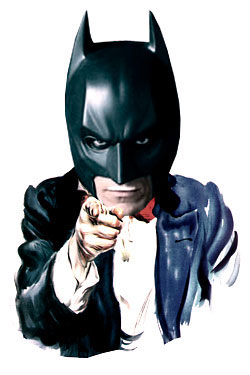 | |
Fight the War on Terror and wear a kickass mask
However, Dark Knight has rightly been called out by parents groups warning of its inappropriateness for younger teens and kids. This film has disturbing images and themes, and possesses an intensity that goes beyond the stereotypical comic book film. The film is more than a little frightening, and I do feel for the disturbed tykes. However, as a film and comic book fan, The Dark Knight is a fantastic step forward for the super hero film genre. Comic books are our modern day myths, and deserve greater respect than as fodder for box office receipts, ancillary merchandising sales, and thinly-supported op-ed pieces. The Dark Knight succeeds in large part because its director wanted to make a Batman film on both his AND the character’s terms. The property is twisted slightly to fit Nolan’s realistic take on Gotham City, but the spirit and themes are faithful to the character and his source material.
If you’re a parent, though, I suggest you see the film first before piling your kids into the minivan for a family viewing.
He wants to watch The Dark Knight too.
Ultimately, I don’t think the film has a truly exceptional point of view, meaning it’s not really trying to give us a singular, overriding message. It gives time to various stories, themes and ideas - some could argue too many to efficiently process - but this, I think, is ultimately a strength of the film. The Joker, Batman, Harvey Dent, Commissioner Gordon, even Alfred - all of these characters offer different points of view in The Dark Knight’s exploration of justice, heroism and morality, and something worthwhile can be gleamed from each and every one of them. This is a great movie in large part because it possesses so much to think and talk about, even though it may not be saying anything that definitive. Postmodern superhero comics have arguably found their greatest impact when dissecting the role of the hero in our cynical times. Graphic novels like Watchmen and Frank Miller’s Dark Knight Returns are so fascinating because they take the superhero archetype and apply it to politics and the current cultural climate, and address the difficulties that come with seeking justice in a complex, compromised society.
Typically, revisionist Batman comics end up with a scene like this:
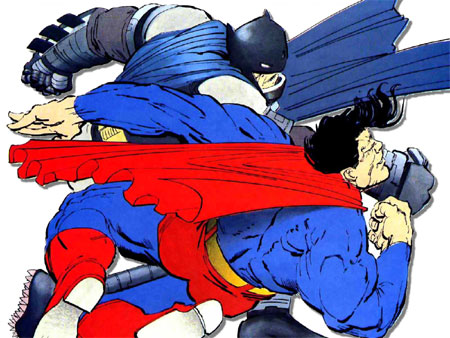
Batman has little patience for a tool of the Man
Not that The Dark Knight is perfect, because few films are. At two hours and thirty-two minutes, the film is a long haul, and could tax more than a few audience members with its enduring grimness. Christopher Nolan still needs some help in the action department; much of the action is difficult to follow, and is punctuated in a way that sometimes deflates the action (the flipped semi-truck is one large exception). Still, this falls into Nolan’s realistic take on the character, and Dark Knight one-ups Batman Begins by giving most of the action an emotional reason for occurring. Characters are put in peril, revenge is sought, and the stakes are considerably more felt. The film successfully creates the impression that anything - good or bad - can happen to its characters, and gives their choices and situations emotional weight beyond the expected good vs. evil stakes.
The actors are uniformly very good. I’d just be echoing every other person in the universe if I praised Heath Ledger’s frightening take on the Joker more, and Christian Bale is perhaps too good as Batman, in that much of the time, his character is also acting, if not as Batman (complete with that overdone, growly voice), then as his superficial playboy alter ego Bruce Wayne. The supporting roles are frequently well-written and the actors not wasted. The story is also very complete, though not without numerous plot holes that could easily be challeneged. Then again, plot holes are something that are unavoidable in a film of this size and scale, and The Dark Knight never resorts to convenience to move the plot along. The film isn’t boring either, and Nolan makes judicious and very effective use of cross-cutting, raising the stakes and upping the tension of his film smartly. There’s a lot to follow in Dark Knight, and while it’s not always easy, the tension and emotion are very well conveyed.
For a commercial film, The Dark Knight has guts, and the perfect storm of media coverage and marketing have apparently prepared people for it. It’s a smart, dramatic, and compelling piece of blockbuster entertainment, and sells pessimism and tragedy because that’s what the story and situations require. At the same time, it delivers some great action film moments (I found the debut of the Batpod to be exceptionally cool). Audiences have responded incredibly well, though I do question the overwhelming public acceptance (I’m waiting for the film to fall out of the #1 slot on IMDB’s Top 250). If the film does receive some of that discussed Oscar consideration, it would be healthy. Popular entertainment should not be excluded from serious awards consideration simply because it’s for the masses. It may not win Best Picture, but I’d be okay with seeing it in the Top 5.
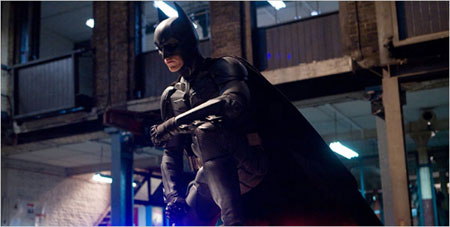
Best Picture Oscar, here we come!
Then again, I’m a massive Batman fan, so my opinion on this movie could be totally, completely out-of-bounds. Hell, I’ve seen it three times and will be checking it out on IMAX in two weeks. You’re welcome to completely disregard my comments on this film. I’ve been a fan of the character for way over 20 years, so if someone wants to tell me that I’m clouded by obvious bias, then they’re welcome to. That’s what blog comments are for.
As proof of my fandom, I own this:
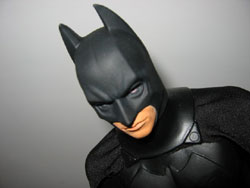
Complete with alternate Christian Bale head
And this:
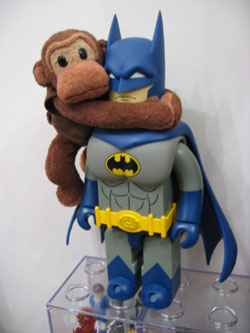
Monkeys love Batman
I also preordered this:
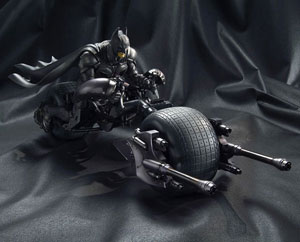
I have no idea where I’ll put this
Yotsuba and the Thing approve:
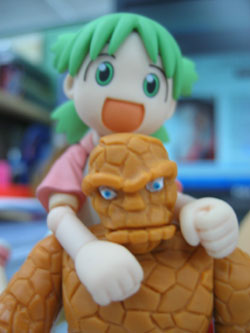
Soon, they’ll have more friends to play with
About the other Dark Knight issue
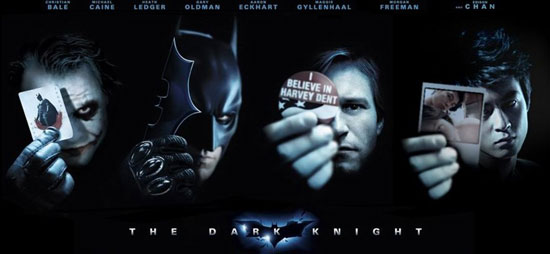
Edison Chen: pwned
The above graphic came from a bulletin board here in Hong Kong, and is easily the best thing about Edison Chen’s involvement in The Dark Knight. Honestly, it’s bizarre that Edison Chen took this part because it’s a total nothing role, and one wonders what he hoped to accomplish with this minor appearance. The part is so inconsequential that it’s beneath mention, and the only reason that anyone would bring it up is to wonder why Edison even bothered to appear in the film. Surely it couldn’t have been because he matched the skills of the rest of the cast.
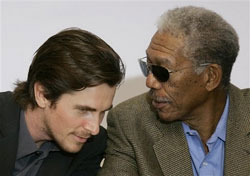
“Edison Chen is in this movie, too?
We’d better bring our ‘A’ game!”
I’m operating from memory here, but I seem to recall that when Edison’s appearance was first bandied about way before Sexy Photos Gate, he was reported as saying that he wasn’t going to take the role because it was so small, but changed his mind because the director asked for him personally. Really? Did Christopher Nolan really say, “Edison Chen, please play Security Guard #1?” Honestly, I find that very, very, very hard to believe.
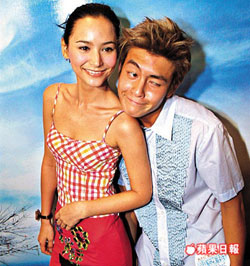
This photo convinced Christopher Nolan
to cast Edison Chen in The Dark Knight
It’s easier to believe that Edison took the role because he’s a Batman geek like untold millions of guys are, but if that’s the case he should have simply owned up to it. He would have earned much more cred with people had that been true. As it is, he was recently dissed on the radio by Sandra Ng and Lee Lik-Chee, who asked the question, “Why did Edison choose to appear in the film?” Basically, the part makes Edison look like a bit player, and not the A-list Hong Kong star he’s been reported as.
Besides, he was out of focus. True, maybe he was going to be in focus before Sexy Photos Gate, but how much could the role of “Security Guard #1″ have been expanded? Maybe he also directed Lucius Fox to the bathroom, or opened a door for him. Someone recently suggested to me that maybe they cut a fight scene between Edison and Batman. While it would have been great to see Batman whale the tar out of Edison, I seriously doubt it’s on the cutting room floor. If deleted scenes reveal something different, I will gladly apologize and shut down LoveHKFilm.com as penance.
Wrapping Up
To finish this Batman-themed megapost, here’s a random memory:
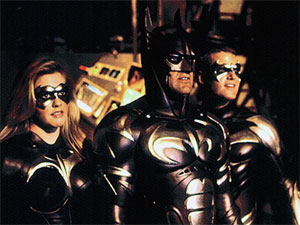
Damn You, Kozo! You could have prevented this.
Back in 1994, I was working as an intern on the Warner Bros. lot and I delivered a package to the office of some director who had recently arrived on the lot. That director: Joel Schumacher. His new project: Batman Forever. I handed the package to his assistant, but I recall seeing Mr. Schumacher sitting in his office, feet propped up on his desk, and talking on the phone. At the time, I thought, “Wow, this guy is going to make the new Batman movie!” I was actually quite excited at the thought.
Had I knew then what I know now, I could have sprinted past his assistant and given him a severe Korean gangster film-inspired beating, thereby preventing him from ever destroying the franchise. Hindsight is a bitch.
Had I done the smart thing in 1994 and kneecapped Joel Schumacher, it would have landed me in jail. I would have been branded a criminal - a guy who attacks big-time Hollywood directors without provocation. But, if I had succeeded I would have spared the still-fledgling Internet generation from the horror of two Schumacher-directed Batman films. More importantly, the Batsuit-with-nipples and its omnipresent Internet meme might never have existed.
I could have been an unknown, unappreciated, and unheralded hero. Hey, just like Batman in The Dark Knight!
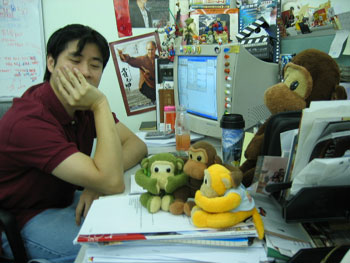
Sadly, I’m just a guy with a bunch of stuffed monkeys on his desk.
That’s it for Batman, who is hereby being served with a LoveHKFilm Embargo™, meaning we’ll be banning him from this website for a good long while. Batman is not Asian film-related, so he shouldn’t be wasting our time. This is the last time I’ll talk about Batman on this blog.
Unless I buy more toys. Or it’s related to Edison Chen.

He lived to become the villain
Posted in Toys, Hollywood movies, Sexy Photos Gate, Edison Chen, Kozo's Mailbag, Random Crap | 17 Comments »
Thursday, July 31st, 2008
In an amazing cosmic coincidence, three people asked me this question, one on the LoveHKFilm forums, one on the LoveHKFilm Facebook group, and one via e-mail. The idea was also mentioned in a previous blog comment, so what the hell - I’ll bite. Also, it now qualifies as an installment of Kozo’s Mailbag.
The question: What did I think of The Dark Knight?
There happen to be Hong Kong elements in Christopher Nolan’s insane blockbuster, so this blog entry actually qualifies as Asian film-related. In an effort to stay even more on topic, I’ll just review the Hong Kong portion of the film.
THE DARK KNIGHT (2008)
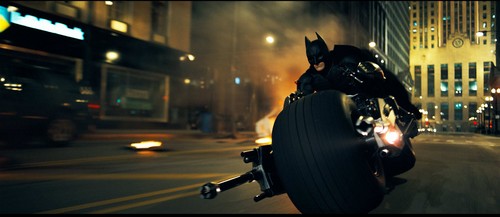
A scene cut from The Dark Knight: Hong Kong Segment.
The Skinny
Batman kicks ass in Hong Kong, and not much else. Christian Bale makes a fine Caped Crusader, but I wish the movie was longer than 10 minutes. Featuring a blurry Edison Chen.
The Review
The Dark Knight opens with businessman Lucius Fox (Morgan Freeman a.k.a. God) landing on top of the Peninsula, after which he checks into security at IFC Two and unwittingly hands his mobile phone to - holy crap, it’s Edison Chen! Hopefully, Lucius deleted any incriminating photos off his phone, because Good Ol’ Ed has the worst luck handling digital technology.
Apparently, Ed has been hiding in IFC Two following Sexy Photos Gate, where he stays under the radar by pretending to be a security guard. He does such a good job of staying unnoticed that cinematographer Wally Pfister doesn’t even put him in focus. Ed: you’re a master of disguise.
Anyway, Batman (the ever-personable Christian Bale) shows up and takes a header off of IFC One to glide into IFC Two. I originally thought the Caped Crusader was taking a Hong Kong trip to extradite Edison, who’s wanted in at least twelve territories for ruining the Hong Kong Entertainment industry, but Batman drops the ball and instead apprehends some guy named Lau (Chin Han), who’s hanging out in IFC Two like all white-collar criminals in Hong Kong do.
Batman’s exact reasons for grabbing Lau are unknown, but Hong Kong looks mighty fine on the big screen, thanks to the huge electric bill they rang up by keeping all the lights on at night. Batman takes out a bunch of useless Asian gangsters and makes off with Lau, though the actual action is a little too murky to get excited about. Unfortunately, neither Danny Lee nor Michael Wong makes a cameo as a Hong Kong Cop Who Breaks All The RulesTM. Instead, the producers just hired some guy to play the main HK cop. At least he’s in focus.
My main gripe with The Dark Knight is that Batman did not complete his Hong Kong trip by dangling Edison Chen from the Bank of China building. Frankly, if anyone in Hong Kong needs to be brought to justice, it’s the people behind Gen-Y Cops. Hopefully in the third film, Batman hangs out in Hong Kong for an extended run to beat up Benny Chan, Stephen Fung, and the rest of the guys at Media Asia - especially the person who wrote the immortal line, “See you at the Jumbo.”
Some suggestions: Maggie Q shows up as Catwoman and Sam Lee replaces Cillian Murphy as the Scarecrow. The film should also feature a 10 minute IMAX sequence in Los Angeles, where Batman will zip in on the Bat Jet Ski and kidnap Paul Rudd from The Coffee Bean in Santa Monica. Nic Tse must play Robin, and should be given a chance to fight Edison Chen on top of IFC One. I say no safety cables or stunt doubles. Winner takes all, i.e., the complete set of photos and Cecilia Cheung. If they recast the Joker, it can be Juno Mak, who should get some personal time with Edison to settle some scores. The gross will be less than The Dark Knight, but should pass CJ7’s HK gross handily. I’d see it. (Kozo 2008)
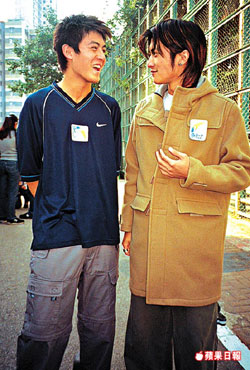
“Dude, we’re in the sequel!”
Notes
- In retrospect, maybe this wasn’t so funny. Frankly, not much on this site is. As evidence, you can randomly select any page.
- Perhaps I’ll return in a day or two to write about what I think of the rest of the film. I will hopefully have seen the film in IMAX - and if it happens it’ll be the third time I’ve gone. I’ll even talk more about Edison.
Posted in Sexy Photos Gate, Kozo's Mailbag, Random Crap | 10 Comments »
Wednesday, July 16th, 2008
LoveHKFilm.com reader Petra asked this question a couple of months ago after the first installment of Kozo & Yotsuba in Italy - which, by the way, has yet to see a second installment because I got too busy with work and lots of review writing. And when those things finally dried up, we had this monstrosity descend upon Hong Kong:
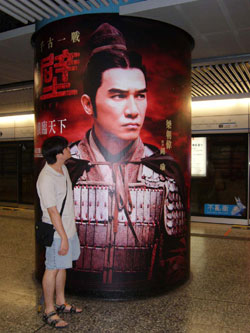
Some random individual gawks at
Tony “Tiger Face” Leung from Red Cliff
Petra’s question was, “Who is Yotsuba?”
While not an Asian film-related question, it happens to be a very appropriate one, because I featured numerous pictures of Yotsuba in that earlier blog entry. Doing so was wrong of me, because I incorrectly assumed that anyone who dropped by this blog either A) knows who Yotsuba is, or B) won’t care one way or another. As this is Damn You, Kozo! and not something anyone would confuse with a quality blog, I figured I would be safe without the explanation.
Well, I was wrong. And even though a simple search can lead you to Yotsuba’s Wikipedia page, I thought I’d explain it here.

Yay, Yotsuba!
Yotsuba is the name of a mischievous little girl created by Kiyohiko Azuma, the manga creator and all-around genius who also created a fun little gag manga called Azumanga Daioh. Yotsuba stars in the manga Yotsubato!, which basically translates as “Yotsuba &!”, with the ampersand connecting his main character to any number of things, including firecrackers, presents, global warming, flowers, and other things that may pop up in everyday life.
What makes Yotsuba interesting and fun is simply her interaction with everyday things, and the surprising honesty, impetuousness, and rampant misunderstanding that a child may display when dealing with things like school projects, ice cream, strangers, the supermarket, next-door neighbors, and trips to the beach. Yotsuba also has a bizarre green hairdo that represents a four-leaf clover. In Japanese, “Yotusba” means four-leaf clover. There’s your language lesson for the day.
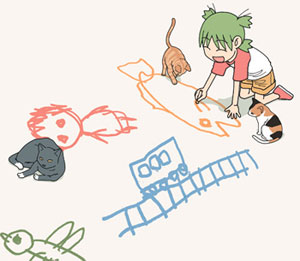
Yotsuba and Cats
The manga’s motto is “Enjoy Everything”, which explains it far better than I ever could. Both Yotsuba and the stars of Azumanga Daioh have made appearances on LoveHKFilm.com before, namely as featured images on the old Life with Kozo pages. I dumped them there because I enjoy both immensely; both share the same whimsical and frequently unexpected sense of humor, and both are free of fan service, violence, or any of the extreme subjects sometimes associated with Japanese manga and animation.
Please remember, not everyone who likes Japanese animation is a pervert. I include myself in that category, though I have been referred to as a pervert on the Internet before. Fitting enough, it was a comment made on some Ekin Cheng forum somewhere.
The gun is sold separately:

“This is for all those Ekin fans! Die, Kozo!”
Anyway, Petra also asked where she can get her own Yotsuba action figure. A Yotsuba Revoltech Action Figure can be purchased from YesAsia.com or any number of online retailers, though there’s not that much Yotsuba schwag currently available. There is, however, a very nice calendar that combines photography with color illustrations of Yotsuba, placing Kiyohiko’s fictional mischief maker into a real-life context that perfectly summarizes her adventures and appeal.
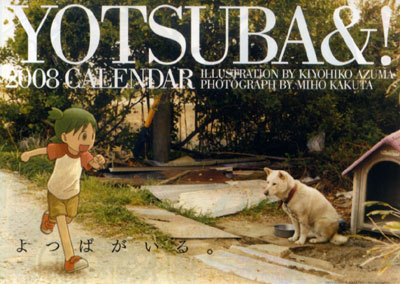
Unfortunately, it’s sold out
Yotsuba isn’t about wacky hijinks or over-the-top strangeness; it’s a simple manga that’s fun, familiar and even comforting, and there’s lots to enjoy in the character’s minor adventures. I said as much to Petra in my earlier email, and soon she got her own Yotsuba action figure, and even picked up a few issues of the manga.
She sent me a picture, too:
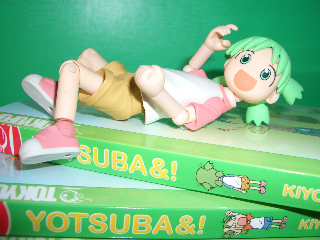
“I’m everywhere!”
This picture proves that this blog can make a small difference. At the very least, it’s probably done more than the actual LoveHKFilm website has recently. The next goal of Damn You, Kozo: persuading everyone that Hong Kong film is not dead. The first person I’ll try to convince is myself.
Anyway, I hope everyone who reads this becomes a fan of Yotsuba, too.
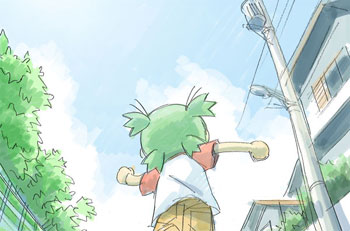
“See you next time!”
Posted in Totally Unrelated, Toys, Kozo's Mailbag | 9 Comments »
Monday, January 14th, 2008
Today I’m going to start another feature on this blog, called Kozo’s Mailbag. It is what it sounds like: answers to actual e-mails that I receive. For something to qualify for Kozo’s Mailbag it has to ask a question that A) I think may be interesting to more than one individual, B) be something that can’t be easily researched via Google, and C) not have anything to do with contacting a celebrity. If you have a question that qualifies, go ahead and send it in here.
Also, as is a non-tradition around here, I’ll try to keep my answers short. However, this very first edition of Kozo’s Mailbag is very appropriate for the site because it’s one question composed of six separate ones. So, unlike the site’s reviews, keeping it short is pretty much impossible. I apologize in advance. If you’d like, you can simply not read it. Also, the question critiques my review of Peter Chan’s Warlords, and was sent in by a reader who has also seen it. As such, it may contain spoilers. Proceed with caution.
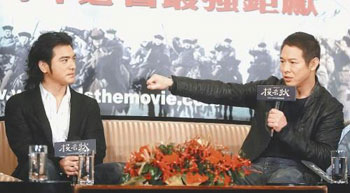
“Takeshi, hold out your hand and close your eyes.”
Anyway, Mei San of Malaysia asks:
Referring to your review of The Warlords, there are some questions that I hope to raise.
1. Why doesn’t the review elaborate on the actors’ showmanship? Personally, that is the most crucial element of this movie considering the fact that Peter Chan primarily wants to portray details on the three very different characters of Pang, Zhao and Jiang.
About the acting in the film, I didn’t elaborate on it because I was not exceptionally impressed by it. More than anything, I felt it was overwrought. Andy Lau played his character charismatically, but it wasn’t much of a stretch for him, and his character was easily the least complex of the three. In Takeshi Kaneshiro’s case, he seemed to be more insane than conflicted, which really reduced my sympathy for him. I felt the part could have been handled better, though I’m not sure if the fault is Kaneshiro’s, Peter Chan’s, or perhaps that of the eight(!) screenwriters.
Only Jet Li really impressed me, because I felt he was able to carry the film without leaning on martial arts sequences. In most Jet Li films previous to Hero or Fearless, a lot of the time between ass-kicking sequences could be considered filler. It’s not like anyone went to see those movies to check out the burgeoning relationship between Jet and Chingmy Yau or Bridget Fonda. But in Warlords, we follow him with no promise of any real action sequences, and he keeps us with him throughout. I think this role is career-changing for Jet Li, because now he may be able to take on roles that don’t require heavy action. Jackie Chan, however, still hasn’t solved his similar problem.
Another reason I didn’t elaborate on the acting was that the review was already getting pretty long, and rather than comment further, I chose to encapsulate it in a few sentences in the beginning and the end, and then put this one to bed. Usually I try to comment on the acting, but I have to admit, with time being what it was, and the review starting to drag on, I thought I could skip it with Warlords. But I should realize that people do want to hear about the acting when the stars are as big as Andy Lau or Takeshi Kaneshiro. I’ll make note of that for next time.
2. The review points out an interesting point that Peter Chan did not manage to exploit the historical Taiping Rebellion to enhance his movie. But is there really a need to harp on the Taiping Rebellion? Perhaps all Peter Chan wanted the Taiping Rebellion was just as a setting and nothing more. After all, this is a movie on brotherhood rather than a movie on the history. Moreover, won’t a heavily historical movie be parochial in terms of plots and character descriptions, resulting in a movie like, perhaps, The Soong Dynasty?
I don’t feel there was really a particular need for Peter Chan to harp on the Taiping Rebellion. I just felt that given certain details presented in the film (Xu Jinglei’s crucifix, the messianic enemy general), some extra info could have been effective to explain those details to non-Chinese audiences. Providing some explanation could have made the film richer for history-impaired audiences.
This is purely my opinion, however, and not something that should be considered a flaw. It’s not like I disliked the movie because of this point. On the other hand, I do think there was a missed opportunity there to at least bring more in. Other than brotherhood, the concerns of the characters are largely human ones, and the contrast between the religious dogma of the Taiping and the bandits’ material needs would have been interesting. But was it be necessary? Probably not. Could it have made the film better? I think so, but again, that’s just my opinion.
3. The review elaborates a lot on commercialism. I thought Peter Chan did quite a good job in balancing between commercial (great cast) and cinematic values (a rather creative way of portraying brotherhood instead of just swords and blood) of the movie. Well, a movie, to a certain extent, still needs some commercial values, right? Although too much will definitely spoil it.
Actually, I think we’re in agreement on this point. I think Peter Chan did do a good job balancing the commercialism with his story and stars. The main reason I rambled on about commercialism is because I believe Peter Chan is much more concerned with the commercial appeal of his films than, say, Johnnie To or Pang Ho-Cheung. I think that’s always been the case since he got back from Hollywood, and he seems to say as much in his interviews. This isn’t a negative; actually, it’s quite smart, and I think Chan’s approach is helping Hong Kong and Asian film survive and even thrive on an international level. In the review, I describe the commercialism as a debit and a credit. It’s a debit because I do think that commercialism can make a film simpler and perhaps predictable. It’s a credit because it made for an accessible, entertaining film that should appeal to global audiences. The extra money in the bank isn’t a bad thing either.
4. Brotherhood theme is perfunctory? But till the end of each of Pang, Zhao and Jiang’s lives, they are, in one way or the other, still holding on to their oath. For e.g. Pang wants Jiang to kill him according to their oath; Zhao, being ignorant to the fact that Pang wants to kill him, rushes to save Pang from a rumoured coup against Pang; Jiang hopes to die with his two elder brothers and admits to be the assassin of Pang.
I think this next question is based on a misunderstanding of what I wrote. The brotherhood theme isn’t perfunctory; after all, that’s what the whole film was about. I just think that the actual brotherhood, as portrayed in the film, felt very perfunctory, in that it was presented as strong and powerful, but wasn’t given enough support to really show that strength to the audience.
The plot certainly contained all the requisite conflicts and themes, and I understood the importance of brotherhood to the story. But did I, as a captive audience member for 2+ hours, feel the brotherhood between the three? No, I didn’t. This is why I called it perfunctory, because it seemed to exist nominally, and not because the actors, director, or eight screenwriters made it work. I never really got a good sense of the three as brothers, such that when their relationship started to fall apart, it wasn’t that compelling to me. To me, this is the film’s largest flaw, and the reason I probably won’t put it in my Top 5 for 2007. It could make the Top 10, but that’s because only 50 films are made in Hong Kong per year.
5. The anti-war message? Peter Chan approaches war in a very realistic manner. No nationalistic purpose, but is rather to make ends meet, for self-seeking purposes.
The “anti-war” mention in the review was rather vague, and I regret using that word. Basically, the film demonstrates that war gives way to a certain pragmatism that can dehumanize or destroy. This isn’t “anti-war” per se, at least not in the tree-hugging, “give peace a chance” sort of way, though it does cast war in a negative light. I probably chose the wrong word to use there because “anti-war” carries connotations that the film does not demonstrate. I’ll edit my review shortly.
Hold on.
Okay, done.
6. What about Peter Kam’s music to enhance the war scenes? That’s definitely a point worth talking about, right? I mean, so far, I have never seen a movie which the soundtrack is so immensely effective in enhancing the war scenes.
Peter Kam’s music was good, but truthfully not something that I really felt I had to mention. To me, it was a rather obvious score, and not up to the level of, say, Chris Babida’s work in C’est La Vie, Mon Cheri, Alexandre Desplat’s work in Lust, Caution, or numerous film scores by James Wong (Green Snake is, to me, still the best Hong Kong movie soundtrack ever). I probably could have mentioned it, but I don’t think it would have taken up more than a sentence. This is kind of like the first question, about the actors. I just ran out of time/space/energy to push it to a 1600 word review. Not that it wasn’t long enough already.
Thanks for reading this lengthy mail. The above questions are just personal opinions, because I feel that The Warlords is a rather great movie and can be called a breakthrough in Peter Chan’s career. I have been expecting quite a good review from LoveHKfilm, but it’s a little disappointing that the review goes mainly about commercialism. No offense, just a 17 year old Hong Kong cinema fan trying to get some opinions from more senior fans. Thanks again.
No offense taken. I didn’t see the phrase, “you sir, are an idiot” in your email, so I’m perfectly fine with your comments. Hopefully my answers at least explained where I was coming from. Unfortunately, some of my answers were probably not the preferred ones, as they sometimes came with the admission that I was running out of time. Probably not the most professional thing to say, but at least it’s the truth.
Generally, two things occur when I review films. One, sometimes when I review a film I get carried away and write way more than I should. Unfortunately, if the review is 1300-2000 words long at the end of the process, then we’re kind of in No Man’s Land. All I can do then is look it over at a couple of times, see if I can cut some words here or there, try to keep the flow consistent, and then let it go. I wish I had an editor to look at the review before it gets published, or I could attempt multiple drafts of what I write, but this isn’t my full-time job. It’s just a hobby, and time is limited. If I finish, then I just throw the review up there and hope that I managed to cover everything I needed to - or, more important, that what I wrote made sense. Judging by some of the feedback I get, I’m not always successful.
The second thing that occurs when I review a film is that it gets filtered through my perspective, which is called “my” because that’s what it is: mine. It’s not necessarily better or more perceptive than anyone else’s. The only difference between the guy who sits behind you in the theater and me is that I choose to spend lots of time putting my opinion online. Sometimes when I write, the review goes in directions that I didn’t necessarily plan, meaning I sometimes leave out details that some people want to hear about. The Warlords review is one instance. I’ve also read complaints on some forums that I waste time talking about story or content or expectations, and don’t acknowledge the acting improvement of the Twins or Edison Chen. I can’t please everyone all of the time.
Anyway, the bottom line to this is a review is just an opinion, and I fully expect and even hope that people disagree with me. Watching film is subjective, and much of a person’s film experience is dictated by what they personally bring to it. I think a good film reviewer is not someone that people always agree with, but someone who is knowledgeable and can communicate well enough such that the person reading the review can make up their own mind. I keep this in mind whenever I write about a film, which is why I’m not incredibly effusive when I write. You won’t usually catch me saying, “This is one of the greatest Hong Kong films ever made!” because after seeing the number of movies I have, it’s hard to be so declarative. I’m not a person who’s into hype. All I do is watch movies, assemble my immediate opinions, and hope that what I write makes enough sense that people will be able to agree or disagree, and not simply say, “This person is an idiot.”
Though people say that, too. I know, because I save all their emails.
Let’s close this post with a picture:
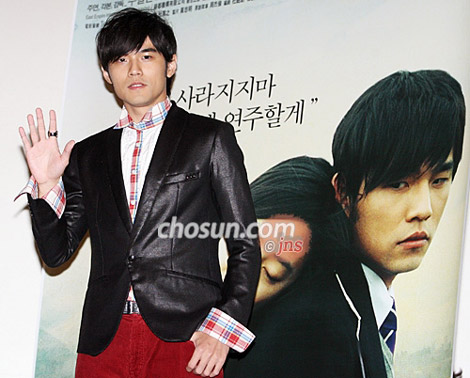
“Sorry. It’s laundry day.”
Posted in Kozo's Mailbag | 12 Comments »
|
|
|
| |
| |
|
|
|
|
|
|
|
|
|
|
|
|
|
|
|
|
|
|
|
|
|
|
|
|
|
|
|
|
|
|
|
|
|
|
|
|
|
|
|
|
|
|
|
|
|
|
|
|
|
|
|
| LoveHKFilm.com
Copyright © 2002-2026 Ross Chen |
|
|