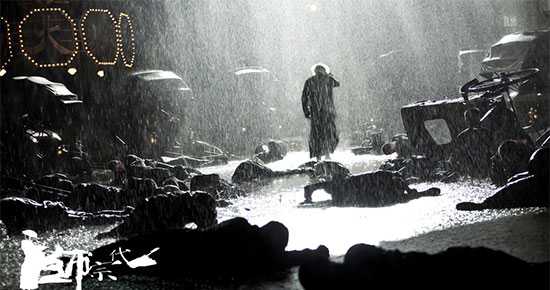
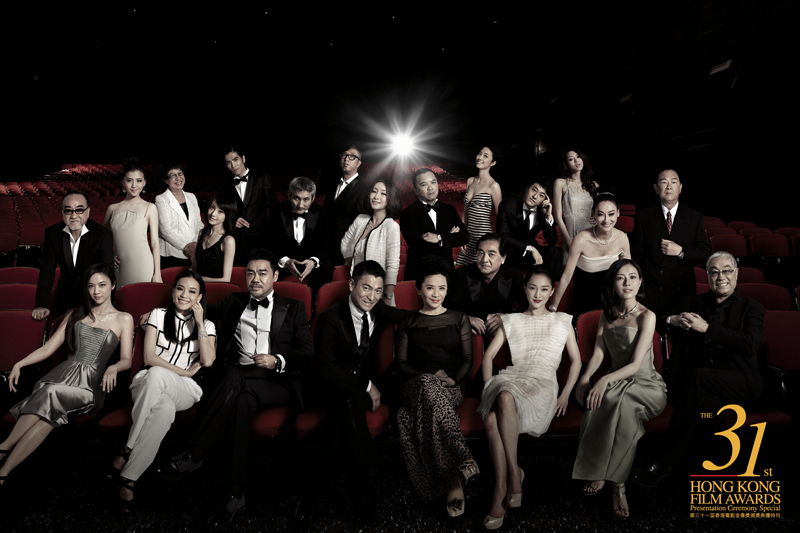
This is it! Today is November 24th, 2012, and it’s the day of the 2012 Golden Horse Awards. In the household of the Golden Rock (population: 1), we celebrate the best and brightest of films from the Greater China Region (that were submitted) with snark and live-blogging!
So without further ado, read below all that happened at this year’s Golden Horse Awards:
10:58pm: And 4 hours later, we’re done with our Golden Horse Awards coverage. Thanks to everyone on Twitter, Facebook, and those who read the last 4 hours. Our next live blog will be in April with the Hong Kong Film Awards, and we’ll of course be back to cover the 50th Golden Horse Awards next year, too. See ya!
10:56pm: So the final count: BEIJING BLUES and LIFE WITHOUT PRINCIPLE tied at 3. Mainland China cinema is the ultimate winner of the night with most wins.
10:55pm: Wow, that was a major, major surprise. BEIJING BLUES take home Best Picture without winning Best Screenplay, Best Director, or any of the acting awards.
10:54pm: Finally, here we go. Oh, god, the clip for BULLET VANISHES is a major spoiler
The winner of Best Feature Film is……BEIJING BLUES!!!!!!!! WHAT??!?!?!?!?!?!
10:49pm: Waste of time banter happening. Please stand by.
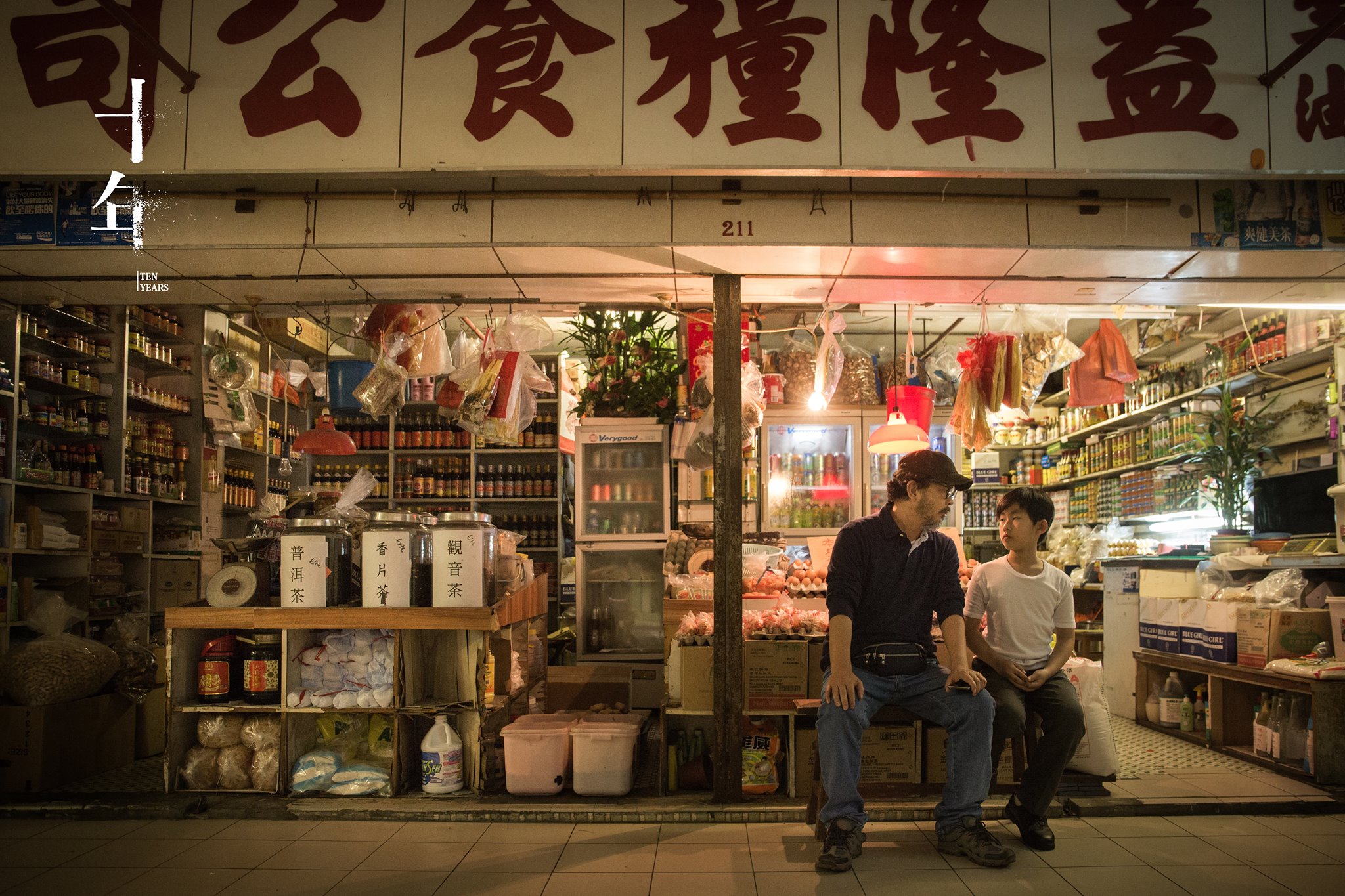
10:47pm: Seen on Weibo: Leon Dai writes brief Weibo post called “Ten Years”. No names on it, of course.
10:46pm: Now, Andy Lau on stage to present the Best Picture award. I predicted GF*BF to take the top prize, but it’s all up in the air now.
Andy Lau is the Chairman of this year’s Golden Horse Award jury.
10:44pm: Huang Bo: “I always look up to Uncle Andy when I was growing up…….then people told me that Andy Lau would be perfect as my younger brother.”
10:43pm: Bowie Tsang explaining why she was so emotional about Lau Ching-Wan winning the Golden Horse Awards: He’s never won a Golden Horse before, and she was also present the only time he won a Hong Kong Film Award.
10:40pm: Next up is the final award, Best Film.
Current count: LIFE WITHOUT PRINCIPLE at 3 awards, MYSTERY at 2, and BEIJING BLUES at 2
10:36pm: “I don’t make movies for awards….I’m just kidding, of course I want awards.”—Lau Ching-Wan
10:34pm: And the winner for Best Actor is…………….Lau Ching-Wan for LIFE WITHOUT PRINCIPLE!!!! This is his first Golden Horse Best Actor win.
10:32pm: I don’t understand what Deanie Ip is saying. Seriously.
10:30pm: Deanie Ip now on stage to present the Best Actor Award. I’m rooting for Lau Ching Wan, but feel a bit sorry for Taiwan now, so a Joseph Chang win would be a nice moment.
10:29pm: Huang Bo mentions that Joseph Chang must be feeling a lot of pressure. His win would give Taiwan a great morale boost.
10:27pm: The two hosts now discuss the Best Actors nominees. Nick Cheung shared his Best Actor Award with Huang Bo when he won.
10:20pm: Sadly, Gooey does NOT thank Leon Dai in her acceptance speech.
10:17pm: And the winner for Best Actress is………………….Guei Lun-Mei for GF*BF!!!!! Taiwan finally nabs a big award!
10:14pm: Li Bingbing and some guy named Jackie Chan on stage to present the Best Actress award. Jackie Chan attempts to speak Taiwanese and fails miserably…and I don’t even speak Taiwanese!
Jackie Chan says he was asked to drag out his time on stage. Threatened to start singing.
I predicted Sandrine Pinna for the win, but this is a really tough one.
10:13pm: “Maybe you should win the Best Actress Award” — Hao Lei to Huang Bo.
10:10pm: I prefer Bai Baihe in LOVE IS NOT BLIND to Bai Baihe in real life.
10:08pm: Huang Bo and Bowie Tsang go into the audience to interview the Best Actress nominees.
10:03pm: Still no clear frontrunner tonight, as BEIJING BLUES, LIFE WITHOUT PRINCIPLE, and MYSTERY each has two awards.
10:02pm: To winning Best Director paving the path for LIFE WITHOUT PRINCIPLE to pick up Best Film, but remember all paths were leading to A SIMPLE LIFE last year when SEEDIQ BALE won.
10:01pm: And now, it’s the one commercial break per major award phase of the night.
9:59pm: And the winner for Best Director is………………..Johnnie To for LIFE WITHOUT PRINCIPLE!
Lau Ching-Wan goes up to the stage and says: “I am not Johnnie To”.
9:57pm: Of course. Huang Bo and Lin Chiling take the chance to promote SAY YES, their upcoming Valentine’s Day movie.
9:56pm: Give Lin Chiling the award for Best Script Reader tonight.
9:54pm: Lin Chiling now on stage to present the Best Director Award. As I typed earlier, was expecting a Taiwanese director to get it, but now leaning towards Johnnie To or Gao Qunshu.
Lin Chiling is so thin that she looks like she’s tied up in bondage.
9:52pm: Time for some witty banter before the Best Director Award. OK, guys, let’s get to it, we’re getting into the 4th hour……….
9;50pm: Also forgot to mention that Taiwan has yet to figure out how to send out HD signal abroad: Star Movies Chinese HD channel’s broadcast is in 4:3 aspect ratio.
9:48pm: Had expected Gilles Yang or Doze Niu to have pretty good chance at Best Director tonight, but now leaning towards Gao Qunshu or Johnnie To. What happened, Taiwan??!!!!!
9:47pm: Camera captures Doze Niu taking photo of LOVE theme song being performed onstage with his iPhone. Oh, he’s one of THOSE people…..
9:45pm: OK, I get it. A classic theme song from a film by each of the Best Director nominee. Try explaining that idea at the pitching meeting.
9:44pm: Someone please tell Sammi on Weibo that they’re singing another one of her songs. Since, you know, she’s clearly not paying attention.
9:43pm: Um, didn’t we already get a movie theme song medley already? Not that I’m not liking this one better…….
9:42pm: But before the major awards, we get another musical performance by Outstanding Taiwanese Filmmaker award winner Huang Yu-Siang and singer Lala Xu.
Did I say that Huang Yu-Siang is a really good pianist?
9:40pm: This commercial break is feeling extra long…..
9:34pm: Good, humble speech by Mr. Shih. Up next to present is Lin Chiling, after the commercial break.
Looks like we’re coming into home stretch, as the four major awards are the only ones left.
9:27pm: Shih Chun was discovered by King Hu. In addition to being one of the best-known wuxia stars (including in King Hu films), he will also be in Hou Hsiao Hsien’s upcoming wuxia film THE ASSASSIN
Shih now works in preservation and promotion of King Hu’s works.
9:26pm: Hou Hsiao-Hsien now on stage to present the Lifetime Achievement Award to Shih Chun.
9:24pm: Just seen on Weibo: Sammi Cheng found out her ROMANCING IN THIN AIR song’s Golden Horse win on Weibo.
9:20pm: I didn’t make a prediction for this award. Guessing Taiwan doesn’t have to worry about this award, either.
The winner for Outstanding Taiwanese Filmmaker of the Year is…………Huang Yu-Siang! The blind star and composer of TOUCH OF THE LIGHT!
9:19pm: Wang Wei-Liu, last year’s Outstanding Taiwanese Filmmaker of the Year, now on stage to present this year’s Outstanding Taiwanese Filmmaker award.
Wang clearly nervous as he makes his way through his speech.
9:16pm: Already known: GF*BF wins the Golden Horse Audience Award.
9:14pm: This year’s jury Chairman is Andy Lau, which is why he’s sitting front and center at the ceremony.
9:12pm. Whew, getting a few minutes’ break, finally.
9:10pm: Wang Wei-Liu up after the commercial break. I’m guessing it’s time for the Lifetime Achievement Award
9:08pm: Szeto Kam-Yuen and Lo Wei-Kuen both got mentions, so I guess it’s not just Taiwanese………
9:05pm: Now, the In Memoriam sequence, remembering Taiwanese film figures who left us this past year.
9:03pm: And now, a montage about the success of Taiwanese films…….on the night when Taiwanese films are losing to Mainland Chinese films. Whoops.
9:02pm: TOUCH OF THE LIGHT is produced by Wong Kar-Wai’s Jet Tone Films, which is why Chang thanks Wong Kar Wai.
9:00pm: And the winner of Best Director is……….Chang Jung-Chi for TOUCH OF THE LIGHT!
8:58pm: Now it’s time for Best New Director, presented by Wei Te-Sheng…..and sorry, I don’t know who the other one is….total fail.
Also, Taiwan doesn’t have to worry about this category: All 5 nominees are Taiwanese.
I predicted Chang Jung-Chi or Fung Kai to win for TOUCH OF THE LIGHT or DIN TAO
8:55pm: Angelababy was wondering which of her two nominated films would win Best Action Choreography. Neither did.
Bowie Tsang: “I think this is the time to say…’TAIWAN FILMS JIA YOU!’” Someone’s getting nervous….
8:54pm: Chin Ka Lok having a really good week: Marriage, baby on the way, and now, a Golden Horse Award!
8:53pm: Time for Best Action Choreography. I predicted JUDGE ARCHER or TAI CHI
The winner for Best Action Choreography is………….MOTORWAY!!!!!!!
8:51pm: Also forgotten: One of the three winners for DRAGON GATE is Korean, so I can’t translated his speech. The American guy: “This place is wonderful. The food, wow!” I think that was a euphemism.
This is like a bad joke: A Korean, a Hong Konger, and an American step onto an award stage……….
8:50pm: And the winner for Best Visual Effects is………FLYING SWORDS OF DRAGON GATE. Oh, I forgot the 3D thing.
8:49pm; Stephen Fung and Angelababy now on stage to present Visual Effects and Best Action Design.
I predicted Best Visual effects would go to PAINTED SKIN.
8:46pm: Four Hong Kong winners so far tonight. Is LIFE WITHOUT PRINCIPLE heading to major winning night after Best Screenplay win?
8:43pm: Next up after commercial: Stephen Fung and Angelababy present.
8:42pm: And the winner of Best Original Song is…………DoReMi from ROMANCING IN THIN AIR. Lo Dayu’s first Golden Horse Award.
8:41pm: Now, Ronald and Richie present Best Original Song. I guess the other two nominated songs will not be performed, then. I predicted Sammi Cheng’s DOREMI for ROMANCING IN THIN AIR.
8:39pm: They are first presenting Best Original Film Score. I predicted LOVE, but I’m not really rooting for any film in particular.
And the winner of Best Original Score is…………..MYSTERY
8;37pm: Now that’s over, Ronald Cheng and Richie Ren come on stage to present.
Ronald: “Why are you always playing cops and heroes, while I play a man in drag, a man in drag, and a man in drag?”
8:36pm: Oh no, Sally Yeh is going to try and pretend to be dancing. I need some more yakitori.
8:34pm: Camera gets half a second of Jackie Chan singing along, then quickly cuts back to Andy Lau. Hmmmmmmmmm…………
8:33pm: Quick check of Weibo says Taiwan cinema is in a bit of danger this year, as Mainland films take up the awards.
8:30pm: Camera gets a shot of Andy Lau singing along. Hmmmmmm……
8:27pm: Time for another musical performance. A medley of classic film theme songs performed by Sally Yeh. This means only one thing: Yakitori break!
8:25pm: No win for GF*BF so far, which does not bode well for its Best Picture chances. But remember, SEEDIQ BALE went through similar process last year.
8:21pm. Time for Best Original Screenplay. I predicted GF*BF or CHA CHA FOR TWINS.
The winner of Best Original Screenplay is…………….LIFE WITHOUT PRINCIPLE! Third Hong Kong win of the night!
Denise Ho accepts the award on behalf of the winners.
8:20pm: LOVE IS NOT BLIND writer wrote her book after an argument with her boyfriend.
8:19pm: The writer of LOVE IS NOT BLIND is absolutely effing ADORABLE
8:17pm: And the winner for Best Adapted Screenplay is…….LOVE IS NOT BLIND! I got another one right!
8:15pm: Bad mic disaster just as Alec Su begins to speak. Awkward moment no. 4 of the night. The two then recite their favorite dialogue of the year……but no one seems to be recognizing them.
Sonia Sui and Alec Su are presenting Best Adapted Screenplay. I predicted LOVE IS NOT BLIND
8:14pm: A few of the ones I wanted to win have been winning, but my “should win”’s have been way off tonight. Expected advantage for Taiwan not happening this year.
8:13pm: Next up as presenters: Sonia Sui and Alec Su.
8:11pm: Liang Jing thanks DESIGN OF DEATH co-star Huang Bo for the fake set of teeth she wears in the film.
That’s two wins for DESIGN OF DEATH and two wins for BEIJING BLUES.
8:09pm: And the winner for Best Supporting Actress is………….Liang Jing for DESIGN FOR DEATH!
Liang Jing is director Guan Hu’s wife. Kitty Zhang is Wang Quan’an’s wife. Xu Fan is Feng Xiaogang’s wife. Hey, see a pattern?
8:08pm: Chou and Gooey remain to present Best Supporting Actress. Gooey: “Jay…you’re not nominated this year for it”. Jay follows with a shout-out to Nicholas Tse, who IS nominated for Best Actor.
I predicted one of the LOVE actresses.
8:06pm: Um, pretty clear that the director of CHINA HEAVYWEIGHT doesn’t really speak Mandarin. Congrats anyway, dude.
8:05pm: CHINA HEAVYWEIGHT marks another win for documentary distributor CNEX.
8:04pm: And the winner of Best Documentary is……CHINA HEAVYWEIGHT!
8:03pm: Jay Chou and Gooey address each other by their character names. Gooey says “My favorite role of yours is….GREEN HORNET”
The two are presenting Best Documentary. I didn’t predict this category.
8:00pm: From Twitter again: “Tony Yang’s girlfriend=Amber Kuo, yo”. Thanks, Shelley! Also from her: “NIGHTFALL should never win for anything”
7:59pm: From Twitter “Tony Yang’s gf is Amber Kuo”. Thanks, @yupkigirl!
7:58pm: Jay Chou and Guey Lun-Mei (aka Gooey) up next as presenters.
7:57pm: And the winner of Best Editing is……………..BEIJING BLUES! Second award of the night
7:56pm: Sorry, Chen and Yang’s second award is Best Editing. I didn’t predict anything, but would like to see MYSTERY win. BEIJING BLUES also a possible winner.
7:55pm: And the winner is……………NIGHTFALL????!!!!!!!!!
Nick Cheung accepts the award on behalf of the winners.
7:54pm: The first award they’re presenting is Best Sound Effects. I predicted BLACK AND WHITE, but want BULLET VANISHES or SILENT WAR
7:52pm: Ivy Chen and Tony Yang now presenting Best Sound Effects and Best Special Effects. Chen is nominated for Best Supporting Actress, and apparently Yang’s girlfriend is also nominated. Tell me on Twitter who they’re talking about.
7:50pm; Alan Kuo performing DIN TAO, nominated for Best Original Song tonight.
7:47pm: Lead cast of DIN TAO and drumming troupe perform. First performance of the night.
Friendly reminder: Tweet your thoughts about tonight’s awards in Twitter with the hashtag #2012GHA!
7:45pm: Huang Bo and Bowie talk about the success of local films, from PAINTED SKIN to VULGARIA to DIN TAO
7:42pm: No clear front runner yet. GF*BF already lost out at least two categories, one of which had a pretty good chance of winning.
7:41pm: Next up: Ivy Chen and Tony Yang present….something. We’ll find out after the commercial break
7:40pm: Chapman To lost, but looks very happy that Ronald won for VULGARIA….co-produced by To
7:38pm: And the winner for Best Supporting Actor is………Ronald Cheng!
7:37pm: And now, Niu and Peng remain for Best Supporting Actor. I predicted Ronald Cheng to win for VULGARIA.
7:36pm: Winner Wu Di says it was the first time he’s ever shot on digital.
7:35pm: And the winner for Best Cinematography is…………..BEIJING BLUES! Good night for Mainland Chinese cinema tonight.
7:34pm: Niu and Peng say they don’t know why they’re presenting Best Cinematography. Skips to nominee clip. Ouch.
I predicted Jake Pollock to win for GF*BF, but wanted WHITE DEER PLAIN to win.
7:32pm: Doze Niu and Eddie Peng up next as presenters after this commercial break.
7:31pm: And the winner of Best Art Direction is………..DESIGN OF DEATH! A pleasant surprise!
7:29pm: Winner just says thanks and takes off. Pinna and Chang caught off-guard
Time for Best Art Direction now. I predicted FLYING SWORDS OF DRAGON GATE
7:28pm: And the winner is………THE BULLET VANISHES! Whoo-hoo, I got one right.
7:27pm: An awkward “whose turn is it to talk now” moment there with Chang and Pinna. The latter keeps missing her cue.
They’re presenting Best Make-up and Costume Design. I predicted TAI CHI or BULLET VANISHES
7:26pm: And time for our first commercial break. Next presenters: Joseph Chang and Sandrine Pinna
7:25pm: That was a bit of a surprise. Does that signal the beginning of a good night for Lou Ye’s MYSTERY?
7:24pm: And the winner of Best New Performer is……….Qi Xi for MYSTERY!
7:22pm: I predicted that Peijia Huang would win this category with CHA CHA FOR TWINS.
7:20pm: Ko and Kuo remain on the stage to present Best New Actor. Ko Chen-Tung won this awards last year.
7:19pm: And the winner of Best Short Film is……..THE HOME GLEANERS
7:18pm: Amber Kuo and Ko Chen-Tung are the first presenters. Presenting Best Short Film.
7:17pm: Of course, they throw in an anti-piracy message at the end of the dance sequence
7:15pm: This is the first year that the nominee list expanded to five?
7:14pm: “All of this year’s Best Actor nominees have beautiful wifes, too!” Lau Ching Wan shakes his head.
Huang Bo: “What about Nicholas Tse?”
Bowie Tsang: “Let’s not go there”
7:12pm: Huang Bo: “Look, I was beaten up this year, too! Why wasn’t I nominated? Chapman To didn’t get beaten up, either.” This was followed by a clip of VULGARIA. Yes, that clip.
7:11pm: “All of this year’s Best Actor nominees had to withstand a good beating!”
7:10pm: I am not kidding that when I type that Huang Bo is a surprisingly good singer.
7:08pm: Tonight’s hosts are Bowie Tsang and HUANG BO! The two start with speech about dreams and being happy to be there. Leads to a song & dance!
7:07pm: As always, just keep reloading this page to see the latest entries.
7:06pm: Awards officially starting now. Starting with montage of nominated films.
7:03pm: Holy crap, Lin Chiling is really tall. I also call the kettle black.
7:02pm: The feed starts with red carpet footage, Lin Chiling walking the red carpet now.
7:00pm: And we’re off. Star Movies Chinese feed starting now.
14:30: Four and a half hours away from the show. Tonight’s live blog is brought to you by the iPad, my generic keyboard, my desktop computer, and Splashtop 2. We’re hella hip with technology like that. Since this seems to be working, I’ll be back at 7:00pm Hong Kong time!
Don’t forget to join and post comments on twitter with hashtag #2012GHA!